

This Iconic Snack Isn't Strictly Vegan, Despite What Many People Think

Oreo cookies have been satiating our sweet tooth for over a century, with over 500 billion of these chocolate-y, creamy biscuits sold since 1912. While there are some dubious special-edition flavors that have since vanished, like jelly donut Oreos and even spinoff creations that were 86'd over time, like the discontinued Oreo Magic Dunkers, our love for the OG cookies remains steadfast. One question that pops up from time to time in the Oreo fandom — which is very much a thing — is whether the cookies are, as popular culture purports, truly vegan-friendly.
Whether Oreos are safe for vegans to eat is a complex question, not unlike the issue of whether or not Chick-fil-A fries are gluten-free. CFA's fries are subject to possible cross-contamination that could sully their status, and such is the case with Oreos as well. Yes, the recipe for the cookies (most of them, anyway ... more on that in a bit) contains no dairy or animal byproducts, but Oreos are baked and assembled in factories where other goodies containing animal products are created. Therefore, there's a non-zero chance that some contamination could occur in the manufacturing process. Oreo UK's own website corroborates this fact, specifically pointing out milk as a potential contaminant that could still make cookies safe for vegetarians, but not vegans, with their stricter dietary needs.
It's worth noting that Oreo cookies are only "accidentally" vegan. This means that they happen to fit most (possibly all) of the requirements for vegan eaters, but they were not intended that way. Perhaps that's the reason that the manufacturers of Oreo are a bit cavalier about possible cross-contamination ... they never claimed that Oreos would be 100% safe for vegans.
Are there other ethical issues with Oreos for vegans?
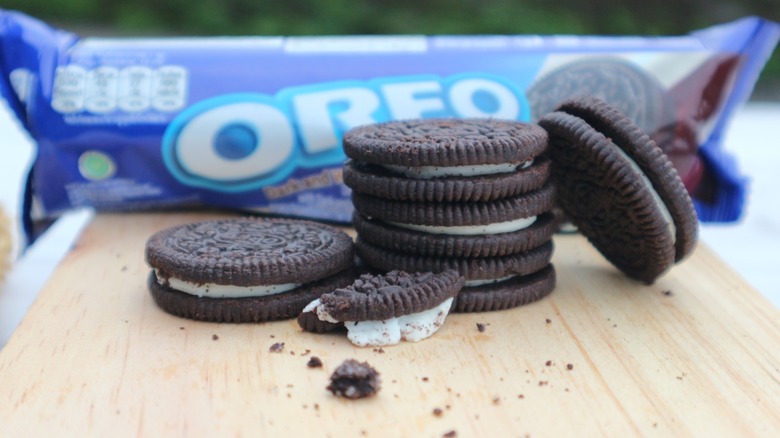
You will find that most flavors of Oreos meet the "accidentally vegan" label that we discussed, meaning that you are safe to scarf Double Stuf, Halloween Orange BOO, and Golden Oreos as long as you don't have qualms about the risk of cross-contamination. This doesn't apply to Oreo Cakesters or other third-party treats that are Oreo-flavored, such as "cookies and cream" ice cream or candy bars. Emerging seasonal flavors should also always be thoroughly checked before you make assumptions about their contents. Peanut butter Oreos in the U.K., for instance, contain milk. Fudge-dipped Oreos are also not vegan-friendly. Ultimately, proceed with caution when you scope a new Oreo flavor at the supermarket!
Beyond the risk of cross-contamination with milk, there are some other possible sticking points for very devout vegans to consider. Some folks, for example, take issue with the presence of animal-derived bone char used in white sugar, which is an ingredient in Oreos. However, many vegans consider this such an ubiquitous ingredient that they choose not to quibble with it. Oreos also contain palm oil, which certain ethical vegans choose to abstain from due to detrimental environmental effects stemming from its production. Informed consumers should always do their research and assess their own comfort with the ingredients and manufacturing practices of store-bought goods. Also, keep in mind that if you avoid dairy for allergies instead of lifestyle reasons, Oreos may not be a safe cookie for you to enjoy.