

This Old-School Pasta 'Hack' Does Nothing But Make Your Kitchen A Mess
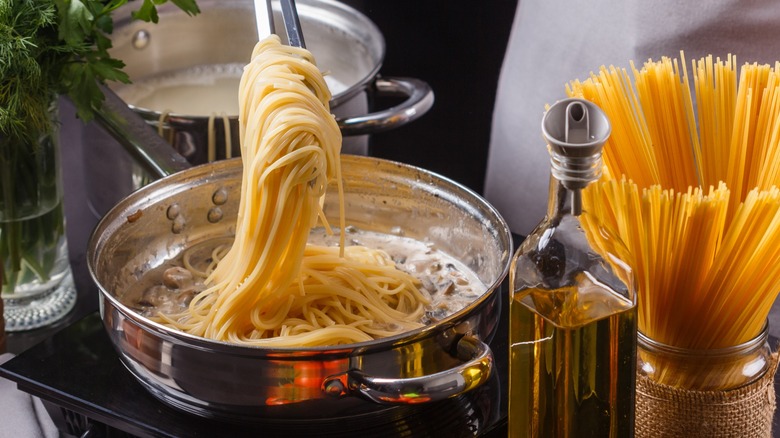
We've discussed why you should boil water before adding pasta, and regular readers even know how to put together Thomas Keller's egg yolk-heavy pasta dough. Here's a new one when it comes to the basics of cooking pasta, that beloved, hearty dinner: you shouldn't actually whip it at the wall to determine if it's done. All you are doing is dirtying up your kitchen.
On a Reddit post in the "Ask Culinary" subreddit, commenters discussed the possible origins of throwing pasta at the wall in the first place. It was widely agreed that this was likely an American practice, as any Italian nonna worth her (pasta) salt would shake her head at such an egregious and wasteful display of foolishness. One reply attributed the pasta-throwing to the 1960 film "The Apartment," starring Jack Lemmon and Shirley MacLaine. Whatever the origins of the pasta throw, however, this activity is never going to make the Olympics, and it shouldn't make your own home cooking repertoire, either.
Basically put, if pasta is sticky enough to adhere to your kitchen wall, it's probably overdone. The golden standard for cooking pasta is al dente, and a pasta with some bite left to it won't necessarily stick to a vertical surface. This "hack" is not only the worst way to test pasta (more on that in a minute), but it isn't even practical. All you are doing is flinging starchy food around your kitchen, which probably isn't as entertaining to the person on clean-up duty.
How can you actually tell if pasta is done?
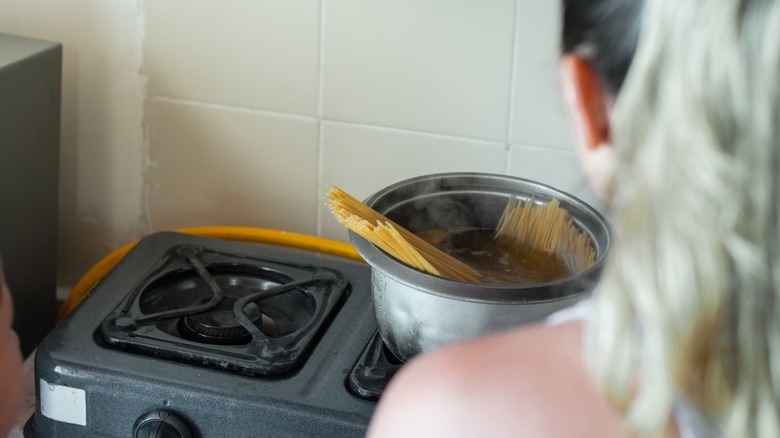
According to chef Antonio Morichini, who gave Foodie pasta cooking tips, simply reading the packaging is the easiest way to know if your pasta is cooked al dente. Pasta manufacturers can have countless hours of experimental data backing up the numbers published on their boxes or bags, and so they are probably the folks you should trust when it comes to figuring out how long you should cook pasta. When in doubt, however, you can't go wrong with your sense of taste. Fish one piece of pasta (strand, noodle, bowtie, etc.) from the water — being careful not to burn your fingers or tongue, of course — and pop it in your mouth. Your teeth will let you know if the pasta is still crunchy or if it has just the right amount of "give." If the texture feels right, go ahead and pull it from the heat.
Don't want to risk biting into raw pasta? On StackExchange, some readers have suggested cutting into your pasta shape and examining the middle. If the center of the pasta is opaque, the boiling water hasn't yet permeated the noodle and it is still undercooked. Other readers recommended dropping a piece of pasta onto a metal tray and listening to how loud the sound is, with the theory that a cooked pasta won't make much noise at all. No matter how you choose to test your pasta, however, your options just shouldn't include flinging it at the wall.