

Aretha Franklin's Favorite Food Was An Old-School Southern Staple
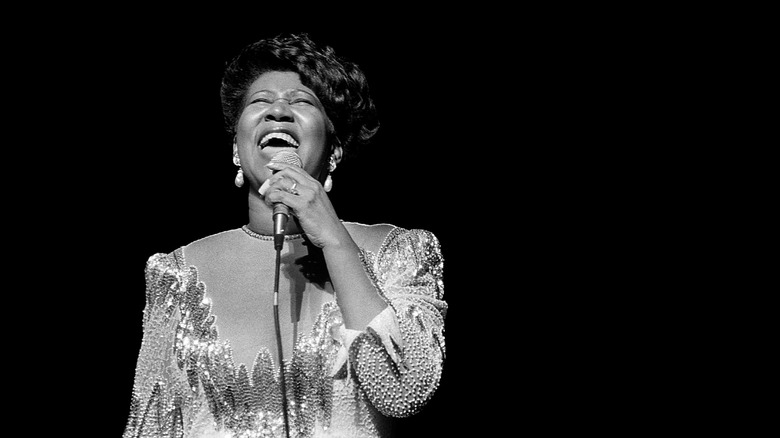
Soul food, which has special meaning during Kwanzaa, takes on several recognizable forms in the American culinary pantheon. You've heard, of course, of fried chicken, mac and cheese, collard greens and black-eyed peas, and downy biscuits dripping with butter. A less-ubiquitous, but no less-beloved dish, is chitterlings, also known as chitlins. Legendary singer Aretha Franklin, the "Queen of Soul," loved chitterlings for most of her life, although she gave them up closer to her death for health reasons.
In 1967, Franklin told "Ebony" magazine that chitterlings were her favorite food, especially when served with greens and hot-water cornbread. A screenshot on Reddit even shows a black-and-white photo of Franklin alongside a recipe for her chitterlings published in a cookbook called "Cool Cooking." The preparation calls for cloves, red pepper, and bay leaf, among other aromatics, and requires six hours of soaking before a three-to-four hour boil.
By 2008, however, Franklin told NPR that she was eschewing her favorite food. "Yeah, no, chitlins are out and they are off the menu," she vowed. "And anything like chitterlings for me, A, they were keeping my weight up and B, they run your [blood] pressure up, and things like that." Making a point of saying that she was choosing "other" food as opposed to "better" food, Franklin took a stance in the direction of health positivity. (Willie Nelson, on the other hand, has not given up his favorite chicken-fried steak and waffles.)
What are chitterlings, anyway?
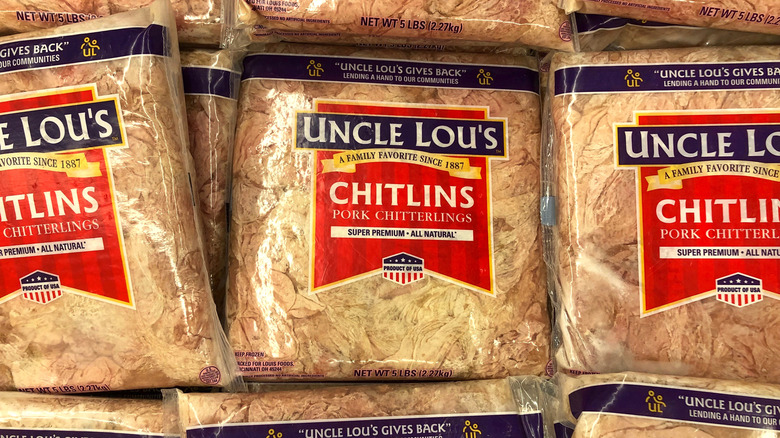
Aretha Franklin's passion for chitterlings won't make much sense if you don't know what, exactly, this dish is. Chitterlings are a Southern delicacy with a deep history. It consists of pig intestines that are boiled, fried, and/or stuffed. Chitterlings were a celebratory holiday feast meal in the 1700s, because hogs were slaughtered in December, and chitterlings were one way to ensure that no part of the valuable pig got wasted. Enslaved people became associated with chitterlings, an underused part of the animal that otherwise might have been discarded, and this dish made its way intrinsically into Black culture over almost two centuries.
Chitterlings even have a connection to Black musicians who paved the way for Franklin and her '60s soul peers. During the Jim Crow period, small restaurants and roadhouses that had chitterlings on their menus were considered safe places for singers of color to perform without risk of prejudice or ejection. As a whole, this battery of eateries and clubs became known as the "Chitlin Circuit."
While chitterlings are delicious, it's true that they are high in saturated fat and cholesterol, both of which can have negative implications for heart health when eaten excessively or by folks already at risk. Franklin substituted baked chicken for her beloved chitterlings as she aged. If you enjoy chitterlings, perhaps savor this richly historical dish in moderation, and save it for special occasions, just like our forefathers did.