

The Best Fertilizer For Growing More Tomatoes Than Ever This Year
We may receive a commission on purchases made from links.
As the weather warms up, so do gardeners' thoughts turn to one of summer's most exquisite pleasures ... sun-warmed, juicy tomatoes. On the list of fun facts you didn't know about tomatoes, we bet you weren't aware that a full 93% of Americans with a garden choose to grow this scrumptious fruit! And yet, many of them are doing it wrong.
Happy tomato plants need fertilizer to yield that bumper crop of ripe red beauties that you'll use in your Caprese salads and homemade marinara, but there are a lot of fertilizers out there. Turns out that, as long as your soil of choice isn't overwhelmed with or lacking any significant micronutrients, the fertilizer of choice is a nice, basic 5/10/5 compound, which means that it contains 5% apiece of nitrogen and potassium, as well as 10% phosphorus. These "big three" nutrients are what tomatoes crave.
On a related note: ever notice your tomato leaves turning yellow? While this could indicate a watering issue — very common, since knowing how often to water your veggie garden can be a nuanced and tricky question — it can also indicate a nutritional deficiency. Barring a shortage or overabundance of vitamins and minerals in your soil (more on that in a minute), your 5/10/5 fertilizer should feed your plants what they require. We like the high ratings on the Espoma Company Garden Food product, which can also be used elsewhere in your garden, but your local garden center will likely have many options.
There are times when a commercial fertilizer may not be the right choice
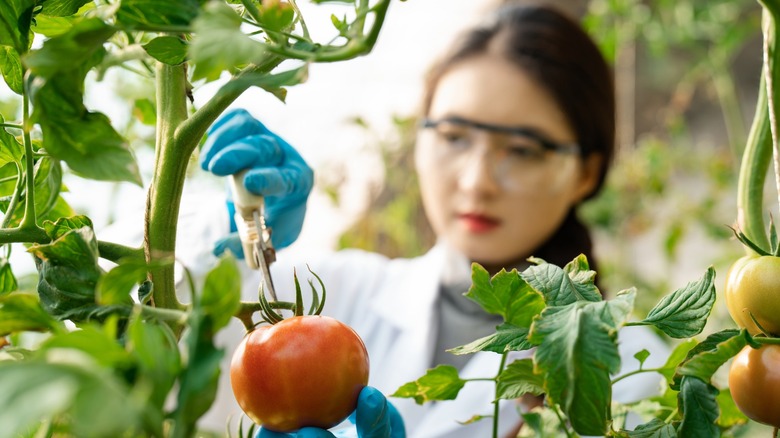
One wrench that can jam up the works of your tomato empire is the fact that different soils have different nutrient levels. Adding an off-the-shelf commercial fertilizer will work most of the time for your tomatoes, but doing so blindly could cause issues if your soil is already high in certain vitamins and minerals while lacking others.
Gardening experts largely recommend that, before planting, you get your soil tested to determine pH and nutrient makeup so that you can more effectively feed your garden. Amazon sells a well-rated MySoil Test Kit that you mail away for custom results and recommendations tailored to your unique situation. For example, tomatoes also need several nutrients like calcium, sulfur, and zinc, among many others, to say nothing of trace minerals. With a soil test, you can determine exactly what your garden lacks.
Of course, if you are growing only a small number of tomato plants in pots with commercial potting mix, you likely won't have these concerns. The takeaway here is that a 5/10/5 fertilizer that you buy from the internet or a garden supply store will generally lead to happier, healthier tomatoes in most cases. If you find that your yields or your plants' health aren't where you want them to be, on the other hand, a bit more probing may be necessary to get the dirt on your garden's dirt.