

Why Ribs From A Steakhouse Are Often More Tender Than Yours
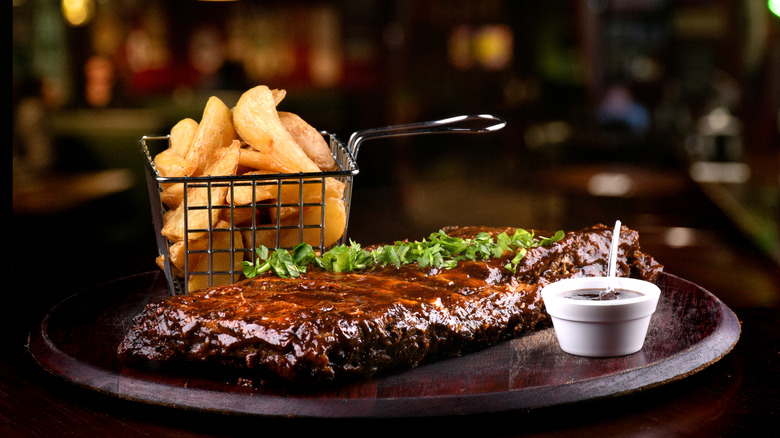
We previously covered the reasons that steak tastes different at restaurants (experience, resources, and so much butter!) and concluded that, sometimes, having someone else do the cooking for you is the secret to an extra-special meal. It can often feel the same way when it comes to ribs: the kind you get at Texas Roadhouse, Outback, or even higher-end steakhouses are always more succulent and tender than what you make in your own kitchen or backyard. Believe it or not, you aren't imagining this. Restaurants do, in fact, make better ribs than the vast majority of home cooks, and the explanations for this exceptional tenderness are manifold.
There are several reasons why steakhouses execute better-textured ribs almost all the time: they source higher-quality meat; they don't take shortcuts with prep steps like removing the silverskin; they have specialized equipment like industrial smokers; they maintain closely-guarded secret recipes for tenderizing BBQ rubs; and they don't try to rush the process.
A restaurant chef knows the difference between baby back ribs and spare ribs, for example; they get the best ribs on the market, which are already prone to greater tenderness, and has the cooking down to a science. You, on the other hand, might just prepare ribs a handful of times annually around big summertime cookout holidays. Is it any wonder that your average home cook doesn't stand a chance? Luckily, by channeling some of the pros' tips, you, too, can cook expert-level, fall-off-the-bone ribs.
Tips you should use to cook tender ribs like steakhouses
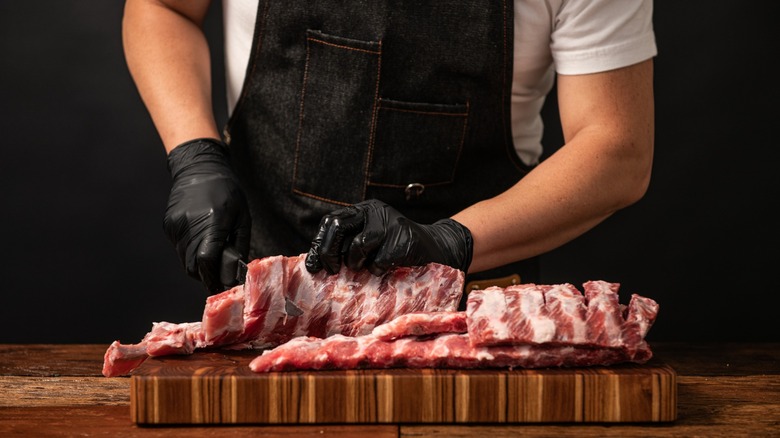
How are you supposed to compete with steakhouse equipment to control tenderness? Actually, you can easily make great, moist, tender ribs in your own oven or home smoker; the key variable is time. Ribs need low heat and slow cooking to render the fat marbling in the meat and to break down tough proteins. Some home cooks have unlocked the best ribs ever with the three-two-one method, for instance, which takes six hours and results in unparalleled tenderness.
Picking the best ribs that your money can buy is another attainable step to restaurant-worthy textural results. You want a good fat balance — not too little, and not too much. Know that the size and variety of ribs you buy will affect cook time. Pork baby back ribs are known for tenderness, while spareribs typically have better flavor.
When it comes to seasoning your ribs for maximum textural benefit, throw out the maxim that "less is more." Choose bold seasoning blends for your rub, and be generous with those spices! You also need to use a firm hand (literally) with your rub, really massaging it into the meat of the ribs to induce tenderness. For the best results, let your seasoned ribs rest overnight in the fridge. There's no hurrying love, however, and the same goes double for tender steakhouse-style ribs.