

The Best Burgers Start With Remembering This Ratio
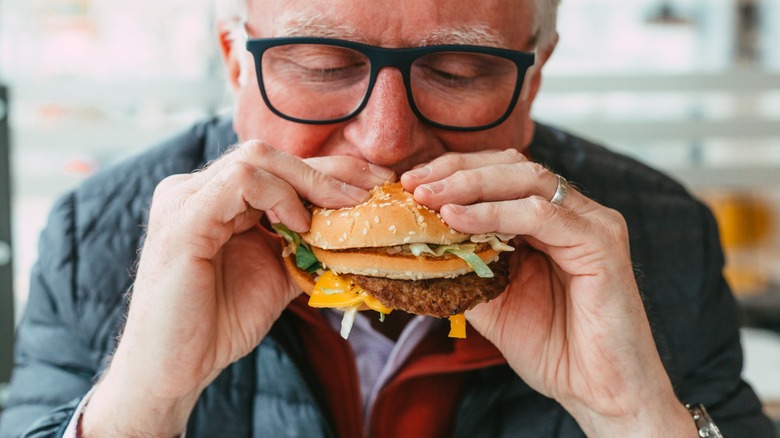
We know several essential tips for grilling perfect burgers, but one of the ultimate nuggets of wisdom concerns the composition of the beef you buy from the store. All the hacks out there for binders, shaping, temperature, and toppings don't matter if you pick the wrong meat for the job. And here, fat really does equal flavor. Fat also conducts heat very well, meaning it plays a role in juiciness as well as taste. So, if you are selecting too lean a beef for your burgers, you are potentially doing yourself an injustice. Among the mistakes that everyone makes when cooking ground beef, not being mindful of your ratios when cooking burgers is a big one.
An 80/20 beef blend or even an 85/15 is the right one for most burgers, depending on desired doneness. The ratios labeling ground beef are presented in terms of lean meat and fat, so 80/20 is 80% lean and 20% fat. When you are talking about grilling, broiling, or frying burgers at high heat, fat keeps the meat moist and flavorful. An 80/20 is ideal for almost all burgers, with 85/15 coming right behind for less thoroughly-cooked patties — though keep in mind the possible health risks of underdone ground beef.
It may seem like more fat would be better, but this isn't strictly true. A 70/30 beef can result in a burger that's too greasy, unless you are making something thin and well-done like a smashburger. Overall, the more "done" you want your burger, the fattier your beef should be. A medium burger, however, is consistently great at the magic 80/20 number.
Getting familiar with your ground beef is essential to making great burgers
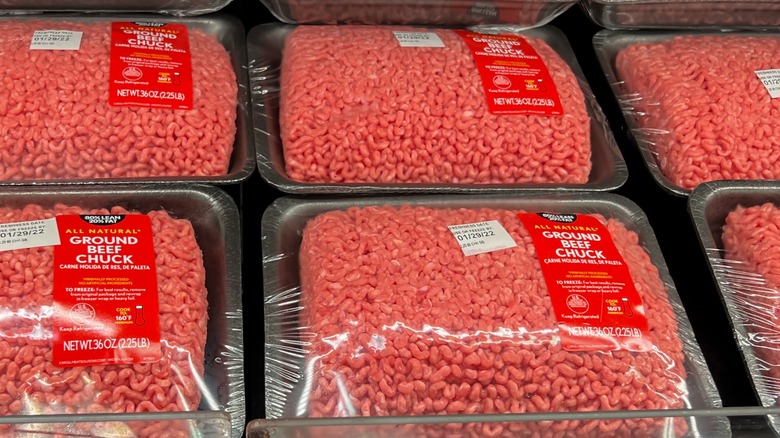
Knowing the correct way to calculate the cook time for your burgers on the grill depends on the type of beef, desired doneness, and style of burger. Fat ratio is perhaps the most important factor when picking your ground beef, but it's not the only one. You should also know what type of beef you are buying. Sirloin, for instance, is sometimes positioned as a more luxurious option than plain chuck, but it's naturally leaner ... which might not be ideal for your burger.
Ground short rib, on the other hand, costs more, but has delicious flavor and great texture. More uncommon types like hanger steak or skirt steak may seem interesting, but the (grittier) texture isn't always what you'd expect. Any of these beef cuts will come in different presentations of that fat ratio, adding to the complexity of your decision.
In short, it pays to acquaint yourself with the label on the beef you buy. Playing a guessing game with fat ratios by randomly grabbing a pack of meat based on details like price or appearance is not a winning proposition. An educated beef consumer will take a little more time and consider all the details. When in doubt, or if you're in a hurry, pick up 80/20 ground beef and thank us later.