

This Is By Far The Best Type Of Fertilizer To Use For Peppers
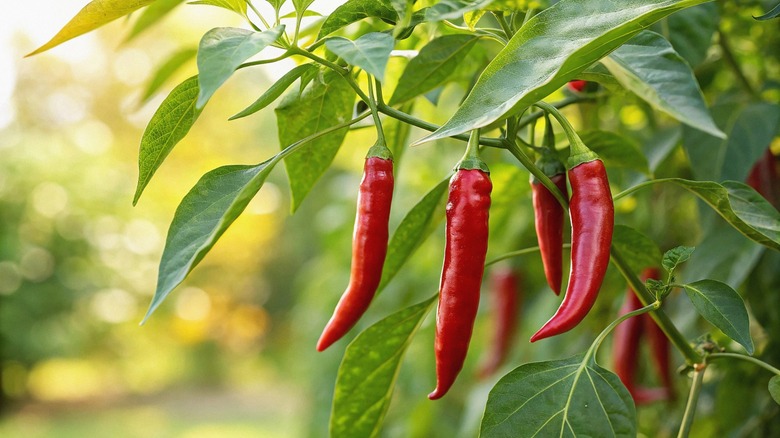
As you're happily planning your summer garden, a few big questions come to mind. Knowing how often to water your veggie garden is something to research, as the "right" answer can depend on what you're growing — but it turns out that fertilizing is a similarly tricky issue. The best fertilizer for gardening tomato plants, for instance, is different from the best one for peppers.
If you are looking for one suitable, all-purpose pepper food, you want to look at the numbers. Commercial fertilizers have values on them expressed in terms of the ratio of the "big three" nutrients: nitrogen, phosphorus, and potassium. Peppers thrive with a 4-1-4 formula. As per research, those are the magic numbers for happy peppers. Barring that exact formula, however, since it can be hard to source, a balanced 5-5-5 fertilizer will also suit your peppers just fine.
That said, many gardening experts will tell you that you might want to use a different fertilizer before the plant starts fruiting (for leaf and stem growth) than you do for the health of your peppers themselves. Depending on what you grow, you have the opportunity to cultivate both flavor and heat that, when properly preserved, can last you all year.
How you fertilize peppers is just as important as what you use
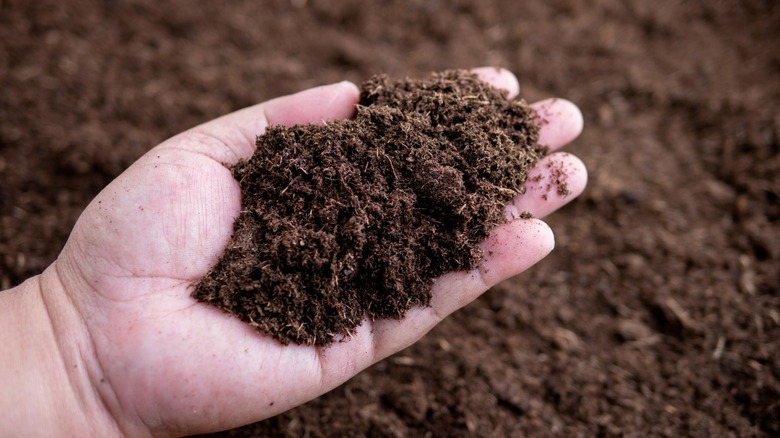
Knowing the effects of your fertilizer on the health of your pepper plants will help you make the best decisions as they grow. Nitrogen, for instance, can be both a blessing and a curse to your yields. A little extra, and your plants produce bountiful amounts of fruit. Too much, and your leaves may show signs of chemical burning, and the weight of all the extra fruit can possibly be damaging to your plant. Just like your tomato leaves may turn yellow in your garden from too much or too little nutrient load, so can the leaves of your pepper plants give you vital info.
When you fertilize is crucial, too. Fertilizing your seedlings early on can make your plants hardier by establishing good root systems. One week after sprouting is a great time to feed your plants for the first time. This is only, however, if your plants are in the ground. Did you plant your seeds in rich potting soil in a pot? Extra fertilizer might be overkill, so hold off.
It turns out that fertilizing peppers is a bit more complicated than you might have initially thought. No worries, though — the internet is a great resource, and, with a bit of research into your particular situation, you can master the art of feeding your plants for strong, abundant growth. Remember those magic numbers for the "big three" nutrients, take your planting situation into account, and prepare your pantry for tons of delicious peppers!