

The Commonly Mislabeled Fish You Should Know About At Sushi Restaurants
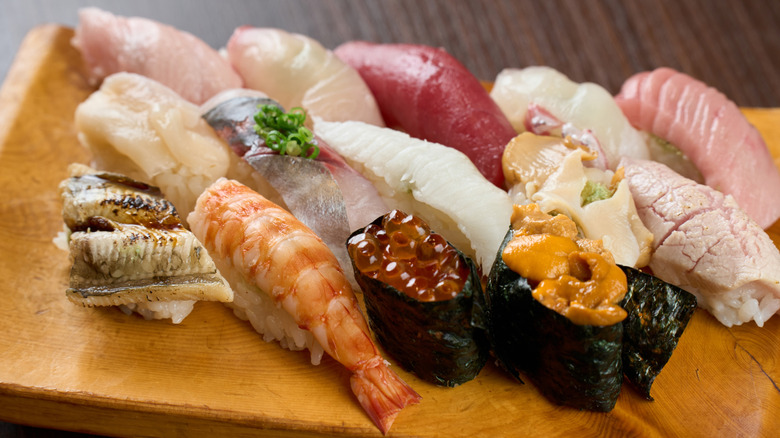
So insatiable is the appetite for sushi in the US that more than 16,000 restaurants are operating — and business is booming. But mislabeled fish has been an ongoing problem in both retail settings and sushi restaurants across the states. One of the more popular cases is sushi being sold as white tuna. Sometimes, it's actually another fish completely: escolar. And it's hard to say at which point in the distribution chain the fish was intentionally mislabeled — it could be at the wholesale level, it could be at the restaurant itself.
Escolar also goes by the names Hawaiian butterfish and walu, and it too is a prized addition to many restaurant menus. It contains around 25% fat, which helps give it that rich, buttery flavor. Diners love its smooth, satiny texture and the fact it doesn't give off a heavy, fishy odor like its snake mackerel family members. However, escolar does come with a health warning. It may be tempting, but humans can't digest the wax ester oil in it — which is also a natural laxative.
Chowing down on sushi made with escolar could lead to keriorrhea, a type of diarrhoea, for some. It can take anywhere between a 30 minutes to three days to show up, and while it's not serious, keriorrhea can lead to digestive discomfort.
Tips for detecting escolar in place of white tuna
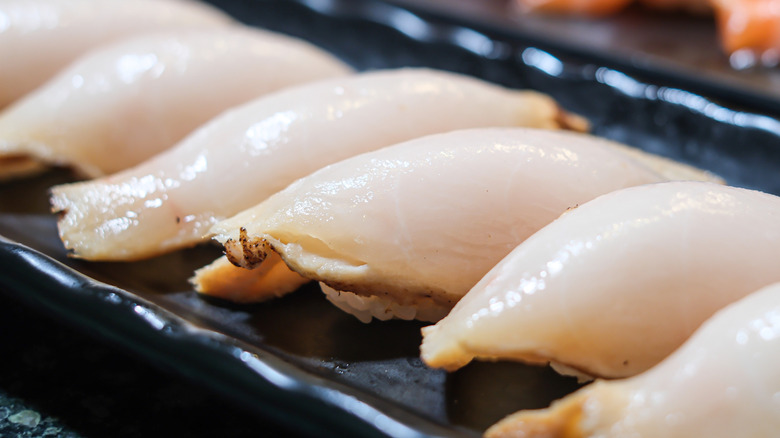
Even people who have sushi regularly may not be aware that the white tuna they're eating isn't what it claims to be. Of course, sushi and sashimi are very different, though both are often used as a catch-all term for several different dishes. It's easy to be misled, but there are some tips for detecting authentic sushi and fish types.
Ben Chan, executive chef of Sushi Aozora, told Foodie in a previous interview about which menu items to skip at a sushi restaurant, to "look at color, texture, and temperature. Real tuna has a natural shine and firmness; fake substitutes look dull or watery." He also insisted eateries that highlighted the origins of their fish were less likely to mislabel anything as escolar. "Transparency is a good sign of integrity," he said. We can verify our ingredients when making sushi at home, but it's important to be vigilant when dining out.