

Growing Potatoes This Way Is So Easy And Saves Tons Of Space
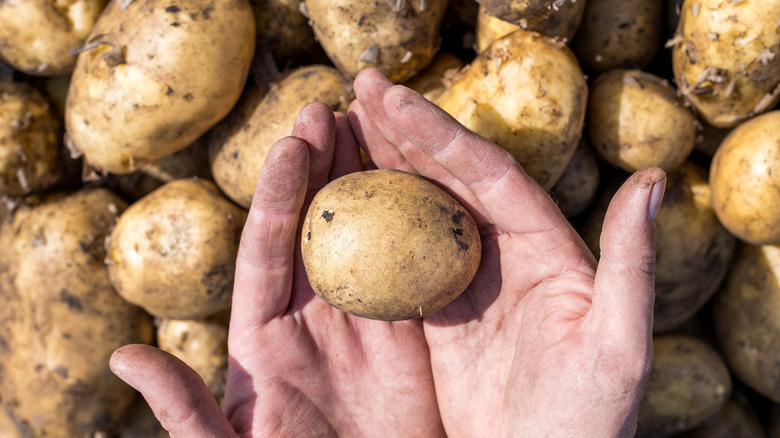
There's a lot of pride in boosting a sauce with herbs you've grown, or serving a salad made with tomatoes picked just moments earlier. The buzz can leave you itching to try more crops. While herbs and tomatoes are simple, potatoes can be a little trickier, especially if you're squeezed for space. The answer: plant them in a pot. Just as herbs will thrive in this cheap Dollar Tree planter set, potatoes will happily do their thing in almost any size of container. Live in an apartment with limited or no balcony access? Grab a bucket, punch a few holes in the bottom, and it will serve beautifully. If you've got a yard, Walmart's best-selling metal planter would make a fantastic potato bed.
The key is knowing when and how to plant your potatoes, rather than where. Whether you choose cut pieces of potato with eyes or those that have sprouted, or buy seed varieties, they all need to be in the ground or the pot during spring, roughly mid-March to May, depending on your region. Potatoes will grow in ordinary garden soil, store-bought compost, or a mix of both. Sit them (sprouts or eyes facing up) on around four inches of soil in the container, and keep covering them as the leaves push through until the pot's full. Potato plants do like a sunny location, while with this technique, it's vital to remember to water and feed them regularly, as containers dry out faster than the ground. Depending on the variety you planted, you could be rummaging for homegrown potato treasure in around three months.
Potatoes in pots have more than just space-saving benefits
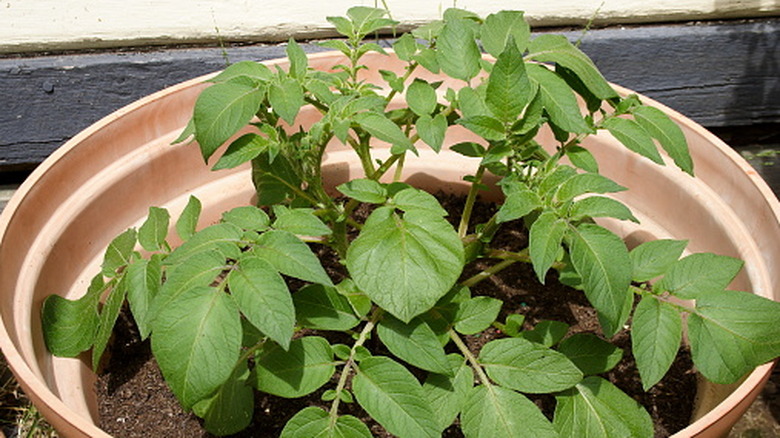
Aside from providing you with the key ingredient for an ultimate, loaded, twice-baked potatoes recipe, growing potatoes in containers has several other benefits. The harvest will naturally be smaller, so fewer tubers will go to waste, and if you store your potatoes in a cardboard box, they'll likely last a lot longer before they begin to sprout. Using pots to grow your potatoes also means you can play around with the over 200 different varieties sold in the United States for an almost year-round supply (again, depending on your region and growing setup). An early variety, like Yukon Gold, is a good first crop, while fingerlings provide mid-season flavor. Eventually, you can be nurturing later-season potatoes, such as German Butterball.
It goes without saying that not every grower is blessed with fertile, productive soil, but using containers filled with nutrient-rich compost neatly sidesteps that problem. If you're making your own compost, it's the only place your green potatoes should go (in other words, don't try to eat them). Potatoes in pots also have a major advantage for your whole garden. The Phytophthora infestans fungus, commonly known as blight, can attack tubers as they grow, but potatoes planted in containers can be moved away from other susceptible fruit or veggies, protecting your other plants from damage. Lastly, your body will thank you for using pots to grow your 'taters, as planting, covering, and harvesting from an elevated container can be much easier on your back!