

What You Need To Know Before Using Coffee Grounds In Your Vegetable Garden
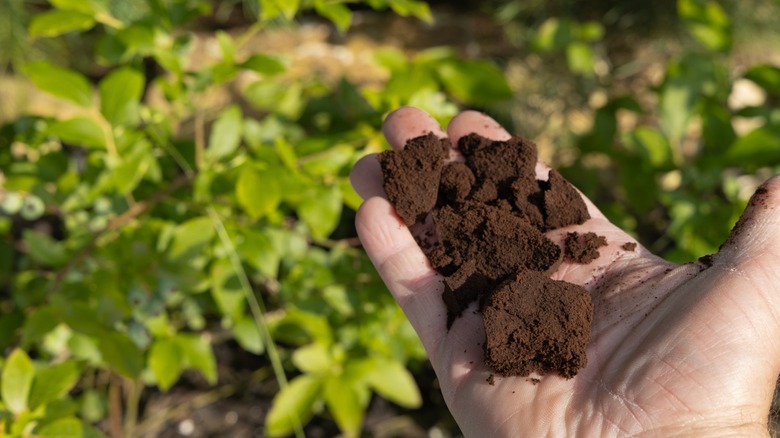
It's human nature to want to recycle or reuse things that might otherwise hit the trash can, especially when it comes to our gardens. Sometimes, this is a hit — remember when we talked about how to repurpose leftover water from boiled potatoes in your garden? — while, other times, our best-laid plans sometimes end up in a bust. Take, for example, coffee grounds. We have a lot of them, and we've seen miscellaneous social media chatter alleging that this refuse material is actually black gold for our garden, whether it's as a fertilizer or a form of pest control. The truth is a bit murky ... just like it was when it came to the topic of coffee grounds' ability to repel ants in your kitchen. In short, coffee grounds have some beneficial applications in your garden, but maybe not to the extent that you hoped. Used correctly and in moderation, however, they can be a boon.
The key is to use coffee grounds sparingly. While coffee grounds have growth-boosting nitrogen, potassium, and magnesium, they don't contain these nutrients in the same densities as commercial fertilizer. It's also true that, if your soil's pH is high, the relatively neutral pH of coffee grounds may help bring it down a scooch. Again, however, the grounds may not be an effective substitute for products you buy at the store. Where coffee grounds actually shine in your garden may not be where you expect them to — they may well do their best work as a slug repellant and in the compost heap.
Use coffee grounds carefully and you may see benefits
The caffeine in coffee may be just the pick-me-up you need to get your day rolling or stave off a late-afternoon nap, but, in spent grounds, it's poisonous to the slugs that might otherwise plague your garden. After all, you want those rare heirloom Noire de Cosebœuf tomatoes on your dinner plate and not serving as a pest's lunch! Spraying a solution of coffee grounds soaked in water on the leaves of your vulnerable plant(s) and the surrounding soil can cause the slugs who cross it to die off from caffeine intoxication. Depending on how much coffee you use in a day, this may not be as cost-effective as a commercial organic pesticide, but you do reap the cool benefits of repurposing trash, which many people find satisfyingly thrifty.
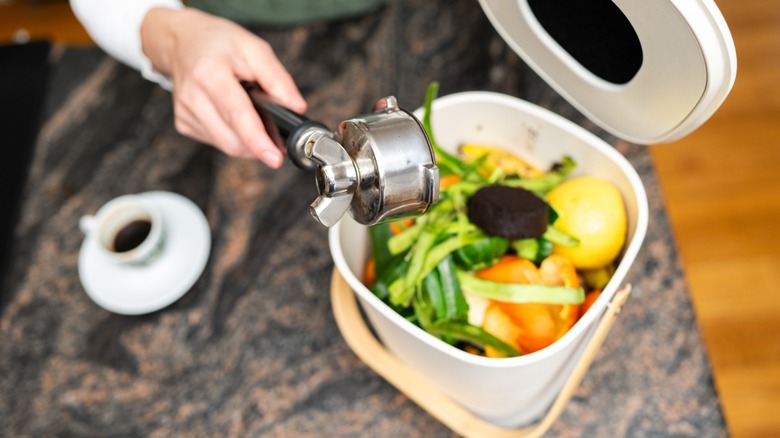
Rather than applying coffee grounds directly to the soil of your plants, consider composting it. When broken down in the compost, your coffee grounds can more effectively release nutrients and microbes that improve soil quality. Remember not to overdo it — you never want more than 20% coffee grounds in your compost, as this can be toxic to your garden. Too much caffeine can not only suppress germination in your plants but may slow their growth or poison them altogether. Composting grounds is especially effective with a mixture of grass clippings and leaves. Three to six months later, the resulting compost will be extra tasty for your plants and their soil, just like that steaming cuppa made you happy when you drank it.