

Snacking On This Fruit Gives You More Potassium Than A Banana Would

Bananas are not only delicious, but they also enjoy a reputation as the be-all,d end-all when it comes to boosting potassium. Come to find out, there's actually a pretty sizable list of fruits with more potassium than a banana, and dried apricots are on that honor roll. Bananas obviously vary greatly in size, but a medium one has, on average, 422 milligrams of potassium. Daily adult potassium needs range from (around) 2,600 to 3,400 milligrams, based on biological sex, meaning that 'nanners are, indeed, a rich source of the good stuff. Just half a cup of snackable dried apricots, on the other hand, will load you up with 755 milligrams of potassium.
Apricots are fruits very similar to plums and are native to Asia. In the United States, the lion's share of apricots consumed domestically comes from California, however. Not only does drying apricots turn them into more compact, nutritionally-dense packages for munching, but it is a more realistic way to eat them, as fresh apricots are incredibly fragile and prone to damage during shipment.
If you want to fuel yourself up with potassium or any of dried apricots' other, numerous benefits (more on that in a moment), you can chop them up in a trail mix, include them in savory-sweet Middle Eastern stews, use them to top your oatmeal, or simply nosh on them by the handful. They're also a fruit that goes splendidly with other diverse foods on your next charcuterie board! It's not hard to eat the minimum half-cup of a full serving, which is both delicious and good for your bodily fluid balance, muscles, and nerve function — all of which are affected by potassium levels.
Dried apricots are all-around nutritional superstars
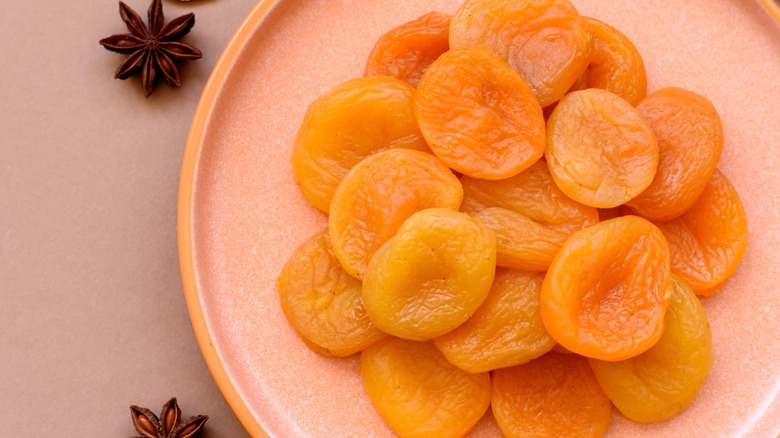
Not only are dried apricots flush with potassium (which may be one of their biggest selling points besides great taste), but they can also bring several other health benefits. This includes a rich dose of antioxidants, specifically flavonoids that can help stave off heart disease and diabetes. Flavonoids may also help combat systemic inflammation, which can lead to a host of negative health consequences. A healthy dose of vitamins C and E in dried apricots can also benefit your skin by combating damage from UV rays. As a less flashy but equally important factor, dried apricots are a great source of the dietary fiber you need to keep your gut health in check, inducing regular bowel movements (via Healthline).
If there's one downside to dried apricots, it's their cost. While bananas are generally not expensive, even in the face of skyrocketing inflation at the grocery store, dried apricots are quite a bit more pricey. Remember that dried apricots are technically a processed product, since they need to be dehydrated, while bananas are pretty much picked and sold as-is. This extra effort is reflected in their cost. While they may be a bit of a splurge, you may find that dried apricots are worth their weight in gold, thanks to the many benefits these little fruits bring along.