

Here's Why Your Homegrown Tomatoes Keep Cracking
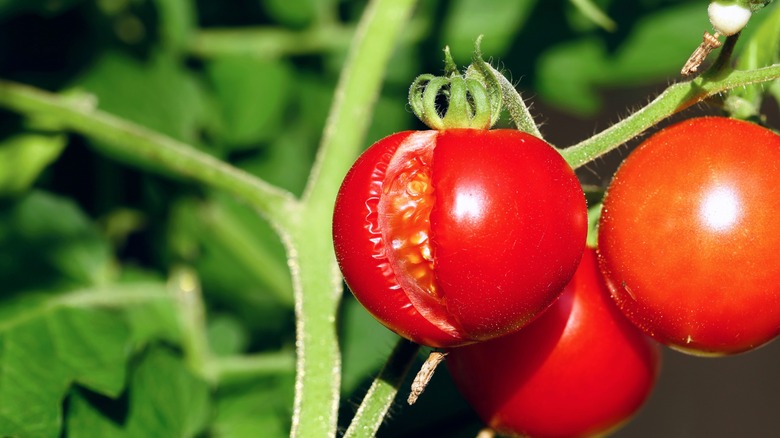
It's one of the most confounding outcomes to growing ripe, juicy tomatoes. You've researched the best fertilizer for gardening tomato plants and selected what plants to grow adjacent to tomatoes for a better harvest. Your soil is aerated, and you've been monitoring your plant babies like a hawk. Why are your tomatoes splitting? Not only are these cracks in the flesh of your tomatoes unsightly, marring the taut, red expanse of the smooth skin, but they also allow rot to seep into the fruit faster than you can cut out the damage. In short, it's a bummer. Why, exactly, do tomatoes split so easily?
Come to find out, the answer has to do with water ... namely, inconsistent levels of it. Tomato plants tend to split when the fruit sucks up a lot of water quickly — faster than the skin of the tomato can stretch, in fact. This rapid expansion causes the delicate skin to break. Even if you maintain a consistent watering schedule, a drenching summer rainshower can undo your hard work by flooding your garden with water and causing those greedy tomatoes to swell too aggressively. Of course, not maintaining a consistent watering schedule can also cause splitting, because, if you allow your plants to get too dry and then douse them with water, the same problem can occur. Are there ways to get around tomato skin splitting? Absolutely ... they just requires some extra vigilance on your part.
Avoiding tomato cracks might take some extra steps
The first line of defense against cracking tomatoes is planting cultivars that are resistant to splitting. This isn't just a marketing gimmick! Certain varieties of tomatoes — there are over 10,000 known ones out there – are less prone to cracking, like plum tomato varieties and those that tend to be more spherical in shape. Celebrity, for example, is a well-known variety of tomato that resists splitting. Note that no tomato is absolutely immune to cracking.
A great watering strategy is also needed to avoid cracking as much as possible. Knowing how often to water your veggie garden is always a concern for gardeners, and this goes extra for tomatoes. They like a lot of water, to the tune of two watering sessions a day during hot weather. Remember to water only the base of the plant, as the roots are what require water ... watering leaves just promotes decay. Surround the base of your tomato plants with mulch to really trap water and encourage good soaking. There's a fine line between happy, hydrated plants and waterlogged ones, however. Good soil drainage is important. If your plants' leaves start yellowing or drooping, you may be giving too much water.
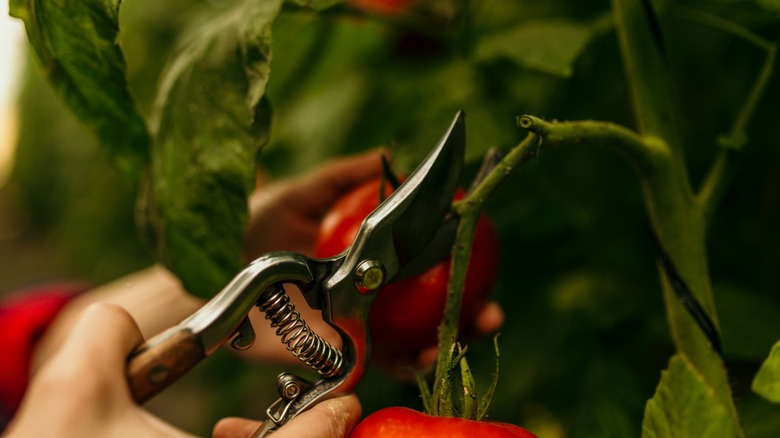
Should you notice a rainstorm is in the forecast, you can stave off cracking by picking tomatoes and bringing them inside. Once tomatoes have started to change color from green to reddish, orange, or yellow, they will ripen the rest of the way on your kitchen counter. Grabbing as many eligible tomatoes as possible before vigorous rain will save those tomatoes from splitting before they can fully ripen, meaning that they'll stay beautiful and good to eat.