

Prune Your Tomato Plants This Way For The Healthiest Harvest
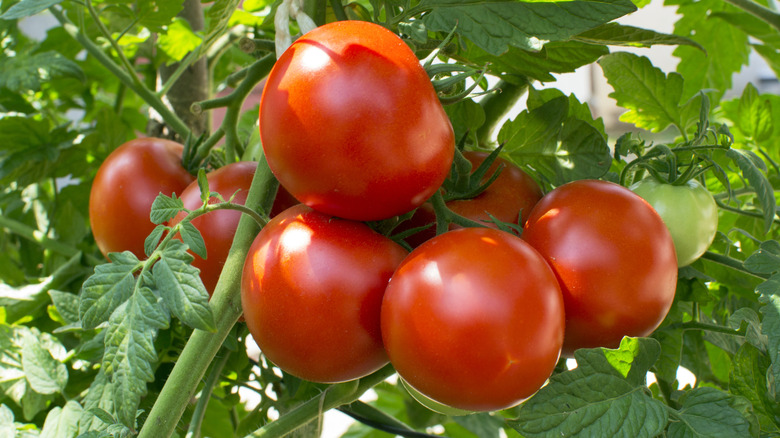
You could be forgiven for thinking that using the best fertilizer to guarantee a hefty tomato harvest would be job done as far as these salad veggies are concerned. Sadly, it just ain't so. Apart from keeping any weeds to a minimum with regular hoeing, there's the small but vitally important job of pruning your tomatoes. Before you head outside with freshly sharpened shears, hold your horses, because you first need to know what kind of tomato plants you have.
We're not just talking about the variety, though of course that matters in terms of general tomato care. These plants fall into two distinct categories: determinant and indeterminate. The former tend to be smaller, grow in a bush form, and all the fruit appears at the same time. Indeterminate tomatoes grow like vines, with grouped fruit that continues to appear throughout the season. You generally don't want to prune determinate tomatoes since it can hinder fruit production.
For indeterminate tomatoes like San Marzano, which make a delicious home-made sauce, the work starts early, when they are 12 to 15 inches tall. You're looking for shoots (also called suckers) that appear at the start of the season in the crook of the main stem and a branch. Smaller ones can be easily pinched out with finger and thumb, or you can carefully use secateurs if they've sneakily grown a little bigger.
Your tomatoes and salad bowl will thank you for nipping (some of) those suckers in the bud
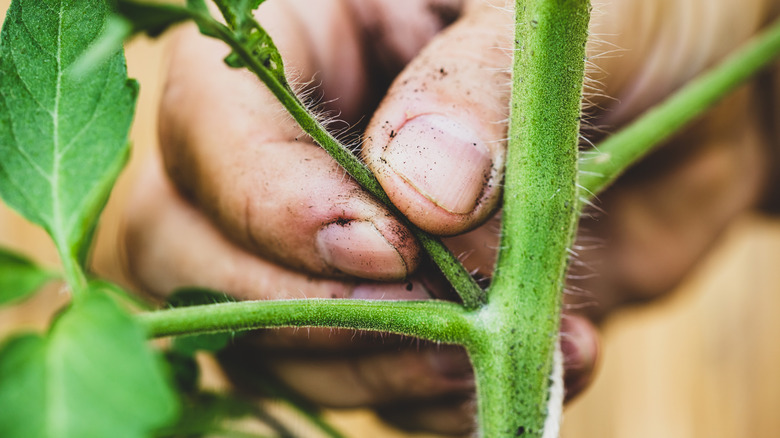
There are lots of benefits to pruning indeterminate tomatoes, not least encouraging the main plant to focus its energy on growing upward and fruiting. Keeping indeterminate suckers to a minimum also helps if your tomatoes have been planted fairly close together, because it prevents them from becoming a tangled mess.
Pruning also helps ensure plenty of air flow around the plants, again reducing the threat of disease. As well as strengthening the vines, getting rid of suckers can also accelerate ripening and give you bigger tomatoes. All that being said, there are times when it's wise not to prune suckers from your indeterminate tomato plants. If there's a flower immediately above a side shoot, let it be, as removing it could cause uneven growth and fewer fruit.
If you live in a location with lots of sunshine, it's worth leaving a few suckers to mature so their leaves provide shade for other species in the garden, and it can also prompt the generation of more fruit higher up the tomato plant. If you're still harvesting armfuls of toms in the last weeks of the season, cut off each stem's growing tip to encourage existing fruit to ripen fully but prevent the plant producing any more. If your tomatoes are proving to be tricky early on, try planting one of these companion species next to them.