

Forget Tomato Cages: This Cheaper Option Works (And Looks) Way Better
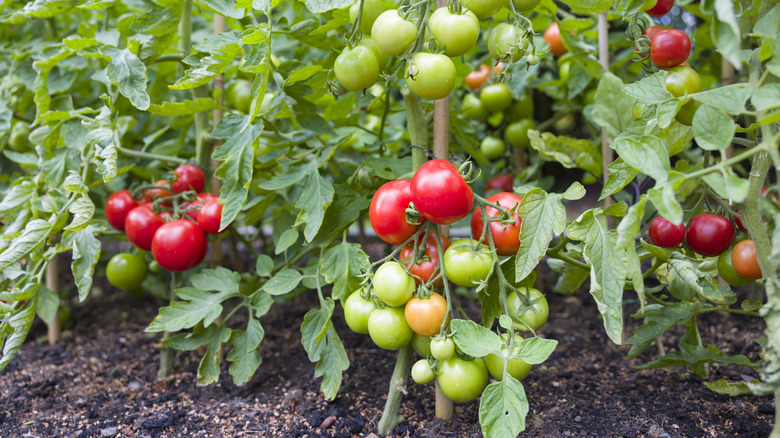
The internet has been a gift to the gardening community, as green-thumbed enthusiasts learn about and try new trends. One particular tool has sown online division among growers: tomato cages. Many won't consider using anything else to support their plants, while others have ditched them in favor of the trellis, which can be cheaper and look better. So, who is right? Let's take a closer look.
Tomato cages do have their advantages, especially for smaller, determinate tomato varieties, and they can be convenient if you've got limited gardening space. However, mature plants in cages can look messy, air can struggle to move around them, and top-heavy cages have an irritating tendency to fall over. They also gobble up storage space when they're not in use, and only really have one purpose. Taking all that into account, we can see why many gardeners are switching to Team Trellis.
Trellises can be installed quickly and made from cheap, easy-to-store materials like stakes and twine. They also have a particular advantage when it comes to indeterminate tomatoes. These grow throughout the season like vines, reaching 6 to 8 feet in height, so they can be overwhelming for cages. A trellis, on the other hand, gives each plant something robust to cling to as it expands to full maturity. You can sink them into a garden bed, a patio pot, or straight into the ground. There's a huge range of trellis styles out there, from this cheap Dollar Tree find to elaborate wall, triangle, or arched designs in wood and metal. Choosing the right one depends on what you want your trellis to do, the room you have, and how long you want it to last.
Make your own trellis with a couple of low-cost materials
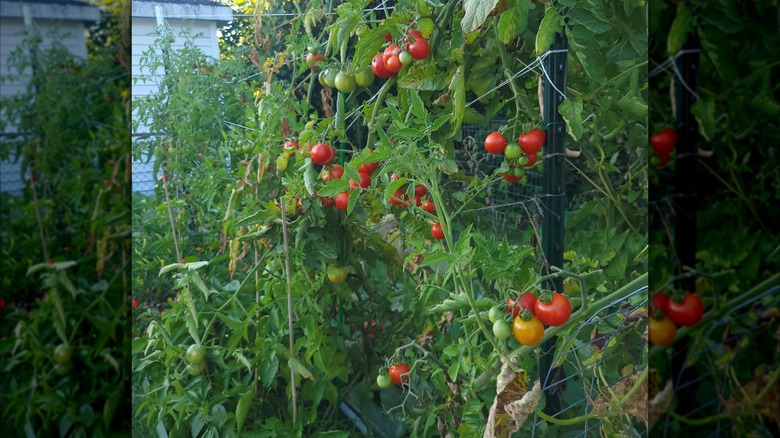
If your gardening ambitions are hampered by the twin issues of space or budget, we've got you. There's another option that can cost next to nothing, takes up minimal storage space, and can be used for other climbing plants. All you need to make your own Florida weave trellis is some wood, bamboo, or metal stakes that are around 8 feet long, and a roll of garden twine or a strong type of string.
This style is best constructed when your tomato plants are fairly small. Simply hammer the stakes firmly in the ground along the same line as the plants, tie the string at one end, run it across the front of the tomato plant, loop it around the other stake, then string it along the back of the plant and tie it off where you started. The tomato plant should sit between the two fairly taut lines without being damaged. As the plant grows, you can add more strings higher up the stake.
As well as allowing for all-important air flow around the plant, this DIY trellis works for both determinate and indeterminate plants, not to mention lots of peas and bean varieties! Assuming your stakes are solidly placed, your trellis can withstand heavy weather while also creating a glorious green screen dotted by colorful, ripening fruit. When the season's over, gather everything up and store it in a box, ready for next year. If you use wooden stakes, keep an eye on the parts that go in the ground as they can degrade over time.