

A Cup Of These Berries Has More Fiber Than Quinoa
We may receive a commission on purchases made from links.
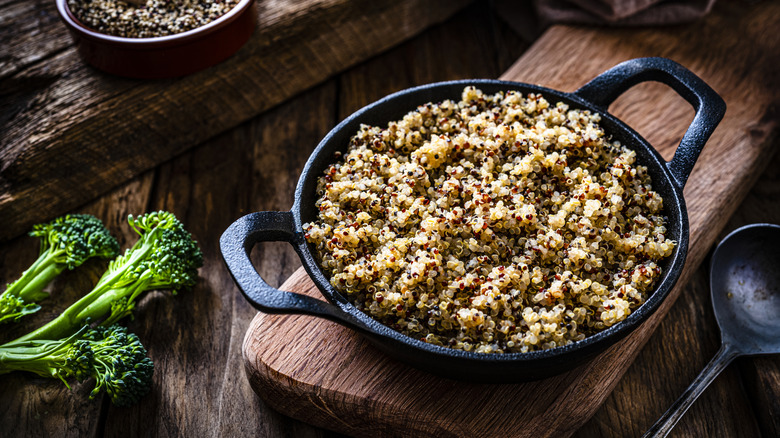
Every adult in the United States knows they ought to eat more dietary fiber, considering on average we have 10 to 15 grams per day, far less than the recommended amounts, which change depending on our age and gender. For years, experts have failed to move the needle on consumption but change is happening thanks to social media's fibermaxxing trend, i.e., as packing as much fiber into meals as possible. Amid the debate about the difference between whole grain and whole wheat bread, many people have embraced quinoa which, when cooked, packs 5g of fiber per cup. That's great, but quinoa doesn't bring much to the table taste-wise. For a double whammy of 8g of fiber and lashings of flavor in a single cup, you need raspberries.
They're among the most popular fruits in the U.S., alongside blueberries, blackberries, and strawberries, with California one of the country's leading producers. Harvested in the summer and fall (depending on the variety), raspberries come in shades of yellow, red, and black. Like quinoa, these tart, sweet fruits are gluten-free and a good source of protein — but that's just the tip of the nutritional iceberg. They might not be among our list of fruits with more potassium than a banana, but you'll still get a not-to-be-sniffed-at 18.5 grams of potassium from a cup of raspberries.
Fresh or frozen, raspberries are a flexible delivery device for dietary fiber
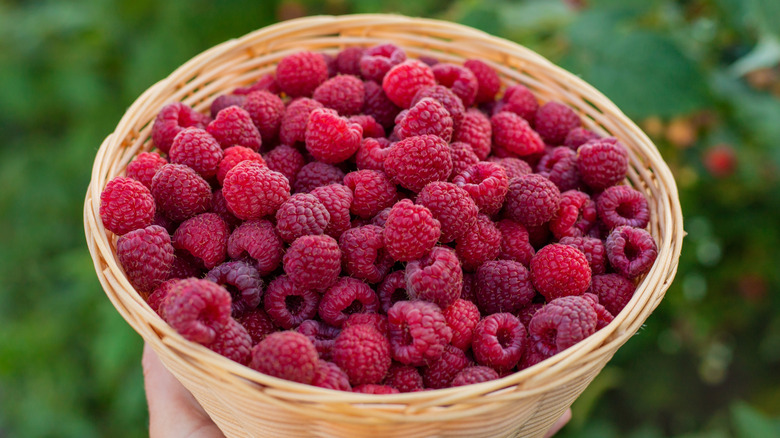
Like quinoa, which is good in both sweet and savory dishes, raspberries are also versatile dietary fiber delivery devices. There's more to be gained than a color and flavor burst; the health benefits are off the hook. As well as improving our digestive health and keeping us regular,eating enough fiber every day can also help reduce blood pressure and the risk of developing type 2 diabetes, heart disease, or stroke. That cup of raspberries also contains vitamin C and several antioxidants to assist in repairing your damaged cells.
The best news of all is we don't have to wait for raspberries to be in season to get our hands on them. Studies have shown that frozen raspberries and pureed fruit remained good sources of dietary fiber, so year-round versions are just as good as their fresh buddies. Now there's no excuse not to toss a handful into a daily bowl of oatmeal and add zing to breakfast, or add them to whole wheat muffins for a delicious — if somewhat sneaky — extra dose of fiber for the whole tribe. Home cooks who love to add a tangy sauce to pulled pork or duck can add blitzed raspberries to their repertoire too.