

Don't Throw Away Those Pruned Tomato Leaves And Suckers. Use Them For Pest Control Instead
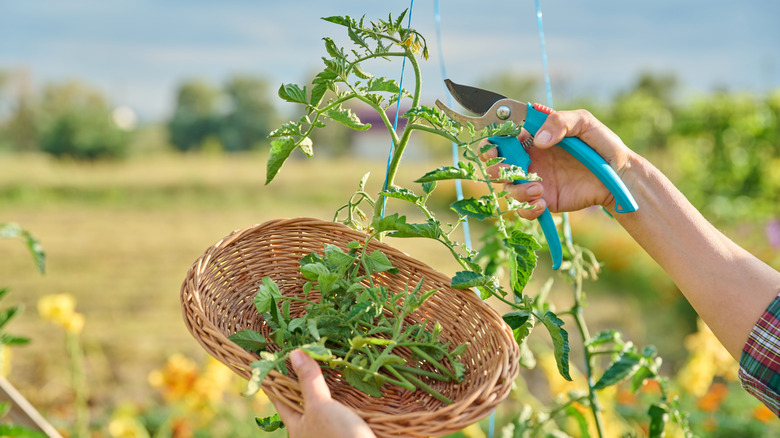
More than half of shoppers across the United States choose to buy organic tomatoes, and the use of chemical pesticides is a key factor in that decision. Gardeners who have witnessed entire crops decimated by insects know there is a need for some sort of pest control, however. The pruned parts of tomato plants can help deter one of their biggest threats: aphids. These tiny green bugs cluster on the underside of leaves and are the bane of many a tomato grower. Not only do they feast on new leaves, hindering growth, but they also release a sticky liquid that ants love and allows mold to stick to the plant.
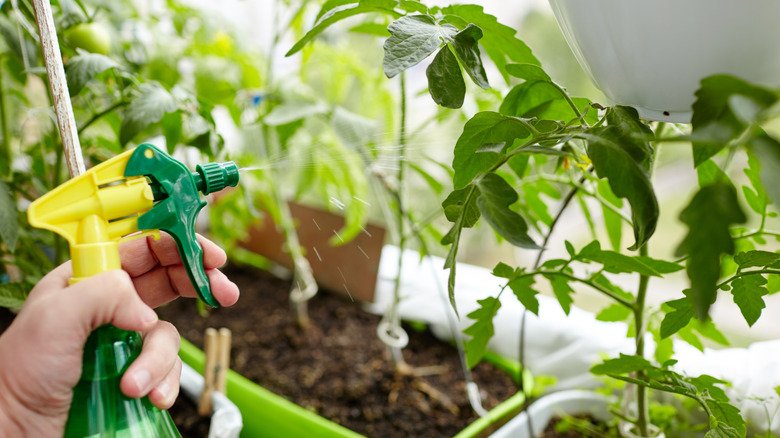
Next time you prune your tomato plants, don't throw the leaves and stems away. Chop them up finely (an old blender can be useful here), then the results steep in water for 24 hours. Drain the liquid into a spray bottle and spray it on those aphids.
Gardeners across social media say the liquid is packed with alkaloids that occur naturally in tomato leaves, and a research review published in Discover Agriculture suggests that tomatoes could be used to create effective biopesticides, while a 2021 study in BMC Complementary Medicine and Therapies noted possible antimicrobial properties of tomato leaves and stems. It's worth noting that tomato plants are members of the nightshade family, meaning exposure could be harmful to people with a sensitivity or could produce contact dermatitis. Wear gloves when gathering the leaves, and don't be too heavy-handed when using the spray. Likewise, avoid using diseased tomato leaves when making up the spray, as it could do your plant more damage than good.
You can do more with your tomato leaves and suckers than control bugs
Just as there are better uses for banana peels beyond simply composting, so it goes for pruned tomato leaves and suckers. Many plants in our gardens and other green spaces can be turned into teas (we're looking at you, mint and nettle), and you can now add tomato leaves to that list. It's earthier and more savory than most infusions, though some caution that the solanine and tomatine in them can be mildly toxic over frequent use. Still, a number of experts, like Auburn University professor and food safety specialist Camila Rodrigues, who spoke to Southern Living on the matter, note that using properly washed tomato leaves in the kitchen is generally fine. Tomato leaves and their stems are also edible, though perhaps best enjoyed cooked. Some note their flavor is almost medicinal when eaten like greens, but they are great for bringing extra depth to some recipes as part of a bundle of herbs.
Bringing it back to the garden, you can also use clippings in compost to make a compost tea for your tomato plants. A couple of days steeping compost in non-chlorinated water can give you a nutrient-packed liquid feed, which can contain garden-friendly microbes that will encourage better soil and plant growth.