

How To Get The Maximum Lifespan Out Of Your Refrigerator
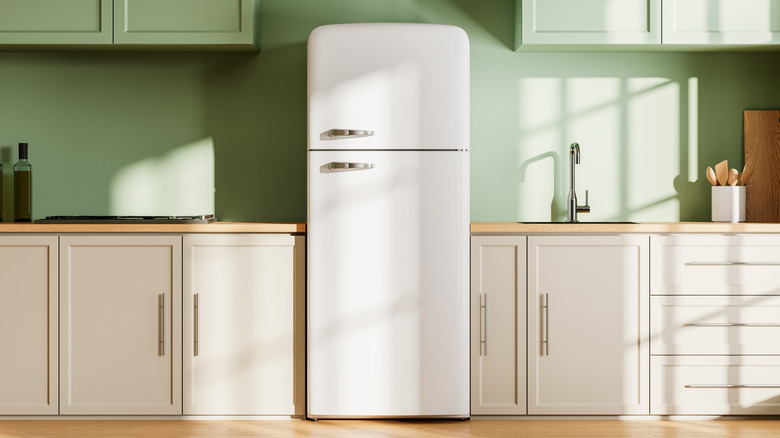
Ten points to anyone who has thought to themselves, "They don't make 'em like they used to," when replacing their fridge. The internet is full of stories from people whose refrigerators are still going strong after decades, while everyone else's seems to give out after a couple of years. While that's not exactly true — the average lifespan of these kitchen stalwarts is around 10 years, according to the Association of Home Appliance Manufacturers — it's easier than you think to keep your fridge purring like a cool cat for the long term.
Many of us keep our fridge extra cold, so everything inside lasts a little longer. That's great for our food budget, but for the compressor, not so much. That's because it's forced to work harder than it really should. Maintaining your fridge at the recommended temperature of 40 degrees Fahrenheit means the food inside is perfectly safe to eat, and the compressor shouldn't burn out prematurely.
Now, if you didn't already know that there's an order in which to store food in your fridge, it's worth taking a good look at what's on those shelves. Are they crammed to bursting with stuff, or in desperate need of this kitchen organisation tool? If so, that's a double blow to your fridge's performance. If things are packed too tightly, cold air can't flow properly. It can also mean that, while you're busy digging out dinner, the door stays open for longer, increasing the internal temperature. Before you shut — never slam — the door, check the seals (also known as gaskets) for any damage or build-up of dirt or mold. Keeping them clean and dry will maintain a better seal and prevent the fridge compressor from having to work overtime.
What goes on outside your fridge plays a key role in its lifespan too
There are lots of essentials that go into kitchen design, but where you put your fridge probably isn't among your first thoughts when planning out the space. Yet it's a crucial factor in maintaining energy efficiency and maximizing the appliance's longevity. Be sure to place it away from sources of direct heat, and leave enough space — at least one inch — around the fridge to allow a good flow of air. And is it sitting level? Many modern appliances have adjustable feet to compensate for the most uneven kitchen floors, but using a bubble level will ensure your fridge is not standing even a little crooked and putting pressure on the motor or seals.
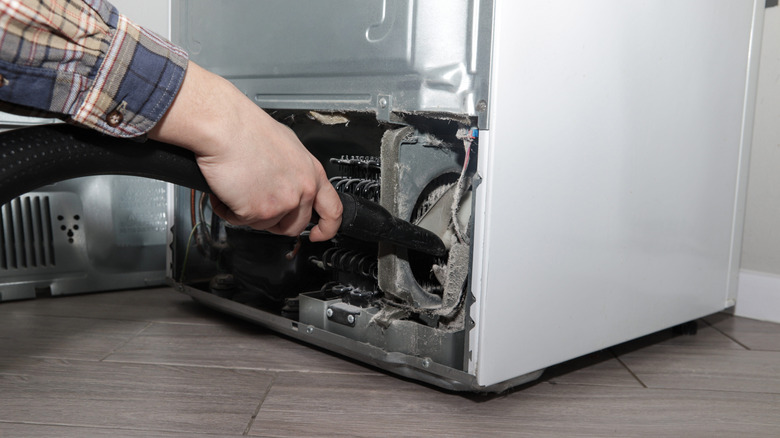
While you're at it, take a peek at the top. This space on fridges can be a magnet for clutter (ours definitely is), but unless your machine's instructions say it's okay to do this, keep the space clear so heat can dissipate properly. Giving the back of your fridge a little TLC will also help extend its shelf life. A couple of times a year, gently vacuum any dust and debris from the condenser coils to ensure they stay clean and work efficiently.