

The Powerhouse Condiment That Used To Be Considered Medicine
In 2000, Heinz launched green-colored EZ Squirt ketchup. It sought to make dipping fries into the sauce even more fun and maybe prove that eating your greens wasn't all bad. The range was expanded to include other wild shades, but the novelty condiments were consigned to history by 2006. We look back on it now and wonder, "What were they thinking?" ... but it wasn't the first time tomato ketchup was at the center of a bonkers food trend. In 19th-century America, ketchup — also known as catsup — was sold as a legit medical treatment for everything from jaundice and indigestion to diarrhea and "bilious attacks."
The driving force behind this campaign was Ohio doctor John Cook Bennett, who, in 1834, developed a ketchup he claimed would cure the aforementioned ills, thanks to one of its key ingredients: tomatoes. First hailing from South America, tomatoes were brought to Europe by Spanish Conquistadors, where they were long viewed as poisonous (just one of the fascinating facts about tomatoes). However, in mid-18th century England, doctors began using the fruit, which they occasionally dubbed "love apples," in their concoctions. This practice soon made its way across the Atlantic. An 1812 ketchup recipe from Philadelphian James Mease was among the first on these shores to include tomatoes, paving the way for the fruit to become a medicinal must-have.
The incredible claims behind the ketchup craze
Mease was among many people who worked hard to rehabilitate the tomato's reputation. In one extreme demonstration in 1820, Salem horticulturalist Robert Gibbon Johnson chowed down a full basket of tomatoes in front of an astonished crowd, hoping to persuade New Jersey farmers to plant them. He succeeded, and tomatoes went on to become an important crop in the state.
Cook Bennett, who became a member of the Church of Jesus Christ of Latter-day Saints after moving to Illinois, had by 1840 persuaded local Mormons that tomatoes were good for stomach aches. By this time, the belief that tomatoes — and by extension, ketchup — worked as a medicine had taken firm hold in the United States. Sales of so-called tomato pills quickly spread in pharmacies as some doctors (but also many charlatans and quacks) capitalized on the booming health trend, claiming their tomato pills could cure everything from syphilis to broken bones.
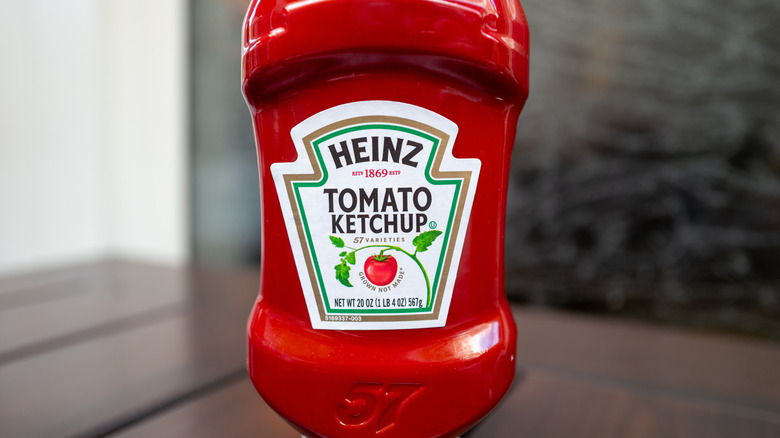
By 1865, the craze for ketchup as medicine and tomato pills started to die down, helped by scrutiny from professionals and groups like the American Medical Association. However, the tomato was now established as a favorite food among U.S. consumers, and into the frame stepped Henry J. Heinz. His company, launched in 1869 and one of the oldest U.S. food brands still around today, originally sold pickles and sauerkraut. In 1876, the range was expanded to include a tomato catsup. Heinz bottled it in transparent glass, before tweaking the label to include the word "tomato" and, in 1890, changed its name from catsup to the ketchup tucked inside millions of fridges.