

The Boomer Meat-Cooking Habit That's Better Left In The Past
We may receive a commission on purchases made from links.
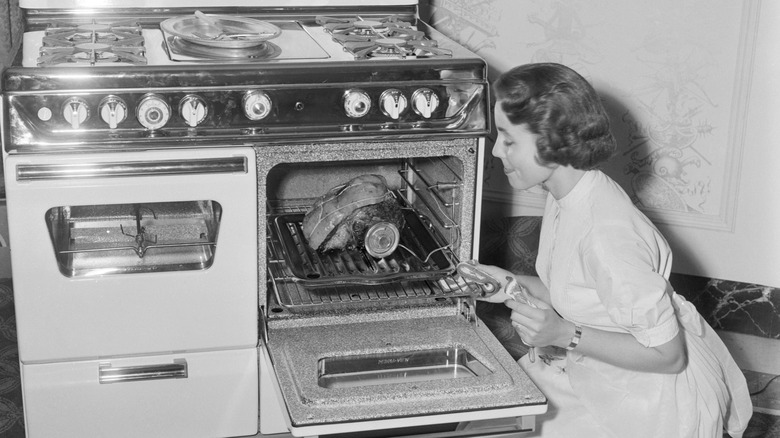
Is there anything worse than biting into undercooked chicken or pork? The merest hint of pearlescent flesh sends us running to the microwave (if you've still got one) to nuke that meat into oblivion – taking every scrap of flavor with it. The overcooking reflex was perhaps passed on by boomer parents and grandparents, who long sought to eliminate foodborne nasties that could make us sick. However, the habit of overdoing chicken and pork among many boomers no longer has a place in 21st-century kitchens.
Regulation of the United States meat industry began in 1906, but it took another 90 years to pass a law reducing microbial pathogens on raw products. If they're struck with a pathogen, pork and chicken are most likely to be contaminated with Trichinella, salmonella, and Clostridium perfringens. For decades, we were told they had to be cooked at high temperatures and for long enough to kill them. While generations of home cooks got used to eating dry, overcooked meat in the belief that it was safer, evidence suggests the official guidance — and boomers who carefully heeded it — may have played it too safe.
According to The Cooking Lab's "Modernist Cuisine: The Art and Science of Cooking," some of the USDA's and the Food Safety and Inspection Service's (FSIS) recommendations were founded on seriously unlikely worst-case contamination levels, while others were based on "politics, tradition, and subjective judgment" (via Scientific American). Coupled with the widespread public belief that chicken was covered in salmonella (weirdly American eggs are generally not, unless you wash them) and pink pork carried a risk of trichinosis, it's easy to see why so many boomers got into the habit of overcooking mea.
New insights and revised guidelines have helped do away with overcooked meat
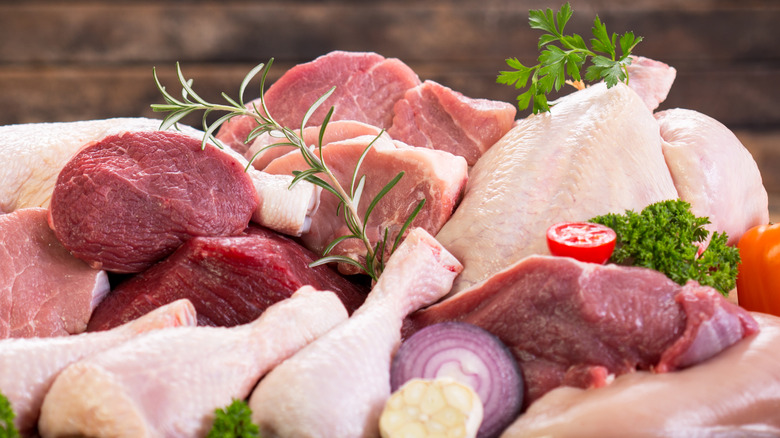
Some people say thermometers were to blame for boomers consistently overcooking meat, because they replaced learned experience about doneness with a reliance on a tool to tell them when food was safe. There's a grain of truth in that, but it's also worth remembering home cooks at the time were getting information from cookbooks, as well as government experts.
Changes in how pigs are farmed and processed increased understanding about how pork contamination happens, insights that enabled the FDA to alter its cooking guidance in 2011. Today, pork cooked at 145 degrees Fahrenheit, then left to rest for at least 3 minutes, is regarded as both safe and at its best texture. That's great for anyone who loves a pork chop, but what about chicken?
Official USDA guidance still calls for it to reach 165 degrees Fahrenheit internally, though The Cooking Lab championed chicken cooked at 136 degrees Fahrenheit was "neither rubbery nor pink," as FSIS suggested, and criticized advising home cooks to continue overdoing their poultry. There are many mistakes you can make when cooking chicken thighs, but if you do so at a lower heat, they must be kept at that temperature for longer to kill any pathogens. For example, chicken cooked at 140 degrees Fahrenheit needs 29 minutes.