

Turkey Shouldn't Just Be For Thanksgiving: Here's One Of The Best Ways To Cook It On The Grill
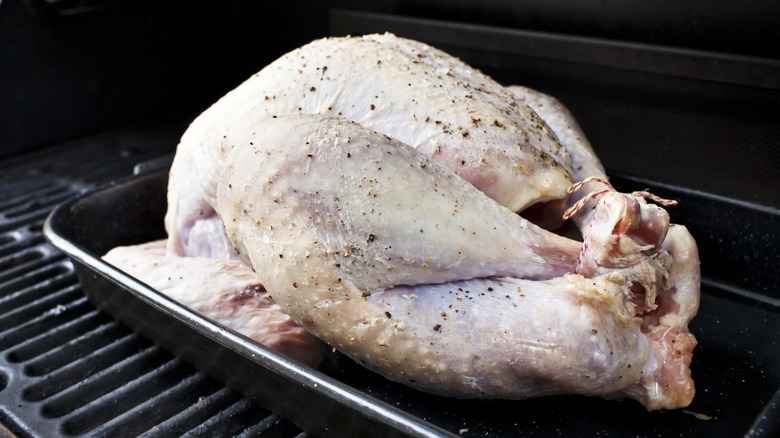
Assuming you avoided all the common mistakes that crop up when cooking a Thanksgiving turkey, what if we told you grilling it was a faster way to create that festive centerpiece? Picture the scene: the turkey is doing its thing on the grill, all the oven space it usually gobbles up is free for your sides, and the anxiety that's often part of preparing this annual feast takes a vacation! Sounds great, right? We haven't even told you the best part: spatchcocking. Doing this to your turkey practically eliminates all those hours spent hovering over a hot stove. Let's dig into it.
Spatchcocking (not to be confused with butterflying, which is more typically a way to cut meat or fish) is a popular method of preparing all kinds of poultry, including your Thanksgiving turkey. It involves removing the entire backbone with either a good boning knife or a solid pair of scissors or shears, allowing you to lay the poultry flat. You can use skewers to hold the legs in place (this is handy for bigger birds), and don't forget to add that backbone to a stock pot for a delicious gravy.
The beauty of spatchcocking is that it allows an entire bird, no matter the size, to be cooked evenly; no desperate basting to prevent the breast meat drying out while the legs catch up! The grill not only frees up precious oven space, but any smoke will also imbue your Thanksgiving turkey — which, let's be honest, isn't the most exciting of meats on its own — with even more flavor.
You still need to prep the meat and grill for perfect results
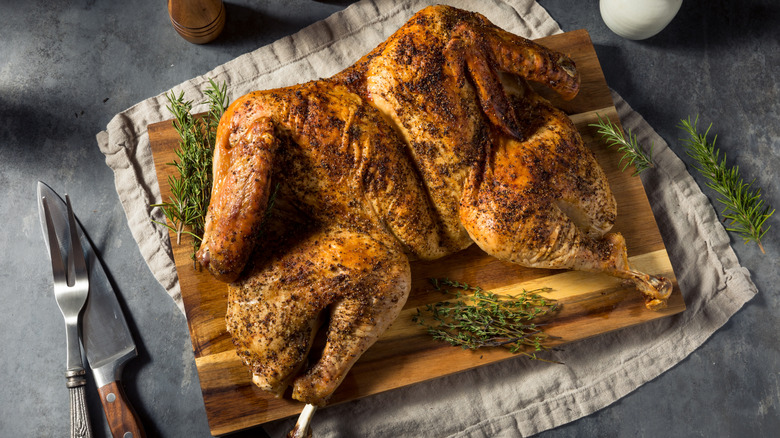
Although cooking your spatchcocked turkey on a grill will be faster, the time savings will be all for nothing if you sidestep the all-important preparation. Brining your turkey for several hours is crucial to ensure you end up with juicy, delicious meat when all's said and done. If you're struggling for a container big enough to hold your bird and brining liquid, Alton Brown's clever brining method has got you covered. After brining, add your chosen rub or glaze and place the turkey on the grill, taking care to place the thicker parts of the bird closer to the heat than the breast so it doesn't overcook.
It's just as important to get the grill prep spot-on, too. Whether you're using gas, electric, or coals, you'll need to have the right level of heat intensity in the appropriate zones before you put your spatchcocked bird on the grill. Use a thermometer to monitor the temperature, which will vary depending on whether you're cooking low and slow or need faster results (not to mention building direct and indirect heat zones when possible). For the turkey, a meat thermometer will best identify when the legs hit the recommended 165 degrees Fahrenheit. The breast should be a little cooler, at around 150 degrees, at which point you can remove the turkey and let it rest for about 20 minutes.