

Forget Banana Peels: This Underrated Kitchen Scrap Will Help Your Veggies Grow So Much Bigger
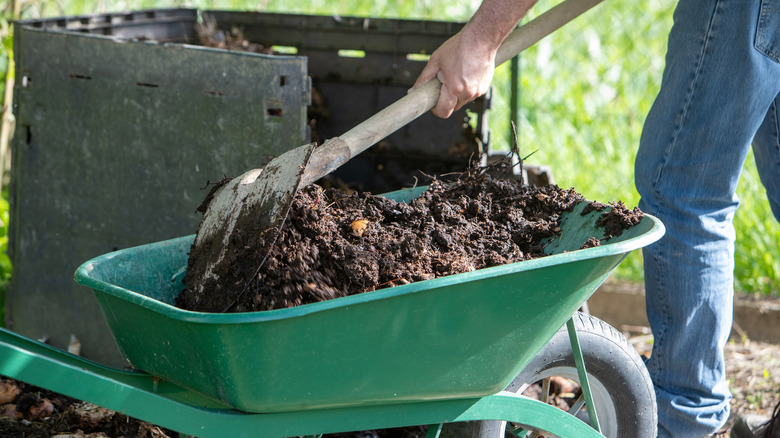
Every gardener planting veggies hopes they'll be harvesting armfuls of home-grown goodies at the end of the season. Adding fertilizers with the right ratios of nitrogen, phosphorus, and potassium to the soil is a well-worn shortcut to bigger vegetables, but it's not the only way to boost the size of your harvest. For many green-fingered enthusiasts, composting is the way to go. It's often a cheaper method of enriching your soil and a sustainable way to use up all sorts of kitchen scraps. One of the best additions to every compost heap or machine is corn husks, silks 'n' all!
Experienced composters know that compost is not just a random pile of rotting food and cut grass. Compost is a carefully nurtured blend of different organic materials that slowly decompose to create a nutrient-rich addition for the soil. Properly put to use in your garden, it will boost the size of your veggies, whether you're growing them in beds or an array of space-saving planters.
Corn leftovers in particular are a welcome addition to the essential "brown" layer of your compost. That's stuff including dead leaves, cardboard, and even human and pet hair that is high in carbon, an essential source of food for the microorganisms that break it all down. In contrast, nitrogen-heavy coffee grounds, lawn clippings, and veggie and fruit leftovers (hello banana peels) make up what's known as the "green" layer. As well as adding a long, slow boost of carbon, a corn husk or corn cob's shape helps create gaps within the compost layers, allowing air to circulate and helping everything inside to break down and become rich food for your soil.
Corn husks help strike the balance between carbon and nitrogen layers
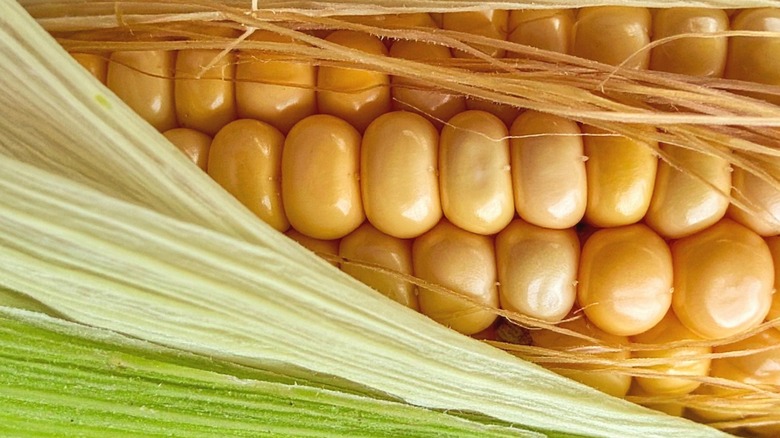
A well-constructed home-made compost should have a rough ratio of two-thirds brown matter to one-third green, and be turned regularly to introduce air. Too much nitrogen can be disastrous for some veggies, so it's vital that the carbon-rich brown layers are deeper than the green ones.
If you grow your own corn, you can also compost the stalks after the cobs have been harvested, making it a truly sustainable veggie. Every part of this plant will increase the pile's carbon levels, and if you want them to break down faster, chop 'em up before you add 'em. You can add any leftover corn kernels too, as long as they're free of any butter, dairy-based sauces or oil. Not only do dairy or other fatty ingredients hinder the decomposition of the materials in your compost, but they can also smell awful after a while — and attract unwanted attention. The last thing you need after spending time carefully nurturing your compost is to find it pulled to pieces by scavenging animals.
Sim whether you're cooking your corn in the air fryer or adding it to your homemade ice cream, every time you eat it, you can rest easy knowing that your tummy and your garden will both get the benefits of this delicious food!