

How To Build A Bigger Sourdough Starter For Those Larger Recipes
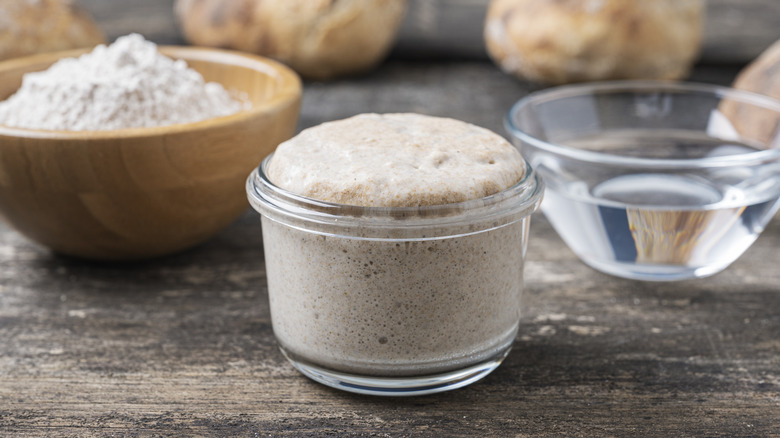
Making sourdough starters took off in a huge way during the COVID-19 pandemic, and it's still very much a Thing in the United States. If you're a newcomer, check out the advice Nicole Bean gave us on feeding a sourdough starter. Now, making and baking a single, perfect loaf is one thing, but what happens when you need to feed a whole crew? Well, you're gonna need to do a little math and play around with the standard ratios.
The simplest sourdough starter needs equal amounts of flour and water (if you're planning to use tap water, test it first) and is fed and grown over several days. Known as 100% hydration, this mix is used in a wide range of sourdough bread recipes. Almost all of that carefully nurtured culture has to be discarded to give the yeast some oomph and dial down acidity, leaving a tiny scrap of precious starter for all your future bread needs. When the time comes for a larger recipe or a bigger number of loaves, scaling up that starter is easier than it may first appear.
If your recipe calls for 200 grams of starter but you only have 50 grams, divide the amount you need in half to determine how much flour and water to add to the starter. In this case, 100 grams of both will give you 250 grams of starter, more than you require. That's a starter-flour-water ratio of 1:2:2, though this step works however far up you scale the numbers; for example, 1:3:3 would see your 50 grams of starter join 150 grams each of flour and water. Using these higher ratios obviously increases the amount of starter, though it will likely need more rise time and will slow starter activity overall.
Playing with the starter ratio can be fun, but don't be tempted to use too much
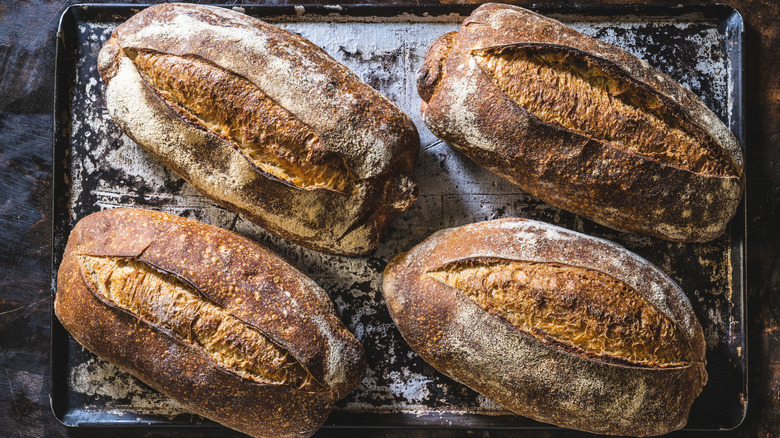
Things get a little more complicated when you start to fiddle around with the ratios for those bigger sourdough recipes. It can be tempting to begin with a hefty amount of starter to speed up fermentation if you're in a hurry, which can work for some things, like pancakes or brioche. But for sourdough bread, using less starter and a slower fermentation will result in better flavor, because the yeasts and bacteria will have enough time to do their jobs properly. Using a more established, yeast-filled starter also makes fiddling with the ratios more reliable.
Using more flour (for example, 1:2:1 for 50 grams of starter, 100 grams of flour, and 50 grams of water) will result in a "stiffer" starter. Adding more flour also adjusts the hydration of the finished sourdough, changing its texture while also giving it a milder, less acidic flavor.
While changing your starter ratios can lead to some interesting flavor and texture developments, it's also vital to make sure your measurements are spot on when bulking up your starter for bigger recipes, lest you end up with runny goop. Using a different flour (sometimes a watery starter needs a dash of whole grain to sort things out) can help keep everything moving in the right direction. As always, the ambient temperature during fermentation can speed up or slow down the whole process. If you do have any leftover homemade sourdough slices, this tip will help refresh them.