

Skip The Stove: This May Be The Ultimate Hands-Off Method For Cooking Salmon
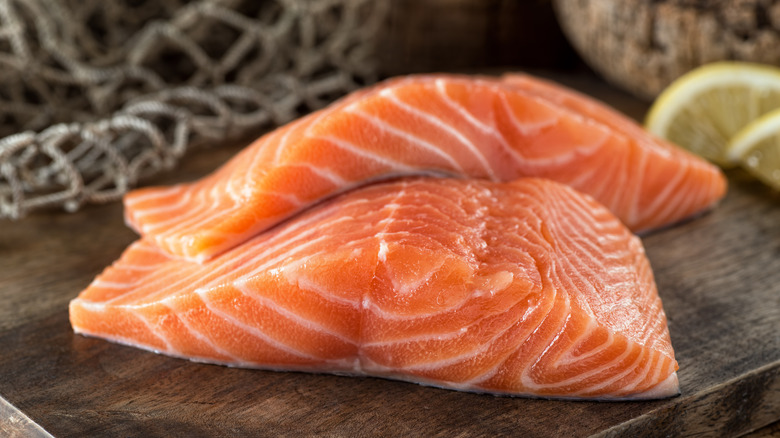
Why would you want to cook salmon in a slow cooker? It's a legit question and one that many foodies have posed on social media. Many home cooks veer between grilling or poaching their salmon fillets (one of which is the easier technique), while others say pan-searing or baking is the way to go. To all those methods we'd happily add the slow cooker. Used right, it produces delicious, juicy fillets of salmon every single time, without you having to hover over a skillet or watch the oven like a hawk for that tense moment when fish slips from perfection to overcooked disaster. A slow cooker lets you set it and forget it. That's not the only benefit, either.
The immediate assumption is everything you put in a slow cooker will take all day (or, if you do things safely, all night) to cook, but that's just not so. A couple of hours will do the trick, and although some sources warn home cooks not to exceed that time limit, there does seem to be a bit of elasticity even there. One Facebook commenter said, "Did salmon fillets [a] few times. Turns out lovely. Few hours on low," while another said their salmon was done by the time they got back from a one-hour dog walk.
Another flexible point is what temperature to set the slow cooker for salmon. Some people insist only the low setting should be used, while others have set their machines to high and claimed to have had delicious results. We'd err on the side of caution if you're trying it for the first time, so stick to low heat.
Tip for slow cooker salmon success
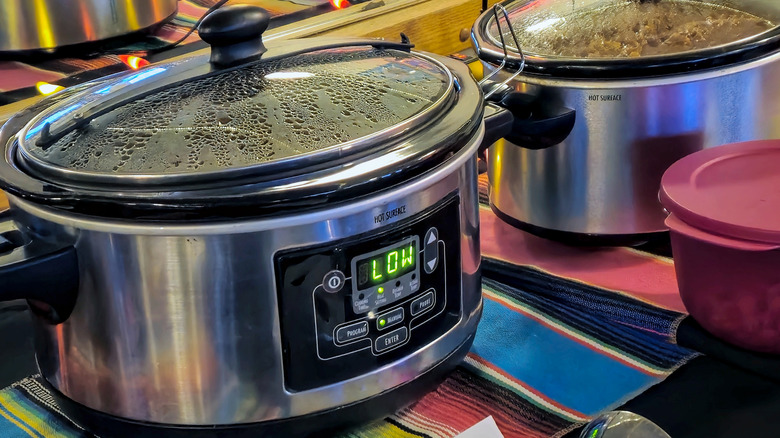
There are a few tips that are indispensable for slow-cooking salmon. The first: get a good piece of fish for the job. Avoid salmon that looks discolored or gray (it's a sign it's past its best), choosing a fillet that has a clean cut, is nicely pink, and glistens. There's a whole array of salmon sources and preservation methods out there, so if you're unsure, ask a store employee or your local fishmonger for advice.
While some say you can slow-cook frozen fish fillets, it's not strictly advised as it could give bacteria enough time to grow before the salmon reaches the USDA-recommended safe internal temperature of 145 degrees Fahrenheit. Consider slipping in a sheet of parchment paper under the fish — the last thing you want is for it to stick! You can cook one or two fillets or bigger batches of fish, stacked up between parchment paper layers.
Arguably the biggest drawback of slow-cooking salmon this way is that you won't get crispy skin — but some say it's a small price to pay for so much convenience. The best-cooked ones are great as main dishes, but any fillets that are a touch overdone can be frozen, added to soups and casseroles, or made into fishcakes. You can also use the slow cooker for veggies served alongside your fish. When they're all cooked, tip the juices into a pan, add a little cornstarch, and whisk it into a delicious sauce to drizzle over your salmon.