

These 3 Foods Have More Vitamin K Than Cabbage
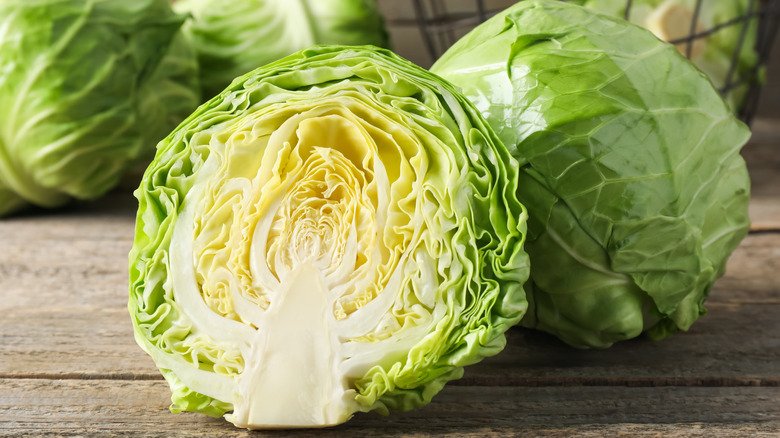
In an ideal world, the foods we really love to eat would contain all the nutrients our bodies need, including vitamin K. It ensures our blood clots and our bones grow, and while fast food does have a little, cabbage is a powerhouse. According to the USDA, raw green cabbage delivers an impressive 59.4 micrograms of vitamin K for every 100-gram serving, while the raw red variety has a creditable 32.3 micrograms — both well on the way to the recommended daily intake of 120 micrograms for men and 90 micrograms for women. But before you dash off and rustle up Jacques Pépin's sweet and sour cabbage recipe, it's not the only veggie to deliver a hefty vitamin K boost. Cabbage is beaten by a Japanese delicacy, an entire food group, and a winter staple.
Let's start with natto. This centuries-old mainstay of Japanese food is made from soybeans fermented with bacteria to create a stringy, sticky, yeasty-flavored dish that people either love or loathe. But it may be worth a try, as natto is full of fiber and protein, and 3 ounces (around 85 grams) contains a massive 850 micrograms of vitamin K, according to the National Institutes of Health. That's got to be worth swallowing down, even if you have to hold your nose! Hot on natto's heels come an array of leafy greens, which include boiled collards (530 micrograms of vitamin K per half-cup), boiled turnip greens (426 micrograms per half-cup), fresh spinach (145 micrograms per cup), and raw kale (113 micrograms per cup). Bringing up the rear, a half-cup of chopped broccoli contains 110 micrograms of vitamin K.
It's tastier than you think to get more vitamin K into your day
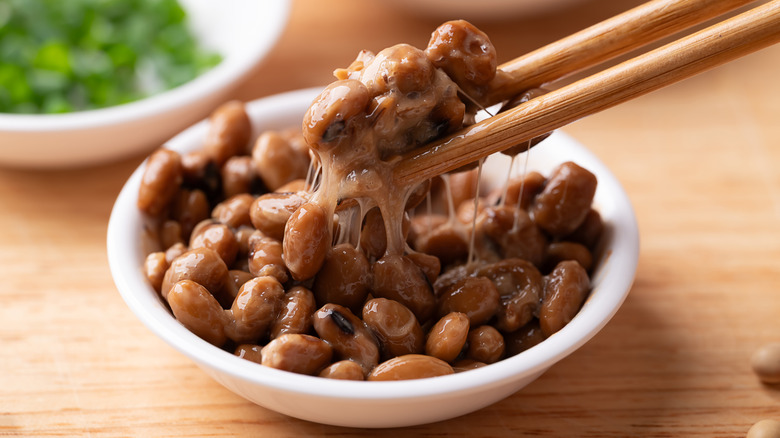
If you're willing to hop on the natto train and give it a whirl, there are three main kinds to try. Kotsubu is very sticky but has a milder taste than robust otsubu, while hikiwari is a smooth paste and is used in maki rolls. Though it's a popular breakfast dish, natto also pairs well with salads and pasta, or you can slather it on toast for a quick and easy snack. As well as being a good source of heart-healthy vitamin K2 (compared to the K1 found in leafy greens), natto may also help reduce blood pressure.
If natto's really not your thing, then leafy greens are an abundant source of vitamin K. They're easy for even novice gardeners to grow and will thrive in a planter if you're short on space. Best of all, you can do so much more with them than you might think. Toss a handful in a blender or add them to your next batch of guacamole or pesto (where you can use broccoli too). Fancy something sweet? Add kale to brownies and watch everyone devour the added vitamins, or purée leftover steamed greens and add them to a muffin mix for green-tinged snacking. If you make your own ice cream, spinach is a great way to turn homemade mint choc chip really green.
As for cabbage? It may be off the vitamin K winners' podium, but you can still do amazing things with this humble veggie. For instance, in an exclusive Foodie interview, Richard LaMarita of the Institute of Culinary Education revealed how to upgrade cabbage into the Japanese dish yamitsuki. Team it with natto and you'll be set for vitamin K!