

Can You Eat Grocery Store Salmon Raw?
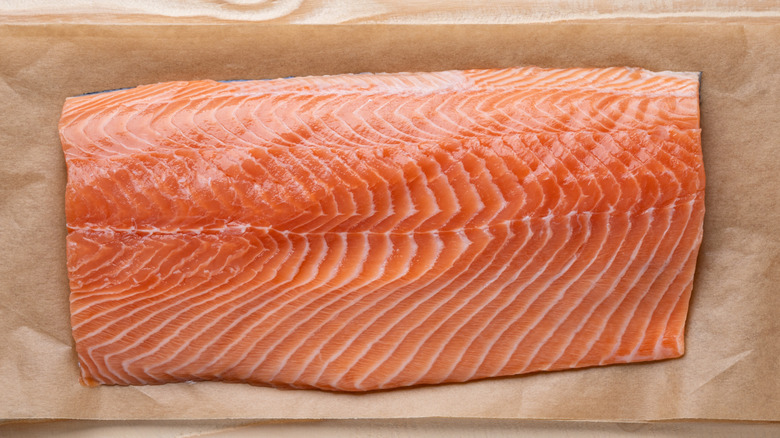
You can go cross-eyed online trying to find an answer to the question of whether it's safe to eat grocery store salmon without cooking it first. There are many opinions, official tables, and very long reports, but it's tricky to get a definitive response. Why? First things first: If you're not immunocompromised or pregnant, yes, you can eat store-bought raw salmon. However, it comes with risks that depend on how the fish was raised, transported, and stored before being sold. What you do with the salmon when you get it home matters a lot, too.
Wild salmon feed on everything from algae to other fish. Because of their uncontrolled environment, the risk of wild salmon carrying some seriously nasty parasites is higher than farmed salmon, whose food is more strictly controlled. Wherever the fish comes from, it should have been blast-frozen to -31 degrees Fahrenheit immediately after being caught and remain solid at every stage of transport. The labeling on store-bought salmon should indicate where it's from and if it was frozen, but if you're not sure, ask an employee. If they can't tell you exactly how it was kept, don't bother eating it raw.
While blast freezing kills parasites in salmon, there's still a risk of bacteria contaminating the fish, including E. coli and salmonella. Whether you bought wild or farmed salmon, it's imperative to keep it in a cold fridge until you're ready to use it and equally vital that you scrupulously wash your hands, as well as surfaces and kitchen utensils that come into contact with the fish, to minimize the risk of bacterial transfer.
Why sushi and sashimi-grade labels are meaningless
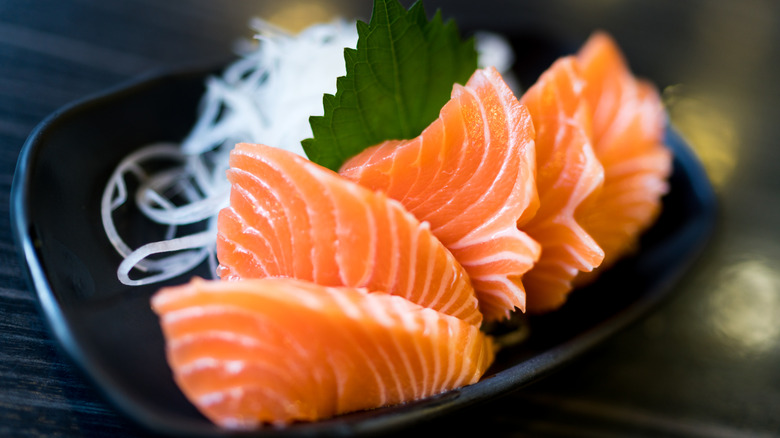
There are some menu items to avoid at sushi restaurants, so it's natural for people who love it to wonder if the likes of Costco salmon would make the (sushi) grade. The truth is, there's no such thing as a regulated sushi or sashimi "grade" fish, not in the same way that beef is rated by the USDA. It's more of a marketing tool than an indication of quality. If you're buying from a trusted store or reputable vendor, you should be able to have more confidence in their stock than perhaps a market trader you've never seen before.
When buying salmon, there are several things that will give you a hint about its quality. Choose vivid pink fillets that are moist and firm with no dull, grey patches or brown spots, and avoid any that have liquid sloshing around in the packaging, as that could indicate it's past its prime. If you can, smell the salmon fillet; you should get a whiff of the ocean rather than any fishy odor. If it does smell unpleasant, that's a hard pass. If you're in any doubt at all, the best way to eliminate all parasites and bacteria is to skip the raw preparation and cook your salmon to a safe internal temperature of 145 degrees Fahrenheit, as recommended by the USDA. Grab the air fryer and it will be ready in a flash.