

The Spicy Condiment To Add To Tartar Sauce For Flavor-Packed Fish Sandwiches

Food Network star Kardea Brown told us tartar sauce was her go-to topping for a fish sandwich and considered adding a slice of cheese as "going crazy." While we love her advice, that's not the be-all and end-all for a seafood sando. By all means, keep the tartar sauce, but throw in a dash of wasabi for a trip to foodie heaven. Don't be put off by the distinctive nasal tingle that comes from this spicy green condiment, as it's soon calmed by the creaminess of the tartar and both majorly boost the flavor of your fish sandwich.
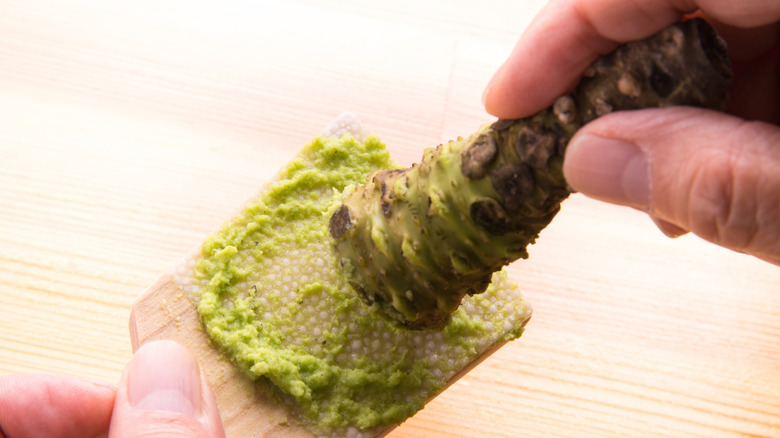
Japanese food lovers know there's a big difference between the wasabi sold in grocery stores or supermarkets and the real deal, Wasabia japonica. It's a tricky-to-grow plant also known as Japanese horseradish, which, as well as needing very specific conditions, is also a pain in the neck to harvest. All that makes genuine wasabi one of the pricier condiments available – but we say the benefits are worth the extra dollars.
Wasabi smells unlike anything else, with a hint of sweetness beneath the heat that complements the delicate flavor of many fish. Fake versions are often made with horseradish, mustard, and a little food coloring, and though they are a lot cheaper, they can't even begin to replicate the subtle flavor of real wasabi. There are a range of products available, including oil and powder, but if you're not sure if yours is genuine, check the flavor. If it's harsh and lasts for more than a few seconds, chances are it's a dupe that won't work quite so well in your tartar sauce mix.
You can do more with wasabi than pair it with a fish
Aside from elevating even the humblest fish sandwich, wasabi comes with numerous health benefits, including lots of antioxidants. It's also a source of iron and, while it might not be among the foods with more potassium than a banana, wasabi will give your levels a filip. However, one of the reasons it's commonly served with sushi has nothing to do with how it complements the meal's other flavors.
Wasabi is packed with allyl isothiocyanate, a compound that helps kill the parasites and bacteria present on the raw fish, or at least slow their growth. That's why, in ancient Japan, wasabi was often used as a preservative. It also works particularly well for fish because it effectively clears the palate, allowing the subtlety of seafood to envelop our tastebuds, whether we're sampling high-end sushi or chowing down on a lunchtime fish sammo. But it's not the only way to enjoy this delicious condiment.
Wasabi, whether you use the powder, oil, or freshly grated root, is a wicked way to bring depth to soups and will happily blend with other sauces beyond tartar. Want to try flavormaxxing? Add it to this mayo swap for your next potato salad. It will bring its unique complexity to all kinds of marinades for meat, swirl a little through a bowl of noodles or rice for a perky lunch, or add it to chocolate for a delicious, sweet treat.