

The Confusing Origins Of Chicken Tikka Masala
We may receive a commission on purchases made from links.
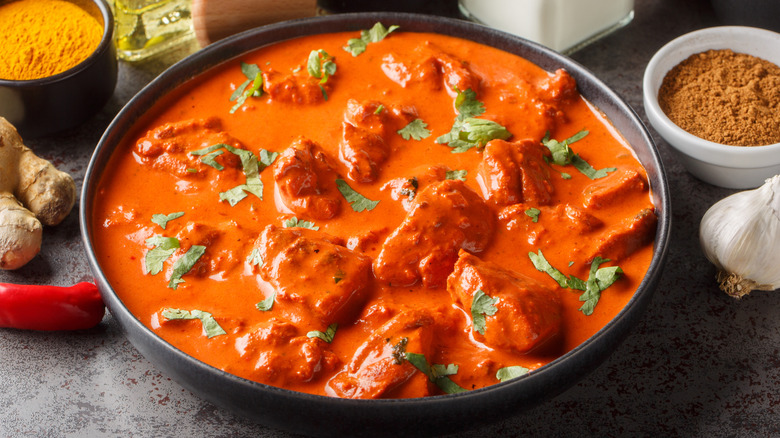
Indian food is definitely having a moment in the United States, but across the Atlantic, Indian flavors have been part of the United Kingdom's food tapestry for a lot longer. One dish has come to symbolize the Brits' passion for Indian food more than any other: chicken tikka masala. This combination of chicken breast drenched in a creamy tomato sauce with a blend of spices such as garam masala, turmeric, and coriander and served with rice is on restaurant menus around the country and is near-universally loved. That makes it all the more shocking to learn that the legend of its creation is a total fabrication.
According to the oft-told story, in the 1970s, a hungry diner in Glasgow sent a chicken curry dish back to the restaurant's kitchen, complaining it was too dry. In response, the chef threw on a can of Campbell's tomato soup, some yogurt, and spices, off-handedly creating the iconic recipe millions of Britons guzzle down every year. It became so popular that, in 2009, a member of parliament tried to secure protected status for chicken tikka masala. The campaign came to nothing, and years later, the truth about its origins emerged.
When he founded the country's first curry restaurant trade magazine, Tandoori, in 1994, Iqbal Wahhab said it was treated as "some kind of curry information bureau," telling The Sunday Post "the mischief maker in me fabricated a story," which was backed up by his friend Peter Groves. The latter admitted the same to author Pete Brown in his book "Pie Fidelity," adding that the duo had been bolstered by a bit of wine.
The story of chicken tikka masala goes farther back than the 1970s
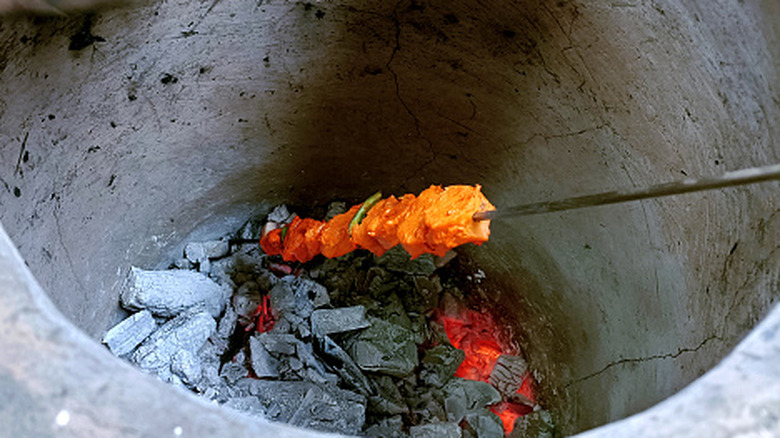
Of course, the real origins of chicken tikka masala are older and more complex than a '70s Glasgow take-out joint. For a start, the dish likely comes from India's Punjab region, where tikka is a specialty. It consists of skewered, marinated meat cooked in a clay oven known as a tandoor, a method used for thousands of years. Some people claim the British love of Indian spices can be traced all the way back to the medieval Crusades, when soldiers brought them home from overseas travels.
Our list of vintage cookbooks that are worth a pretty penny today includes Hannah Glasse's iconic 1747 "The Art of Cookery Made Plain and Easy," which was also among the first British cookbooks to include Indian recipes, demonstrating the love of flavor hadn't faded with time. The British Raj of the 19th century and successive waves of migrants to the U.K. in the 20th, which saw profound political and racial tensions between the two countries, helped Indian food to become a part of the national landscape.
Traditional chicken tikka masala remains my personal fave, but the recipe has also been tweaked to accommodate vegetarians and vegans, while the yogurt is sometimes swapped out for options like coconut milk or heavy cream, and some chefs slip in fruit like mango for a tropical twist. If it takes off in the United States (home to many beloved foods the rest of the world doesn't get), who knows in what new directions this tasty classic will go?