

Butter Crocks Vs Butter Dishes: Here's The Actual Difference
I spent years trying to find the sweet microwave spot that softened butter without leaving a rock-solid lump sitting in a pool of yellow liquid. Then I bought a butter dish and discovered a whole new world. Sadly, our butter-lovin' cat quickly learned to flick off the ceramic lid, so we upgraded to a lockable glass one. Now our spread is always soft, safe from greedy felines, and I can put the butter wrappers to good use — but should I have invested in a butter crock instead? When it comes to keeping my butter cool but soft enough to spread, the answer is yes.
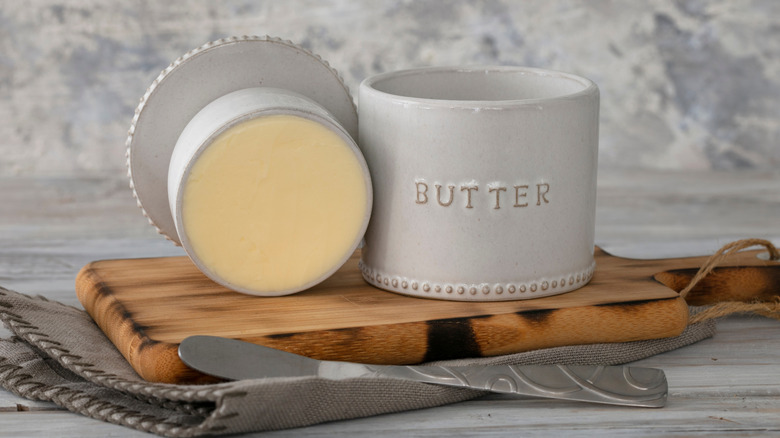
At first glance, the two look very different. A butter crock (also called a butter bell) has two parts. The butter — which needs to be pre-softened — is placed inside the hollow of the lid. It then sits inside the other container, which contains a small amount of cold, clean water. Here's what sets a butter crock apart from my butter dish: When the two halves are put together, the airtight seal created by the liquid will keep around half a stick of butter cool, yet always ready to spread! Butter crocks do need more frequent cleaning than their dish counterparts, and the water must be regularly changed to maintain the seal and avoid the growth of bacterial nasties.
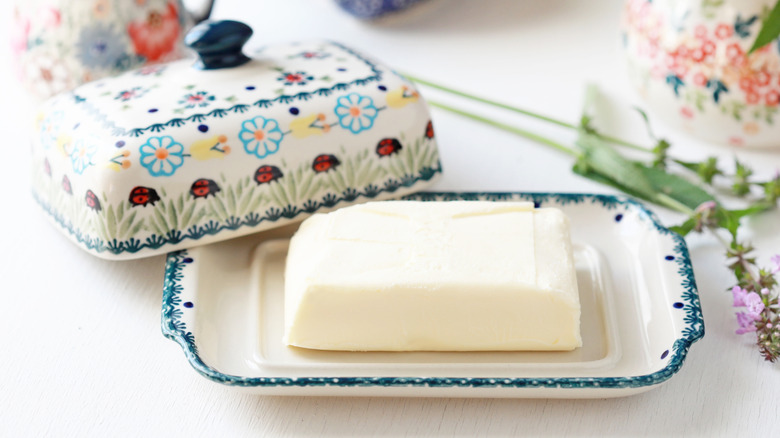
Butter dishes tend to be square or rectangular with a lid that fully encloses a stick of your precious salted or unsalted butter. Butter dishes only need occasional cleaning (I do mine once a week, but that's down to personal preference). Because they don't regulate the butter's temperature, yours may stay on the tricky-to-spread side if your kitchen is cool.
Butter crocks and dishes come in lots of lovely shapes and sizes
Many people credit the French for inventing the butter crock (who knows, maybe there's one of these vintage tools in your attic?), but the L. Tremain Company put its own spin on the concept and brought it to many American kitchens. The vast majority of butter crocks are cylindrical and made from ceramic or natural stone. Meanwhile, butter dishes can come in an array of materials, including glass, stainless steel, and marble. The latter is among the most efficient at keeping butter cool, followed by ceramic dishes. Glass isn't very effective as an insulating material, as light can pass through it. Plastic butter dishes may be the cheapest option, but they can break down over time and may contain potentially unsafe chemicals.
Whether you use a butter crock or a butter dish, it's generally safe to leave butter on your countertop because of its high-fat, low-water ratio that gives bacteria little or no room to survive. If the cream used to make the butter has been pasteurized, all the better. The USDA recommends storing butter at ambient temperatures for up to two days, after which it can start to taste rancid. Try leaving your butter crock or dish out only when it's needed, then keep it in the fridge the rest of the time. And don't be tempted to fill them with soft spreads like margarine or ghee for your grilled cheese – you'll just get a messy countertop!