

The Real Difference Between Le Creuset And Lodge Enameled Cookware Brands
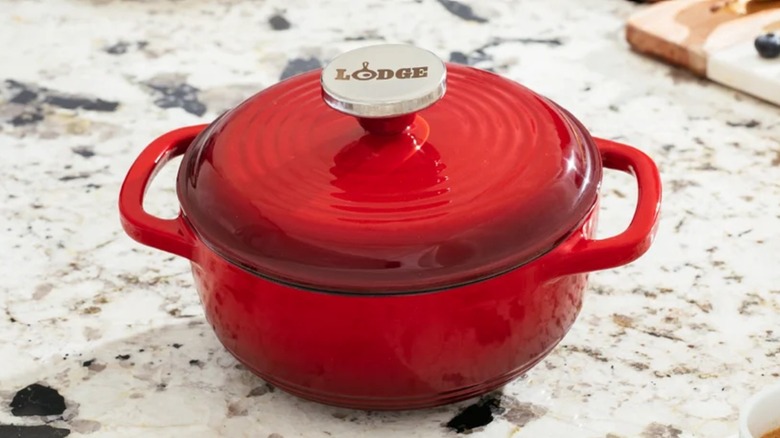
There are a lot of do's and don'ts around cast iron cookware (including this myth, which we merrily busted), and while we love a pitch-black skillet as much as the next foodie, there's something really special about enameled cast iron cookware. The most prized of them all is surely France's Le Creuset, yet home-grown brand Lodge gives it a run for its money, especially among home cooks on the lookout for cheaper options. It's only when you scratch beneath the beautifully painted surface that the differences between Le Creuset and Lodge are thrown into sharp relief, with Le Creuset coming out on top for quality but Lodge beating it for affordability.
Let's start with the American brand. Pittsburgh-based Lodge has been making cast iron cookware since 1896. Although its vintage pans might not be considered a Holy Grail among cast iron collectors, they still have a devoted following. So does the company's enamel cookware, which is not made in the United States. Apart from the USA Enamel line, which launched around 2022 and was discontinued shortly after, all of Lodge's Essential enamel products are currently made in China, Taiwan, and Vietnam and have been for more than 20 years.
Details about the companies and their processes are scant, other than the fact that Lodge's enameled cookware is produced in vetted workshops, there are strict metallurgical standards, and every stage is controlled by a third-party inspector, as well as Lodge. That hasn't stopped people from grumbling about flaws in the enamel or damage during shipping, though it's covered by Lodge's Made Right limited lifetime warranty. Still, many customers are happy to have a good-looking, hard-wearing, and low-cost alternative to Le Creuset. So why all the fuss about the French?
Le Creuset's transparency means people know exactly what they are paying for
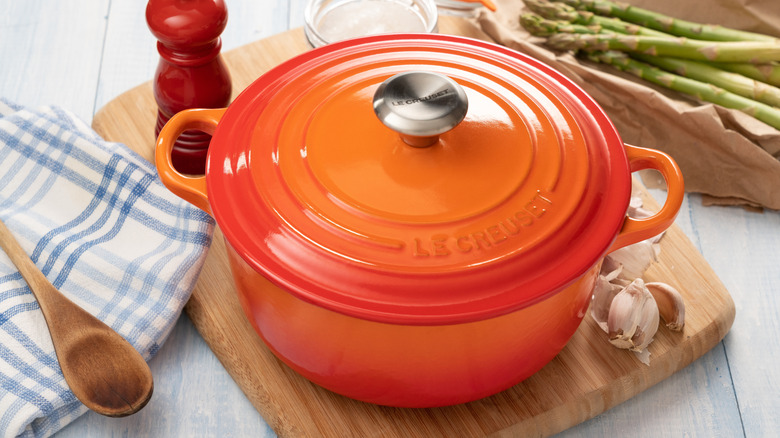
What sets Le Creuset apart is the artisanal quality of its cookware, which the company sees, essentially, as a blend of science and art. Lodge isn't alone in outsourcing some of its production – Le Creuset does it too, though it doesn't currently specify what parts of its range are affected or where they're made. We do know one pot takes seven days to produce from start to finish, beginning as a machine compresses individual sand molds for each pot. After they are smoothed, they get a layer of primer before the enamel – made of powdered glass and pigment – is sprayed on (or more accurately, fused to) the pot. Throughout every stage of the production process, 30 people will touch each item, scrutinizing the vessels to ensure they meet quality standards and can withstand worldwide shipping and being put to use in millions of kitchens.
Although Le Creuset keeps the exact recipe for its metal a secret, there's transparency nearly everywhere else, so customers know exactly what they're getting for the brand's eyewatering prices. A 7.25-quart pot in the iconic Flame color costs almost $500, but looked after properly, it will last for years, cooking everything from stews to delicious home-baked bread. Many Le Creusets are treasured family heirlooms, but it's worth knowing the company's guarantee covers the life of the original owner, not the pot!