

Should You Wash Utensils While Cooking Raw Poultry Or Meat? The Answer Is Crucial
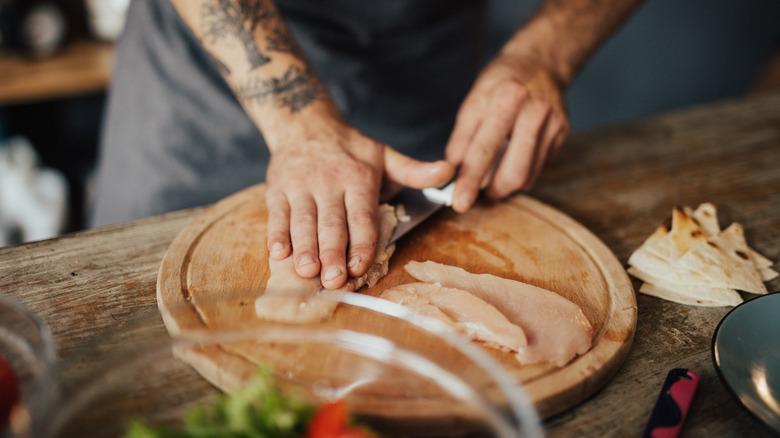
Turning raw ingredients into delicious food is our passion, but it's also one that can be fraught with risk. Every year, around 48 million people get sick from foodborne illnesses, while 3,000 die, according to the CDC. It's a pastime that relies on some important knowledge, from being careful when handling raw meat for burgers, to keeping everything we use to prepare and cook food clean to prevent bacterial contamination. Yet every recipe I can think of (I even checked all my books) omits one vital food safety step: Washing whichever utensil we use to move raw meat around a pan or grill after it has started to cook. Why? Because although the meat in your pan has reached a temperature where the bacteria is bumped off, you can't say the same about the spoon or spatula.
The next time you're at a restaurant with an open kitchen, watch the professional line cooks. They should have separate spoons, spatulas or tongs for both raw and cooked food, or a container of sanitizing fluid for anything that touches raw ingredients. This plethora of kit minimizes the risk of cross contamination, because any bacteria clinging to a utensil that initially moved raw meat around a pan will be killed the instant it hits the sanitizer. The cook should then use a clean utensil to finish their dish. If they don't, it might be time to find somewhere else to eat.
You should thoroughly wash any utensils used to cook raw veggies as well as meat
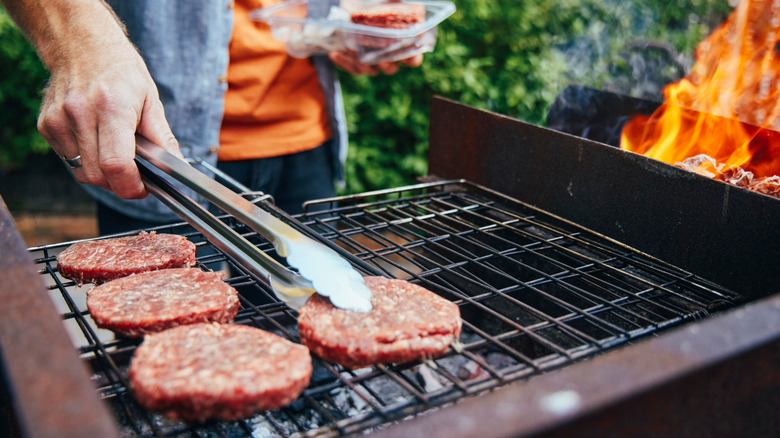
Home cooks still learning the basics may not even be aware of the dangers posed by using the same spoon or spatula for raw and cooked meat (it's one of many things that could spoil your summer BBQ) — after all, like we said, no recipe we found ever points this crucial step out. If you can't switch to a clean utensil when your meat, poultry or shellfish has started to cook, take a moment to wash whatever you used in hot water with a little dish soap or disinfectant, but don't be tempted to put your wooden spoons in boiling water. That way, any traces of raw food and their bacterial hangers-on will be cleaned off, leaving you free to go back and finish your dish without adding an ingredient nobody wants.
Many plant-based ingredients can be sources of some truly nasty bacteria too, from salmonella and norovirus in fresh produce, and E.coli in salads and leafy greens. Thoroughly washing all fresh produce, and using separate cutting boards and utensils for cooked and raw ingredients is recommended for optimal food safety.
Cross contamination from raw foods can happen no matter what your utensils are made of, but to ensure they will withstand years of cleaning (and cooking!), we recommend investing in ones made from stainless steel, good quality silicone, or a hard wood such as olive or oak. The next time you're following a recipe, don't forget to make a note about when to clean your utensils at the appropriate stage.