

What's The Longest You Should Keep Water In Your Coffee Maker Reservoir?
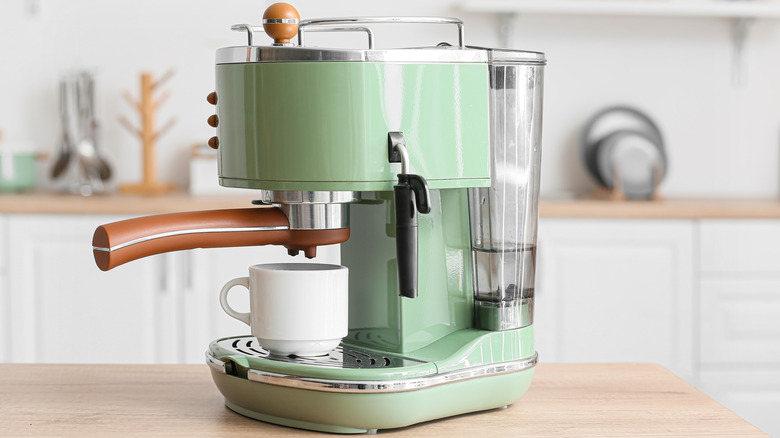
There are lots of ways to rustle up a cup of joe without a coffee maker, but these machines have become indispensable for many people. Some are used several times a day to get the adults in the household moving, but does the last person to grab a cup always empty the reservoir, or do they leave it where it sits? We all forget from time to time, but if you consistently leave water in your coffee machine's reservoir for more than 24 hours, at best you'll end up with iffy-tasting coffee. At worst, your machine will play host to all kinds of microscopic nasties.
A 2011 study by NSF found that a coffee reservoir was the fifth most germ-ridden place in the home, noting it was all too cozy for bacteria and fungus. The majority of modern coffee machines are designed to be used a lot, so the chances of water sitting in the reservoirs for days at a time is quite low. That said, many people prefer to top up their coffee machine with fresh water, rather than emptying it every time. While that's not necessarily a bad thing, over time it can affect the flavor of your finished cup, especially if you don't give the appliance a comprehensive clean on the regular.
The type of water you use to fill your machine doesn't make that much difference as to how long it should stay in the reservoir. Standard tap water has the same shelf life as water that's already been boiled, at 24 hours. Distilled water can give you another day, but some filtered water is the most short-lived of all, thanks to its lack of chlorine, which can slow bacteria's growth.
Clean and descale your coffee machine regularly for the best-tasting cup of joe
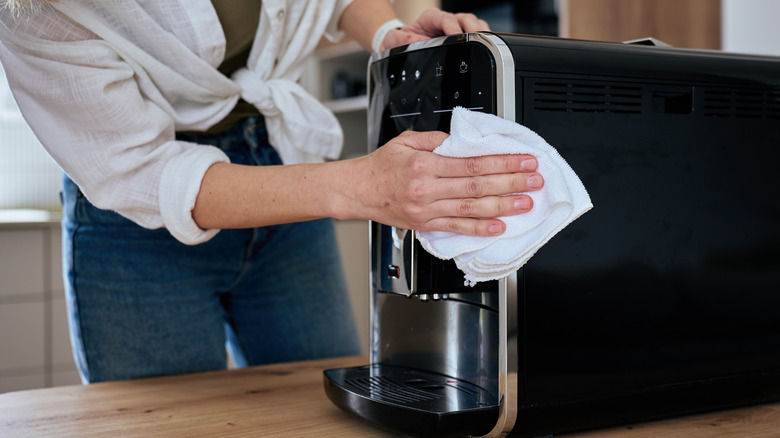
Emptying the water out of your reservoir after every use will go some way to stopping any bacterial build-up, but it needs a little more TLC. Most coffee machines are fairly simple to clean, with the possible exception of bean-to-cup systems, which can be a little trickier. We know we can clean a coffee grinder with rice, but just as a splash of vinegar will help clean your kettle, you can add some to your coffee machine reservoir to keep it germ and mold-free.
How often you clean your machine depends on what kind you have (take a look at the manufacturer's guidelines) and how often you use it. If the reservoir smells stale or musty, black spots are visible on seals, parts of your machine feel slimy, or your coffee just tastes off, it needs a jolly good clean. We'd recommend doing so at least weekly for a machine that's making coffee every day. That includes stripping out any removable parts and washing them with hot water and dish soap.
Don't neglect any seals, shower heads, and other nooks or crannies where moisture could sit undisturbed for long periods of time. They're perfect places for mold to hide, especially in coffee machines with enclosed traps. Make sure the whole thing gets enough time to air dry, too. Descaling your machine will also minimize the risk of mold or bacteria. It goes harder than a simple clean and should be done every few months, depending on how hard your water is. Changing your reservoir's water after every use, along with regularly cleaning and descaling your coffee machine, will go far.