

What A Top-Shelf Bottle Of Whiskey Cost In The 1990s Vs 2026
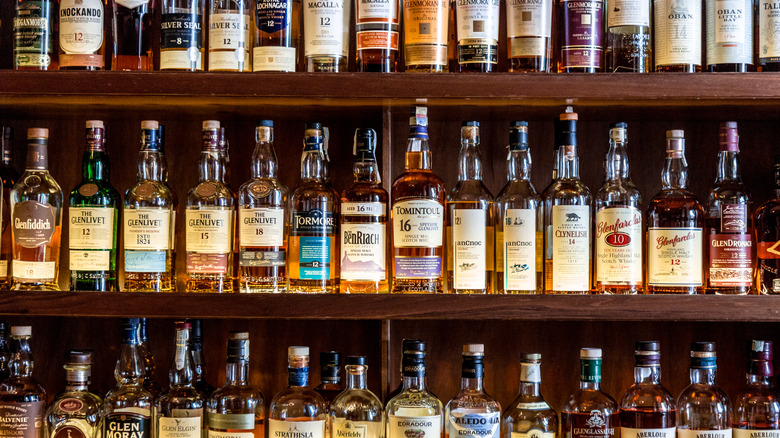
The world of whiskey is as susceptible to shifts in taste and price as its food-based counterpart. In recent years, social media has seen grumbles from whiskey lovers about the cost of buying top-shelf brands, which is often chalked up to "it's what people are willing to pay." The price of Costco's Kirkland Signature Bourbon has long kept its customers happy; for other brands, it's a more complex picture. The past 30 years have seen a general uptick in the cost of some whiskies, especially premium tipples, where smaller, rarer batches crafted with high-quality ingredients now command higher prices.
For instance, Johnnie Walker Blue Label whiskey was launched in 1992 and cost around $150, an eye-watering sum at the time (the only other well-known bottle to cost in excess of $100 was XO Cognac). Even more shocking, Johnnie Walker Blue was a blend (it's purported to be made of whiskies aged between 28 and 60 years old), and some reviewers dismissed it as being nakedly aspirational. Perhaps it was, but Johnnie Walker Blue was also considered very good, racking up 97 points from Whiskey Advocate in 2018, when it cost $225. Years later, the 2026 Year of the Horse limited edition retailed for around $240.
In 2000, a bottle of Glenfarclas 25 Year single malt would set you back around $160, but in 2026 the price was nudging $300 – not including delivery charges. But that's nothing compared to Bowmore Distillery's Black Bowmore trilogy of whiskies, released in the 1990s. In 1993, they sold at between $95 and $162, but by 2022, their average price at auction was more than $16,000. What gives?
From the whiskey loch to tariffs, costs have fluctuated a lot over the last three decades
Nailing down definitive evidence for whiskey prices in the past 30 years is tricky because, aside from the examples we've listed, there's not much reliable information from the 1990s to go on. This assessment by Diving for Pearls lists costs between 2007 and 2019, but it's based on a mechanism for wine, not whiskey. Many reviews of whiskies for sale in the 1990s, but written years later, discuss quality yet have no details about the original recommended retail price. Rarity obviously weighs on how much top-line whiskey costs, but historically, it's not been the only driver.
In the mid to late 1980s, the industry producing Scottish whisky – it's really not the same as whiskey – was in serious crisis. Around two decades of over-production had resulted in what's now known as the "Whisky Loch," a glut of unsold barrels. Prices went through the floor in the 1990s as companies sought to stay afloat, coinciding with growing interest in whisky among American consumers (including tourists flocking to "libraries" like this one). As more bottles were snapped up, prices started to rise again.
Alongside a booming appetite for the spirit, whiskey production methods were radically overhauled between the 1980s and 2000s, with increasingly efficient distilling technology and automation helping produce more consistent whiskies, enabling brands to increase prices. More recently, tariffs have impacted the cost of many bottles, including those of top-line brands. If you're not prepared to swap your favorite brand for a middle or lower-end whiskey, then the internet could well be right: A higher cost is simply what people are willing to pay.