

The Pantry Staple You Should Be Baking Salmon Fillets In
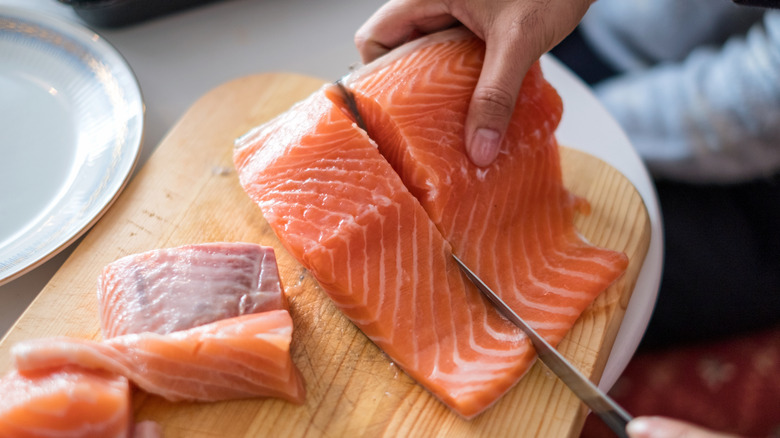
A thick, juicy fillet of baked salmon is always a welcome addition to our dinner table. A slick of cowboy-style butter turns up the flavor, but if you want to amp up the texture, too, you need panko. This roughly shredded bread coating, which originated in Japan, is treasured by both professional chefs and home cooks because of its phenomenal crispiness when cooked. Nothing (certainly not your average can of breadcrumbs) can beat it, because the secret to panko's success lies in the structure of the very flakes themselves.
It starts with how the bread for panko is made. Instead of a traditional oven heating loaves from the outside in to produce a golden-brown crust, panko is cooked from the inside out using an electric current. There are conflicting stories about exactly how this technique was discovered. Some say a wooden box was part of a specialist field kitchen; others say resourceful (and hungry) Japanese soldiers stationed in China during WWII used a tank battery to cook bread. However it came about, the method worked!
The dough's resistance to the electric current generates heat, creating lots of miniscule air pockets and resulting in a loaf that is incredibly light and crust-free. When it's broken up into shards or small flakes, those voids remain intact, allowing oil to cook whatever it's coating quickly and evenly, as well as drain away so it doesn't clog up food. Baked salmon, topped with a layer of panko, ticks all the foodie boxes, as it's both crispy and juicy.
Temperature is key to panko's signature crunch, but don't be shy about adding flavor
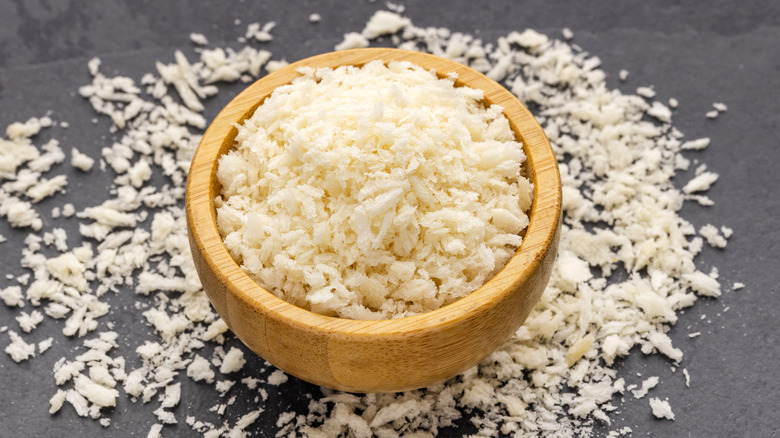
Many people credit The New York Times' Florence Fabricant for letting American cooks in on the panko secret in 1998, and we've loved it ever since. If you've never used panko before, there are a couple of pitfalls to watch out for. First, make sure you're getting the real deal. Panko can come in four sizes, but even the finest should still be visibly airy and open-structured. Second, and this applies particularly to foods coated in panko (add it to your eggs and thank us later), the temperature is crucial to achieving that crunchy end result.
For frying — and we think baking can follow pretty closely — the ideal oil temperature is around 350 degrees Fahrenheit because the panko flakes should seal instantly, but whatever they are coating still has time to cook thoroughly. Cooler oil will be sucked up by the panko, potentially leaving it soggy; if it gets too hot, you risk cooking the coating before the protein. A meat thermometer, one of our go-to frying tools, will help you hit the temperature bullseye.
Another good tip when coating salmon or anything else in panko is to press it firmly in place to prevent it falling off. Some home cooks use a spoon to get the job done, rather than using fingers or pushing the fish or meat into the panko. Don't sleep on adding flavor to your panko coating, either. Panko is a blank canvas — it's just white bread, after all. For salmon, adding dried dill is a classic, but a shake of paprika or garlic salt will enhance that crispy coating also.