

The French Restaurant Rule American Tourists Often Break Immediately
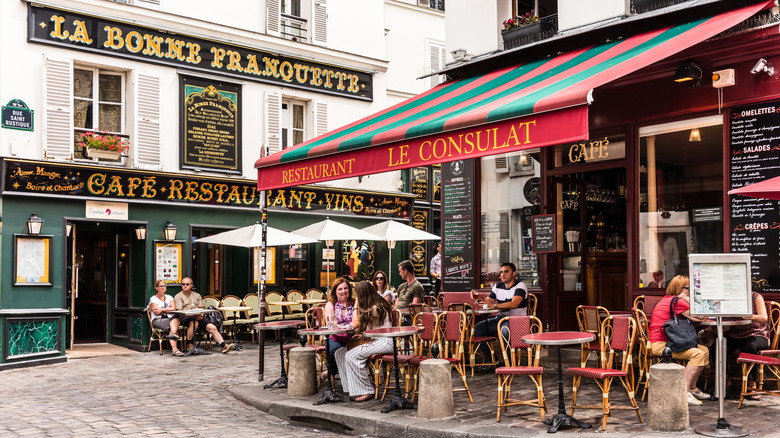
A vacation in France is a dream for many American foodies, especially those who scour their hometown shelves for French-made products. But dining out in a country that wears its gastronomic pride on its sleeve can be fraught with pitfalls, especially if you're not entirely sure how things are done and you don't want to sound like a tourist while ordering coffee or anything else on the menu. There are several unwritten rules woven into the French restaurant experience, and the one many Americans break pretty much from the get-go is not saying "hello" as they walk into an establishment. It doesn't matter whether it's a tiny, out-of-the-way eatery or a bustling, city-center spot. A quick "bonjour" (during the daytime; in the evening, it's "bonsoir") will be expected.
This isn't a convention that applies solely to restaurants. I know from personal experience that it's totally normal to say "bonjour" when walking into most places where the public gathers, from grocery stores to waiting rooms (and "au revoir" when you leave). It's something that often surprises tourists and recent expats, especially given the somewhat grumpy stereotype of French people and Parisians in particular.
For restaurants, saying hello has two purposes. First, it's a polite way of identifying yourself to waiters and serving staff; second, you can then ask if they have a table for you and your party. That opening "bonjour" is crucial, as it avoids the second biggest faux pas made by tourists — and it's not just Americans who do it – seating themselves in a restaurant. You can try it, but in many places the restaurant staff will absolutely hate it.
Get your timing right and don't be upset if your waiter ignores you
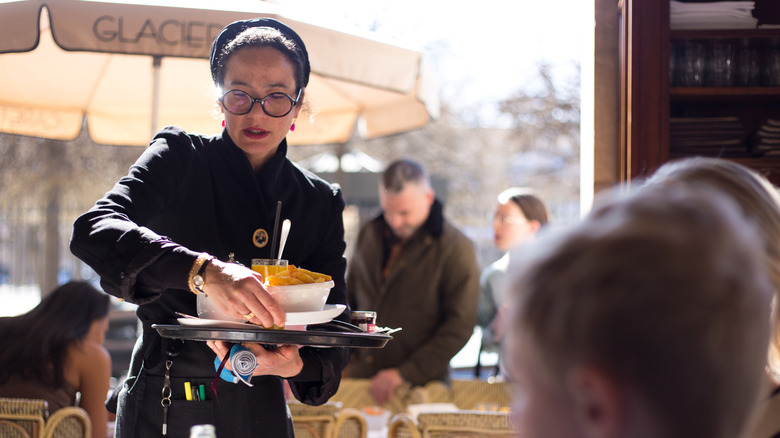
Even if you remember to say "bonjour" and wait to be seated, there are still a few cultural caltraps waiting to strike unsuspecting diners. One of them is time, for two reasons. First, lunch service in many French restaurants ends between 2 p.m. and 2:30 p.m. As in many countries, arriving 15 minutes before closing and expecting to order and eat a three-course meal is a big no-no. Moreover, food is lingered over in France, so get there in good time and be prepared to take at least an hour to eat (more if it's the evening).
Waiters in American restaurants are typically very attentive, buzzing back and forth between customers to make sure everything's to their liking. This is not the case in French restaurants. Waiters will take your order, bring your food, and leave you to it, which is possibly why they have a reputation for being frosty or standoffish among some tourists from the United States.
If you do need anything, you have to catch your server's eye — it's an excuse to give your French a whirl! A polite "s'il vous plaît?" (please) as they pass should be enough to get their attention. Unless you're paying for bottled water, a "carafe d'eau" (jug of water) is free, will come from the tap, rarely has ice, and won't be refilled automatically. Meanwhile, any bread is to be eaten with your meal and is not an appetizer. When you're ready to pay, catch your waiter's eye again and ask for "l'addition" (the bill), whereupon it will be brought to your table. You only leave a tip if you want to, and that tip is expected to be much lower than many Americans expect.