

Transform Bland Tomatoes With A Spicy Ingredient That Adds 10x More Flavor
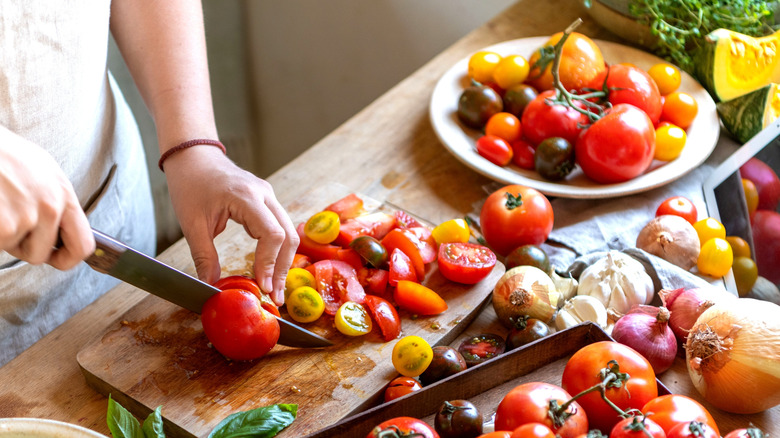
If you've been blessed with a tomato glut from your garden this year, there are lots of ways to use up this versatile veggie. Unfortunately, not every ripe tomato that makes it to our kitchens, whether home-grown or store-bought, is bursting with flavor. But there's a spicy solution to the blandest tomato: chiles. They're the powerhouse of many a tomato and chile relish, bringing warmth as well as earthy flavor complexity to this sweet yet spicy condiment, which is delicious on everything from burgers to scrambled eggs.
Chiles are an easy addition to relish, your next batch of home-made tomato sauce, or really any tomato-forward mix. Just chop them up and toss them in with the other ingredients to simmer on the stovetop. A few dried chile flakes or a dash of chile-infused oil will work for home cooks who just want a little warmth, while diced jalapeños turn up the heat but still keep things at the lower end of the Scoville scale. For anyone who likes to feel the burn, reach for cayenne peppers or habaneros, but we think only the very brave of heart should add Carolina reapers to their tomatoes!
Any variety of bland tomato is easy to overwhelm with other flavor additions, even if you're a fan of spice. To make sure your produce doesn't disappear entirely in a cloud of chile heat, start off with a light hand. Also, consider roasting the tomatoes in the oven with a splash of olive oil before transferring them to the pot, which can add intensity and complexity to the fruit. You can do the same with some roughly chopped bell peppers and chiles to add layers of flavor to your final relish.
The chile heat doesn't come from where you think
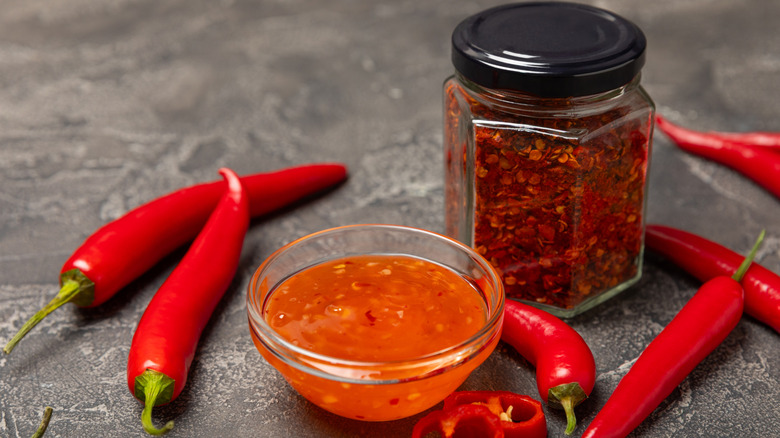
Americans are major consumers of tomatoes, but they're not alone. The commercial drive to keep up with global demand had a direct impact on the taste of the tomatoes we buy. The focus shifted from flavor to crops that could fend off diseases while at the same time producing oodles of firm, red fruit. In recent years, the pendulum has swung back in favor of flavor, but bland tomatoes are still very much a thing. Pairing them with chiles is a tasty fix, but where exactly does their heat come from?
Being selective about which parts of the chile you use can help you better control the spice level. The burning sensation from chiles is triggered by the chemical capsaicin, which you won't find in the seeds. It's actually most concentrated in the white pith and ribs inside the fruit. Also, it's not your tastebuds reacting to capsaicin, but temperature-based nerve receptors in your mouth.
If you're not sure how hot you can reliably go, we recommend cooking up a big batch of tomatoes, separating it into several smaller ones, and adding your chosen chiles to each a little at a time. It's up to you whether you keep things chunky or if you blitz it down to a smooth consistency, but if your sauce is too hot, dilution is the only solution.