

Why Fish And Chips From A Restaurant Tastes Better Than Homemade
We may receive a commission on purchases made from links.
Fish and chips is one of those restaurant menu items that, to the untrained eye, appears easy to make. But, as someone who has cooked it at home several times and only came close to getting the whole thing right once, this classic dish is definitely harder than it looks.
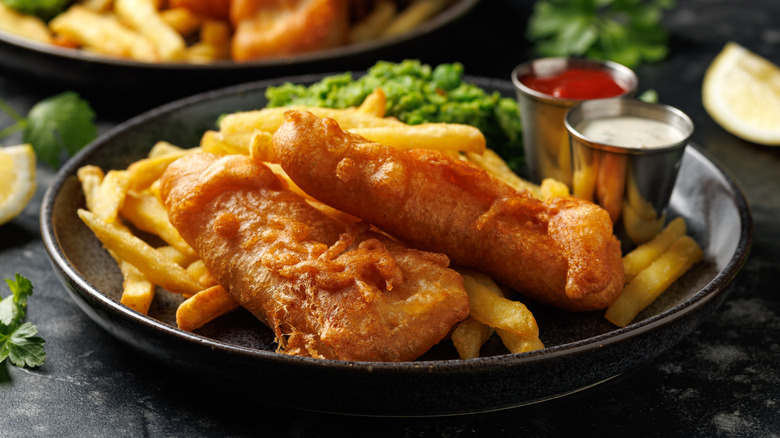
Every time I order fish and chips from a restaurant, I am presented with my dream plate. Cutting into the golden, crispy batter reveals flakes of moist, delicious fish, while the accompanying fries (or chips) are crunchy on the outside with a yummy, soft interior. Repeating that feat in my own kitchen can be a very different story.
Common mistakes when cooking with fish abound. Choose the wrong kind and everything goes downhill fast. Get the batter consistency wrong and you're just as sunk. If the oil isn't hot enough, the fish ends up swimming in grease. For advice on how to up our game, we turned to Ashley Durst, who, along with her husband William, co-owns Portland, Maine-based Lil Chippy, to find out why restaurant fish and chips always tastes better than homemade.
Restaurants have access to a wider range of quality ingredients
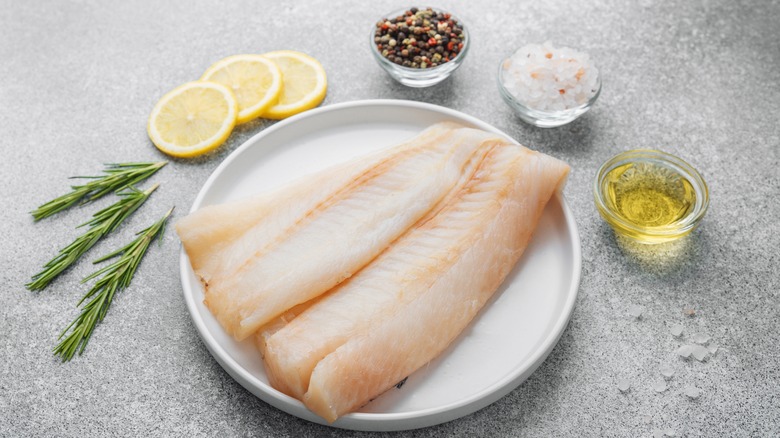
Restaurant owners that are among the roughly 130 million people living in a coastal county in the United States don't have any problem getting hands on varieties of fresh fish. Eateries located further inland can also tap into a vast and speedy supply chain, giving them a considerable edge over home cooks digging through their supermarket freezers looking for quality fish.
Ashley Durst said the quality of ingredients was just as important as technique for great fish and chips. Her restaurant serves Maine hake from Portland's Harbor Fish Market, calling it a "nice flaky fish." Other eateries offer pollock — which is a more sustainable option than traditional cod — or haddock, but tilapia and halibut are also solid choices.
The fish is, of course, only half the tale. The fries (or chips) from restaurants are off the hook too. Few outlets will give away any secrets about the potatoes they use, but anywhere with shatteringly crisp chips probably relies on russets, a type that's full of starch but, unlike some, isn't waterlogged. If you can't get your hands on a bag, Yukon Gold can be a good alternative, but give non-waxy kinds, such as fingerlings, a wide berth.
The batter is a restaurant's secret weapon
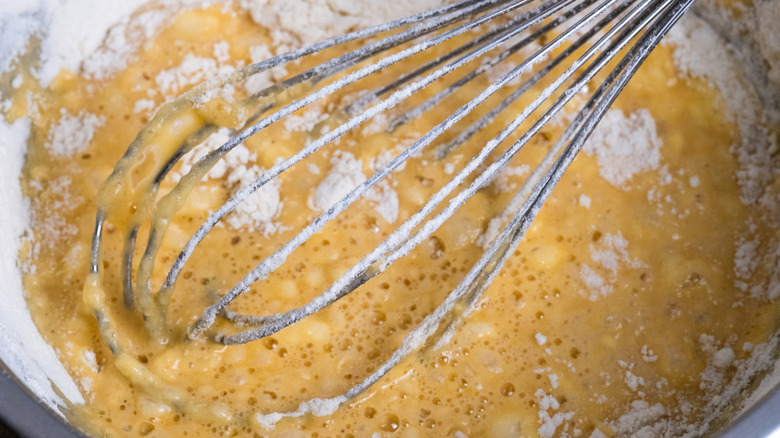
Mom or grandma may have thrown unmeasured ingredients into a bowl and turned out perfect food every time, but trying to do the same with fish batter, especially if you don't make it very often, can be trickier. Unlike breading, which is relatively straightforward, it takes time to tweak the consistency to get batter right, according to Ashley Durst, but that trial and error pays off big time for restaurants whose crispy, golden fish and chips fly out of the door.
If you're thinking "there has to be more to it than the ratio of dry-to-wet ingredients," you're spot on. "Having the access to different flours and a range of ingredients certainly plays a role in making a great batter," Durst said. Some outlets use nothing more than all-purpose flour, which is great for home cooks like me trying to achieve restaurant-quality results. Others prefer extra-fine "00" flour, or for extra crunchy coatings, they swap some flour for trisol.
The thickness of the batter can also vary from restaurant to restaurant. For every place offering a batter so thin you can see the fish through it, there are plenty whose coatings are as generous as they are tasty. Home cooks who want to create those little wisps of batter that give the fish its unique architecture, lift the battered fillet out of the oil a few minutes after cooking and spoon over some fresh batter before gently dropping it back. Crispy curlicues guaranteed.
To beer or not to beer, that's up to them
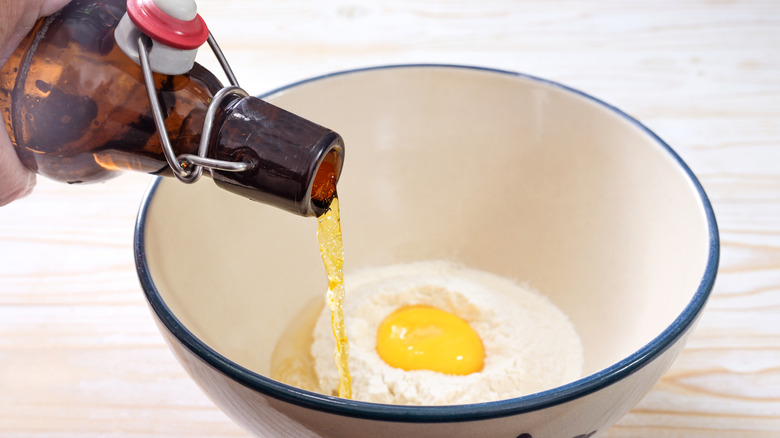
You can't underestimate how important the batter is to an outstanding plate of fish and chips, and the flour is only one part of what makes restaurant versions taste amazing. The liquid is just as crucial. I used to make it with half-fat milk but always ended up with a heavy, soggy coating, so I switched to beer.
Although it gives the batter extra flavor, it's not for everyone, but there are other ways to give your batter a light crisp, according to Ashley Durst. She recommended using a "quickly evaporating liquid," whose bubbles fill the batter with air, making it lighter, but remained tight-lipped about exactly which one Lil Chippy uses.
Some restaurants might use hop water, a naturally gluten-free drink that has all the flavor of beer without the alcohol, while bottled soda water is good for introducing air into the batter, making it light and crispy when fried. I can confirm it does work, though the batter has less flavor. Other chefs have turned to a shot of vodka in their batter to ensure their coating is the crispiest it can be, but if the thought of alcohol in your fish and chips turns you off, stick with a splash of ice-cold water.
Restaurant chefs play around with their oil options
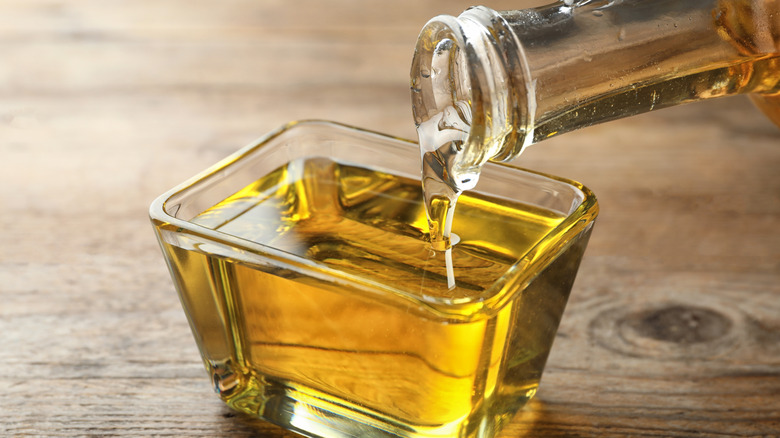
Growing up, the fish and chips I bought were always fried in beef tallow. Today there are a ton of alternative oil options on the market, many of them used by restaurants serving up delicious fish and chips. Ashley Durst prefers the "clean and neutral flavor" of pure premium canola, and she's not the only restaurant owner to do so.
But, as popular a choice as canola is, there are several others that are just as good when it comes to perfectly fried fish and chips. Unless you have family members or guests with allergies, peanut oil can be a great ingredient for home cooks. It has a high smoke point of 450 degrees Fahrenheit, has a mild flavor and — best of all — it doesn't cost a fortune. Some restaurants could also use cottonseed oil. It has the same high smoke point as peanut oil without the same allergy risks and is also an affordable option.
Restaurants that want to show off how health-conscious their recipes are might fry their fish in coconut oil. This isn't surprising, given coconut oil's versatility — it can even be used as a heart-healthy alternative to butter in grilled cheese. That said, it's also quite pricey, which would explain why restaurants using it might charge a little more for their fish and chips. And though lard and tallow might scan as old-school options, renewed vigor in recent years has made them more relevant again.
Professional equipment reaches temperature highs home cooks can't
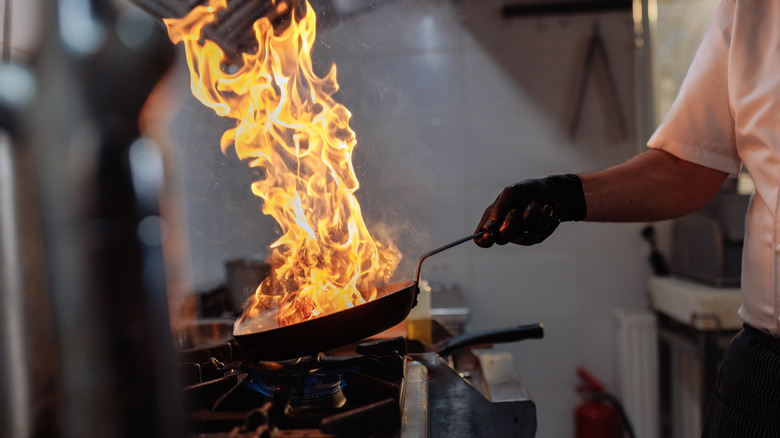
Even if you buy fish that's ideal for deep frying and potatoes you know will pack a crunchy punch, make a smooth, tasty batter, and choose the best oil, restaurants still have the upper hand on home cooks. Why? Because they have kitchens full of professional equipment that can reach the parts even the smartest online options simply can't.
"Without a deep fryer at the right temperature, achieving that super-crispy batter at every angle of the fillet is not possible," said Ashley Durst. "Likewise with the chips. You really need [a] quick deep fry to create a light, airy, and crispy chip." If, like me, you don't own a counter-top deep fryer (though this stainless steel model is both popular and affordable) it can be a struggle to get the oil hot enough to achieve restaurant-level fish and chips.
As with creating the batter, it takes time to learn exactly when to add the battered fish to the oil. Do it too soon and it will absorb too much grease, negatively impacting the texture and flavor. Let the oil get too hot — if you see smoke or bubbles or hear a clicking noise, the temperature's too high — and you risk burning your food. If you can't invest in an electric fryer and choose a pan to deep fry, take it off the heat when adding the fish before returning it to maintain an even temperature.
Practice (and technique) really does make perfect
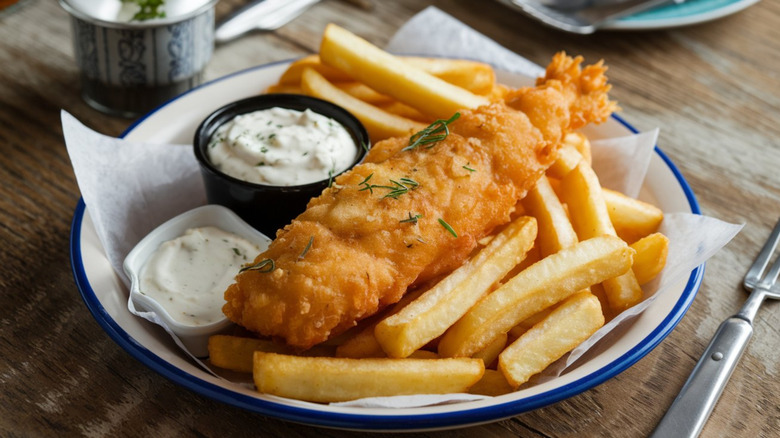
Fish and chips is like many restaurant dishes that don't taste the same at home. What appears on the plate to be a straightforward combination of flour, beer, fish, and potatoes is, in reality, the result of years of work. Apart from their professional training, restaurant chefs work in a very different environment to home cooks. The equipment may be smarter but the pressure is much more intense.
On top of that, restaurant chefs have tried and tested their ingredients, perfected their recipes and their presentation, all to fulfil a single goal: Sending millions of customers home with full bellies. Even if we can't hope to recreate the delicious flavor of their fish and chips at home, that doesn't mean we shouldn't have a go.
Stars including Gordon Ramsay have online tutorials and cookbook recipes dedicated to the art of fish and chips, and you can even use his secret ingredient for a top-notch tartar sauce. If a big name's advice doesn't have you reaching for the canola oil, the internet is full of step-by-step guides that will help you practice your fish and chips over and over again. And, if all else fails, you can book a table at your local restaurant and order theirs.