

The Infamous 1994 McDonald's Lawsuit That Changed The Fast Food World Forever
McDonald's hot coffee pairs well with our favorite McD's desserts, like seasonally available Strawberry & Crème Pie, and it's a nice jolt of caffeine available at any time of day. If you have any degree of pop cultural awareness, the words "McDonald's hot coffee lawsuit" might ring a bell. Oh, sure, you know the story ... an old lady spilled coffee on her lap and sued the Golden Arches for a fat payday. Kinda ridiculous, and possibly the most-cited example of stereotypically litigious Americans, right? Well, actually, it turns out that everything you know about this infamous case is probably incorrect.
Along with mug color, which affects how coffee tastes, the temperature of your coffee plays a huge role in how you enjoy it. What hot coffee shouldn't do is cause third-degree burns to 16% of your body just because you tucked it between your thighs in a stationary car and it spilled on you. That was the sad fate that befell 79-year-old Stella Liebeck of Albuquerque, New Mexico, in 1992.
The lawsuit happened because Liebeck only wanted her extensive medical bills to be paid, but McDonald's dug its heels in and refused to accept blame. However, facts show its restaurants consistently served coffee at dangerously hot temperatures, and with the corporation's knowledge. Liebeck eventually settled privately with McDonald's, but the damage to her reputation continues today, even after her death in 2004. Despite many people feeling the lawsuit was frivolous, it's undeniable that it inspired changes to how coffee is served at McDonald's and elsewhere.
The way your coffee is served today goes back to the Liebeck case
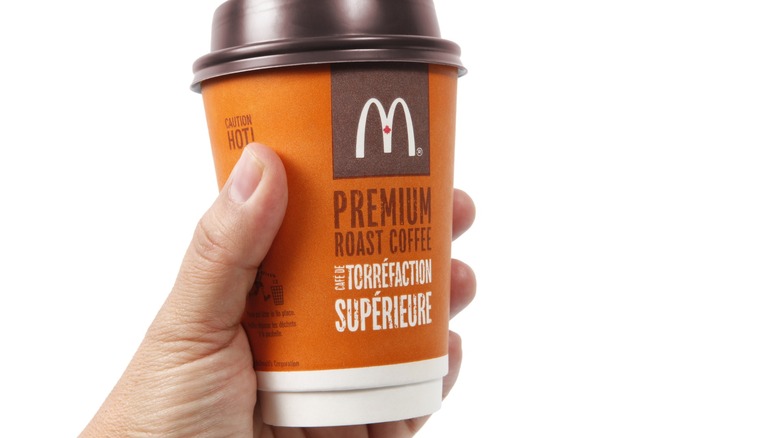
When you grab a cup of coffee from a drive-thru (maybe from one of the fast food restaurants that serves burgers during breakfast hours?), you are likely to notice an embossed or printed warning on the rim of your plastic lid alerting you that the contents of your drink are hot. If this seems a bit redundant, know that the cursory warning is a case of corporate "cover your assets" at play. These warnings appeared after the Liebeck verdict to inform consumers that their coffee was hot, even if the truth was that McDonald's actually was serving it literally scalding. Stella Liebeck's coffee burned her at 190 degrees, but the sweet spot for serving coffee is between 130 and 160 degrees for best flavor, with a bonus lowered risk of disfiguring injury in case of spills.
More than just the lid warnings, fast food restaurants also began pushing the use of cup sleeves when serving hot beverages. That cardboard slipcover around the middle of your Starbucks latte isn't just for looks; it's a safety measure. Consumers need all the safety measures they can get, given the fact that some businesses may still be serving coffee far too hot today, per a review published in the Journal of Food Science. Some experts have even tied the Liebeck case to more widespread inclusion of cupholders in automotive designs, since Liebeck may not have been injured as gravely if that car had cupholders.