

Here's What Happens To All Of Chick-Fil-A's Leftover Chicken
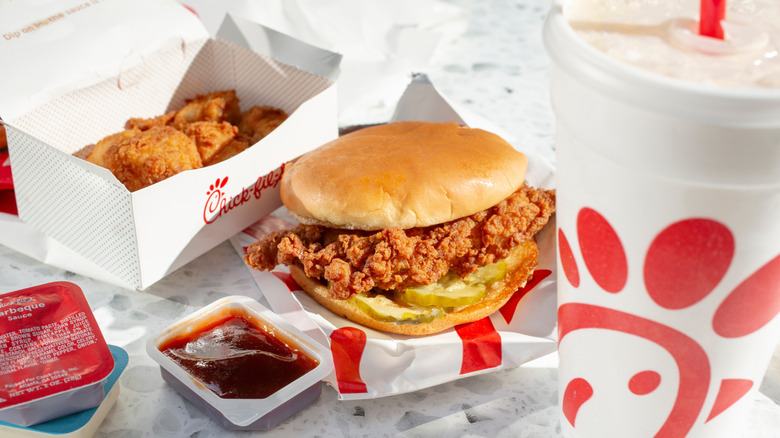
If you're wondering what Chick-fil-A sauce is really made of, or what time the chain stops serving breakfast — chances are you're a regular customer. If so, you've probably asked yourself: What happens to all the chicken that doesn't end up being served? It turns out you can feel good about the fact that leftover food from Chick-fil-A restaurants doesn't go to waste, thanks to the company's Shared Table program.
It all started with Tennessee-based owner-operator Marshall Wilkins, who in the early '80s passed on his restaurant's unsold cooked food to a charity behind local soup kitchens. That connection with Knoxville Area Rescue Ministries (KARM) led to Wilkins joining forces with coordinating agency Food Donation Connection (FDC) in the 1990s.
FDC acts as the bridge between various regional organizations that are tackling hunger in their communities and the companies that have surplus food to give. For more than a decade, the network grew and, by 2012, Chick-fil-A's Shared Table scheme had become the company's official corporate social responsibility program. According to Marshall (via the Chick-fil-A website), it's all about being a "good neighbor," adding it was a "privilege for us to be able to serve those in need in our communities."
The staggering numbers behind this force for good
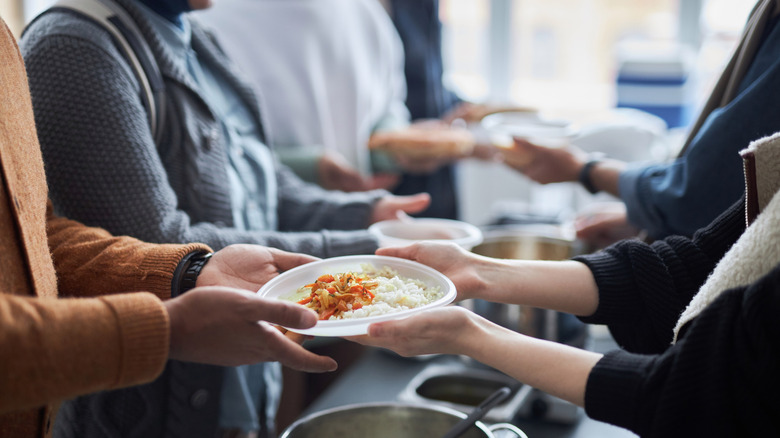
By 2026, more than 2,500 of the over 2,600 Chick-fil-A restaurants were actively taking part in the Shared Table program. Since 2020, it has prevented more than 61 million pounds of food from being thrown into landfills. Even more impressive, 42 million meals have been put together every week from Chick-fil-A leftovers since 2012. So, how does the Shared Table program work?
At the end of every operating day at participating eateries, surplus food including salads, biscuits, and nuggets, is packed up and shipped off to local charities, shelters or organizations, who then turn them into new meals for hungry folks in need. The next time you pick up an order from your local Chick-fil-A, remember the "A" in its name has a deeper meaning: All. As in all the company does for its customers (and in this case, community).
The Shared Table program isn't the only way Chick-fil-A helps local communities across the United States to fight food insecurity. The company also donates a whopping $25,000 to Feeding America or Canada's Second Harvest to celebrate the opening of every new outlet. In 2025, it planned to invest $4 million to bolster its community efforts, including issuing grants to local charities and teaming up with Convoy of Hope to sponsor food packaging.