

The Best Barbecue Starts With This Essential Timing Tip
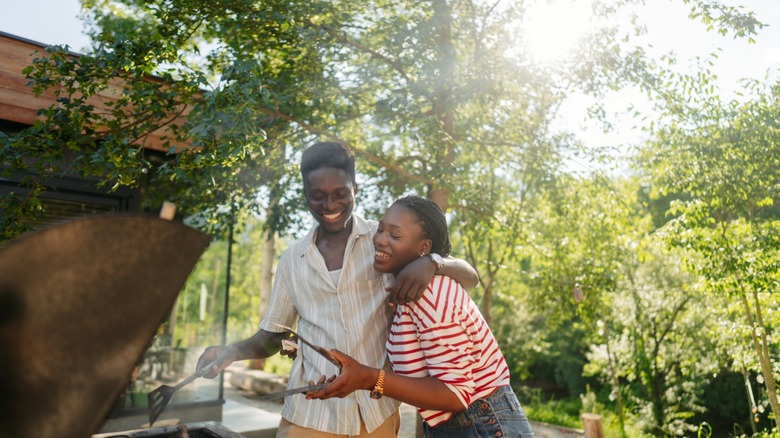
On the list of expert tips for better barbecue, it's hard not to run into a bevy of recommendations when it comes to resting meat. This step is perhaps one of the most-discussed, yet least-understood aspects of grilling and smoking meat. Mastering it can unlock juicier, tastier protein, while ignoring its implications could spoil the cookout. When we explained popular grilling hacks, we didn't dive into why you should rest your meat and precisely how long you should do so — even though that second variable could be the biggest difference between the best barbecue you've ever had and a complete washout. In short, don't forget to factor in resting time.
It was long thought that you should rest meat to retain juices. The theory went that, when you sliced into it directly off the heat, you allowed precious moisture to run out onto the carving board instead of recirculating through the meat. This, as it turns out, isn't really true.
Now, we understand that the magic of resting meat comes from carryover cooking that happens when you pull food from a heat source. As meat sits at room temperature, the hotter exterior continues to direct heat towards the center of the protein, cooking it further. Mastering the so-called "BBQ math" of how long you should rest meat for will allow you to perfect carryover cooking so that, at the end of the rest, you are exactly where you should be. Before we dive in, you should understand that the bigger and/or thicker the cut of meat, the more rest time it needs before serving.
Ignore proper rest times at your own peril
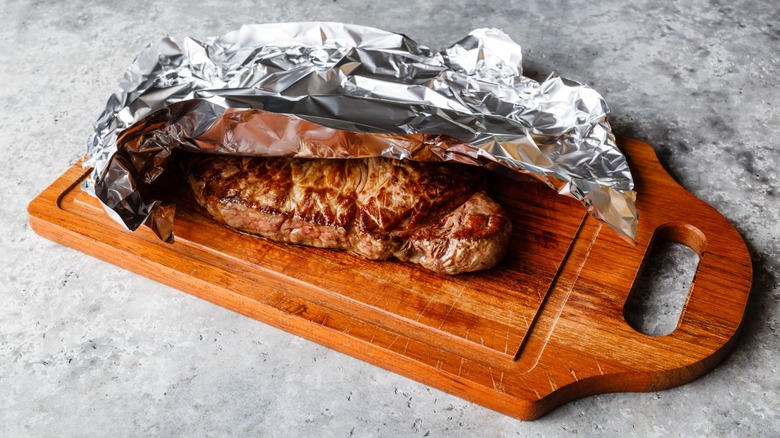
You're probably used to resting juicy ribeyes on a carving board for five or 10 minutes before slicing them up, but what about bigger hunks of beast? A whole chicken you've just smoked should rest for a full 15 minutes before carving. Meanwhile, a rack of spare ribs shouldn't be hurried, and ought to be allowed no less than a half hour to rest. Champing at the bit to get dinner on the table? You'll definitely want to factor in the rest time for that brisket you just spent 12 hours cooking low and slow, as it will require two to three solid hours of resting before you should come near it with a knife. Many sources beg you to at least give it an hour (and some online commenters say they rest brisket for much longer). Once you understand that resting is actually part of the cooking process and not a distinct thing, you will fully understand the importance.
Where should you rest your meat? If you are cooking outdoors, lightly covering your protein with foil is encouraged if there's a chance that bugs could get near it. Or, you could use one of our favorite offbeat cooking hacks and rest your grilled meat in a cooler, which allows for better food safety and retention of warmth — two aspects that (potentially misinformed) opponents of resting meat are apt to bark about when the subject comes up.