

Steak Not Browning On The Grill? Science Has The Answer
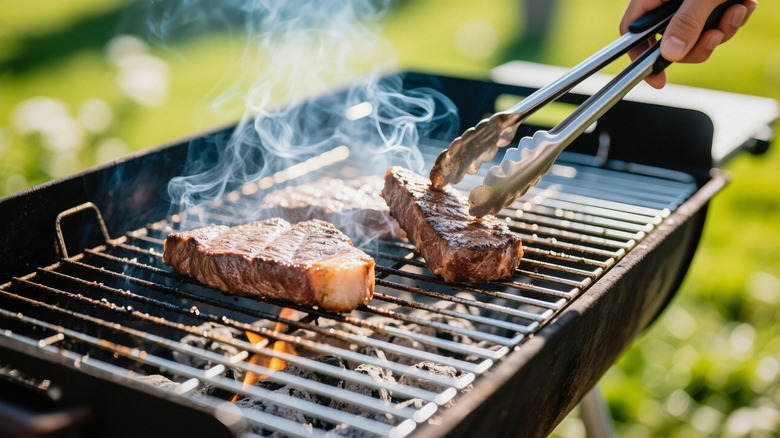
So, you've studied all the secrets to cooking the juiciest steaks, and you read the instructional manual for your grill cover-to-cover. Why, then, are you constantly let down by pale, gray-ish steaks? Is it a matter of seasoning? Grill type (charcoal versus propane)? No, friend. Moisture is the biggest enemy of a crispy, deep brown crust on your beautiful cuts of beef, and science says that you are failing to control moisture at some stage of the cooking process. Let's break it down.
Going over our pro tip for choosing the best steak is a great place to start, but even the humblest cuts, like the cheap and underrated bavette steak, can shine if you cook them right. Your first step is thoroughly patting your meat dry before seasoning. Any lingering moisture on the surface of your steak from its time in the package will resist the famed Maillard reaction, in which food gains both browning and deeper flavor. This reaction takes place at between 300 and 500 degrees Fahrenheit, which is why we put our steaks on screaming-hot grill grates or cast iron pans. If your steak has too much residual fluid in or on it, however, you are inhibiting science from doing its beautiful work.
Even the grill masters on Reddit agree. "Steam," one commenter said bluntly, when giving the top-rated explanation for what a hapless griller was doing to get pale, flabby steaks. "You have moisture somewhere which is evaporating and steaming the outside instead of charring it. [...] Pat dry, [d]ry brine overnight in fridge uncovered on a wire rack, [g]et grill hotter before you put them on, [and/or] [b]ring them to room temp before putting on so you get a more even cook."
To keep your beautiful crust, continue controlling moisture after the grill
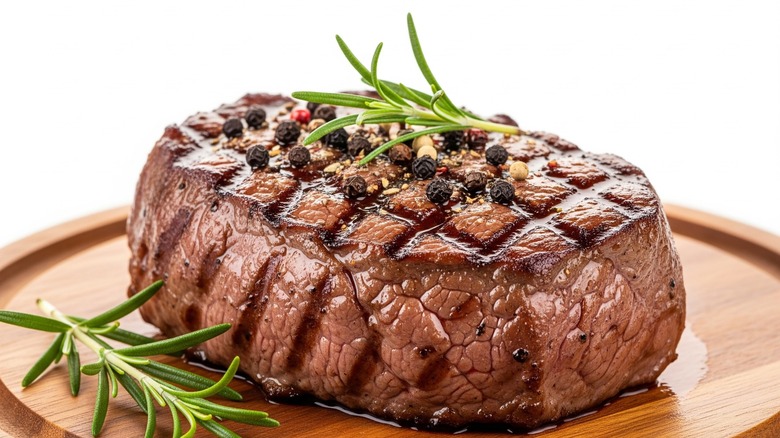
The fight against moisture to make your steak beautiful doesn't stop when you attain a gorgeous brown outside and pull it off the heat. If you don't manage dampness over the steak's journey all the way from the grates to your table, you stand to ruin all your hard work. To that end, if you cover your steak with foil during the resting process, the steam can seep under your crust and make it wilt. The surface, therefore, would be ruined. Furthermore, wrapping your steak in foil, or covering it in any other way, traps heat, and runs the risk of carryover cooking taking the temp of your interior too high. In other words, you might have grilled it to the ideal medium rare, but covering it up could shoot you forward one or even two categories of doneness. At the risk of losing a little bit of surface temperature, leave your steaks uncovered when you rest them!
Getting gorgeous, brown, char-y, crispy crust on your steaks isn't a matter of praying to the grilling gods and hoping for a miracle — it's all in the chemistry! If you consistently counteract moisture at every stage of the cooking process, you will eliminate the biggest barrier to your steaks browning the way they should. If you are plagued by gray, sad-looking steaks, walk through the steps to troubleshoot your moisture content, and there's a good chance that you will solve your problem.