

The Absolute Best Temperature For Grilling Ribs
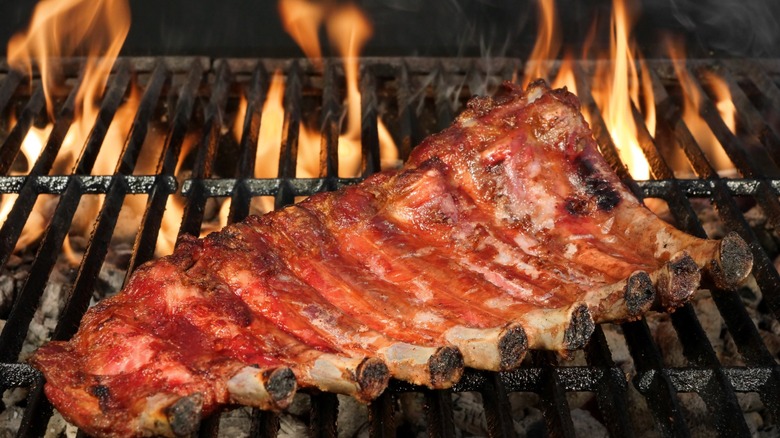
With the summer BBQ season fast approaching, ribs are on every home grillmaster's mind. It's arguable that no other meat product captures the spirit of backyard grilling like a great rack of ribs. We've spilled plenty of digital ink on tips and tricks for ideal ribs — like the best maple syrup marinade — but you may be wondering what grill temperature you should aim for when it comes to fall-off-the-bone, fork-tender specimens. There is, after all, a fine line to walk when grilling ribs. Cook them too high, and the meat will be tough and unpleasant to eat. Too low, and you'll be waiting all day and half the night for your protein to cook through.
According to multiple sources, a great temperature range to aim for when it comes to grilling your ribs is 275 to 300 degrees Fahrenheit. On the higher end of that range, 300 degrees seems to be the sweet spot for hitting doneness in a reasonable amount of time without making ribs chewy and tough. There's a difference between baby back and spare ribs, and that goes for St. Louis-style ribs as well. The latter take longer to cook, but, at 300 degrees, baby back ribs will need to grill for about three hours, while meatier St. Louis ribs will take about four and a half hours. You are aiming for an internal temperature of between 190 and 200 degrees.
Various factors can impact your rib grilling time
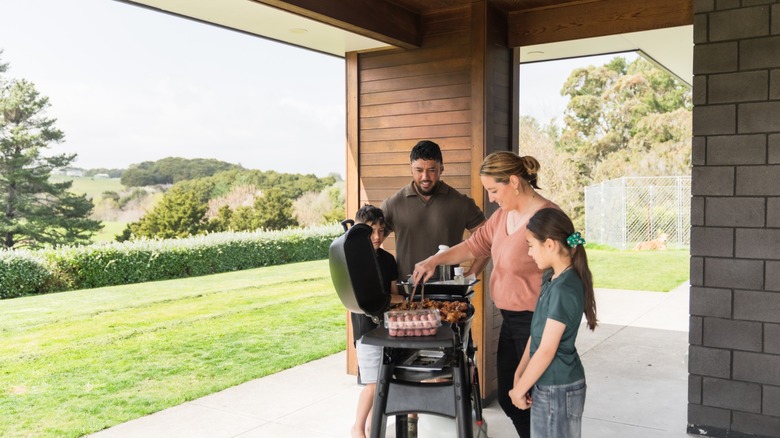
In your quest to master ribs, a lot of trial and error might be involved. First of all, the weather on the day you grill plays a major role. You're probably picturing a mild, balmy, sunny day that's perfect for cooking out, but Mother Nature sometimes has different ideas. If the weather is very hot or unseasonably chilly, you will need to account for that when it comes to controlling temperature. Likewise, rain or other dampness in the air can make it harder to bring your grill up to temp. Wind, too, can be a confounding factor.
Your choice of direct versus indirect heat will also make a major difference in how long your meat needs to stay on the grill. Some pros swear by cooking over indirect heat to reduce toughness and to have more control over the cook, but this will result in a longer grilling session that you may or may not have patience or time for. The internet seems pretty split on the virtues of direct as opposed to indirect heat, so do your research.
There is a panoply of other factors that can affect your grilling experience, most of which you can't control easily or even at all — think altitude, grill type, and fuel type. That's why keeping temperature at the forefront of your grilling "how-to" is important. If you can get that 300-degree temp right, it's easier to account for factors you may not be able to change. Of course, experience is the best teacher, so get out there and grill some ribs!