

10 Ways To Ensure Your Tomatoes Grow To Their Best Flavor Potential
We may receive a commission on purchases made from links.
Is there anything more disappointing than having nurtured a tomato on its vine to a state of glorious, peak ripeness, only for it to taste, well, meh? It's all very well reaching for a secret ingredient to boost a tomato's flavor, but we want the fruits of our labor to taste every bit as good as they look, without any post-harvest help. Anyone who has ever raised tomatoes knows there's a lot more to getting maximum flavor than sticking seedlings in the ground and waiting for the magic to happen.
The taste profile of your tomatoes is created by a blend of ascorbic, citric, and malic acids, fructose and glucose, and a bunch of volatile organic compounds, and it can be influenced by multiple factors. Everything from the variety you decide to plant, the conditions of your garden, and how much water you give it, play a role in the final flavor of your precious fruit. Remember, it's a marathon, not a sprint, so to ensure you grow the tastiest tomatoes on the block, our tips will help you go the distance.
Match your tomato variety to your environment

Livestock breeders know certain species fare better in particular environments, while others don't, and it's exactly the same for tomatoes. Don't just look at varieties that are suited to your soil or climatic zone, dig a little deeper. Finding tomato seeds from plants that were raised in or near the location where you live will ensure their compatibility, making it more likely that you'll get the best-flavored fruit.
Choose tomatoes that are known for their flavor
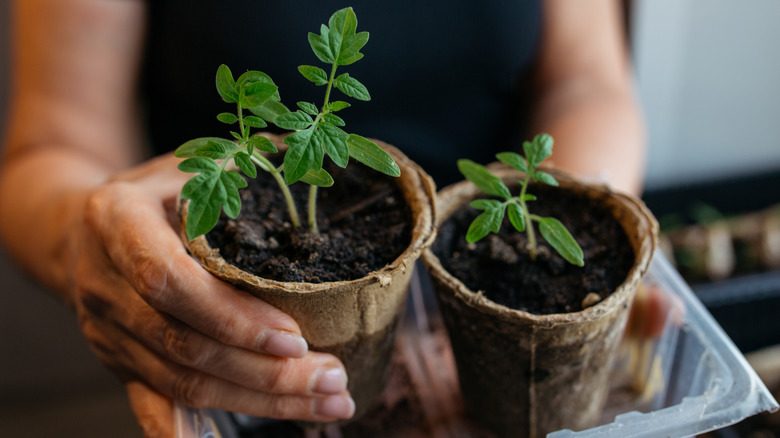
Hybrid tomato species are great at fending off diseases, but in many cases, flavor quality has been sacrificed for a stronger plant. If you must have a hybrid, choose ones like Sungold, a popular cherry tomato which still packs a sweet punch. Alternatively, opt for heirloom species, such as the rare Noire de Cosebœuf, whose rich flavor has been compared to wine!
Rotate your tomato planting annually
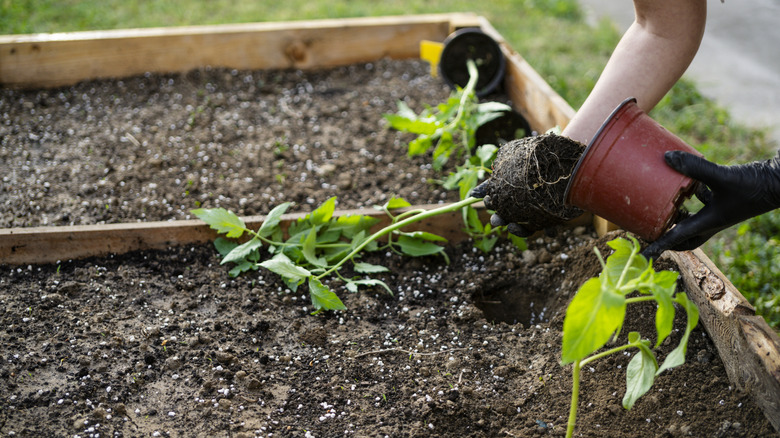
Where you put your tomatoes can be just as important as the varieties you choose to buy. New gardeners won't face this issue for a couple of seasons, but it's worth keeping in mind that you should rotate your planting beds annually. It avoids draining the soil of too many nutrients that help keep your toms full of flavor. That's not such a problem if you're growing your tomatoes in pots, but bear in mind the sizing rule of thumb.
Give your tomatoes space when planting
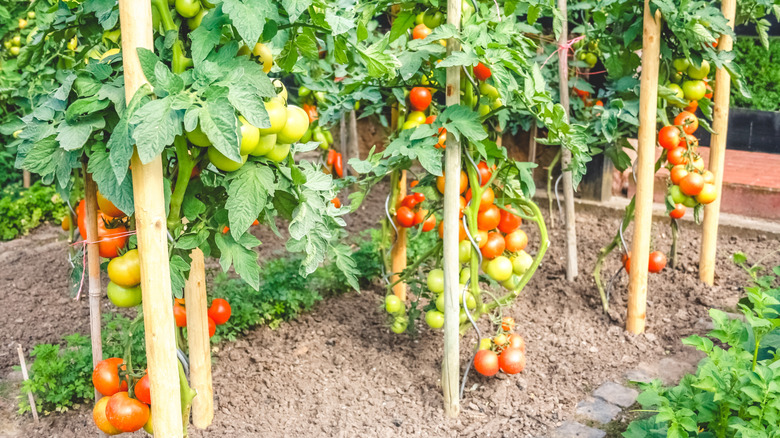
It can be tempting to cram as many tomatoes as possible into a space for maximum yield, but that's a bad idea, especially for indeterminate varieties, which can reach 6 to 12 feet tall. Instead, give them the space they need to expand, and plant them deeply enough so the roots can easily access all the nutrition in the soil to give your fruit the best flavor.
Lay down some protective mulch
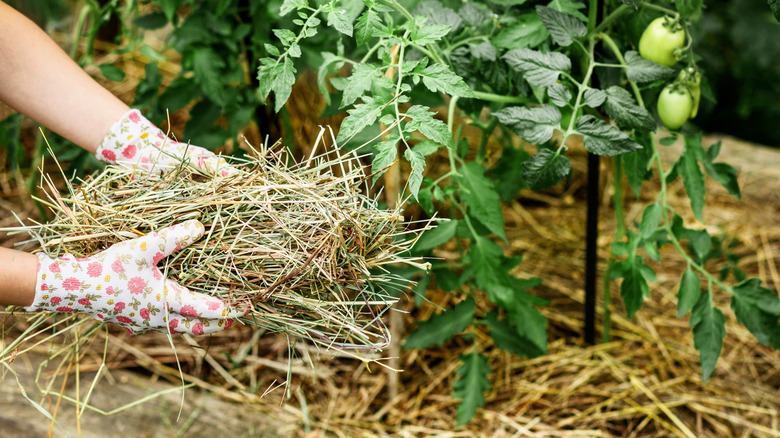
Protecting the roots from stress will intensify the taste of your tomatoes, and one of the best methods is by laying down a layer of mulch. It keeps the sun off in the warmest months, and helps trap moisture in the soil, helping to prevent those tasty tomatoes from cracking. You can buy bags of ready-made mulch, or create your own using old newspapers, lawn clippings, or old leaves.
Put your tomato plants under a little water stress
Not everyone agrees about this tip but a 2026 study came down in favor of water stress, so we're sticking with the boffins. Tomatoes are very thirsty plants when they're flowering but researchers found that, when the fruit is still green, it's worth dialling down the watering by up to 45%. Not only will the dip in hydration accelerate ripening it can — most importantly — amp up the flavor.
Fertilize your tomatoes correctly for maximum flavor
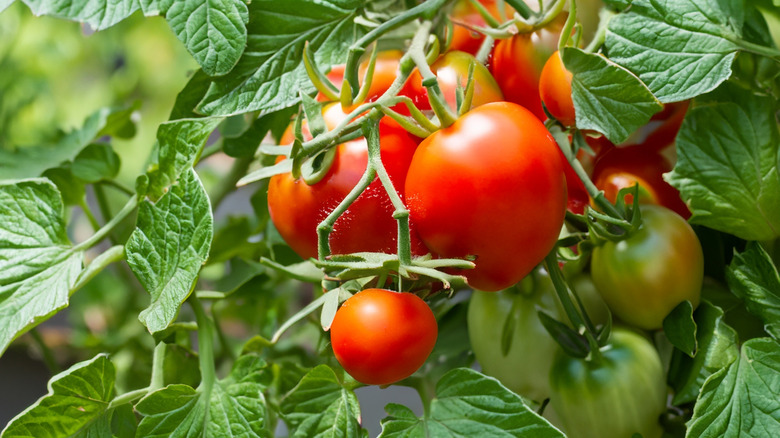
We've previously looked at a tomato fertilizer to increase your crop and the kitchen scraps that will give you bigger tomatoes, so now it's time to focus on flavor. Choose an organic fertilizer with the right balance of nitrogen, phosphorus, and potassium, but read the label for micronutrients too. In particular, check for magnesium, which is crucial for the production of acid and sugar. Without them, your tomatoes will be flavorless.
Sprinkle a little salt
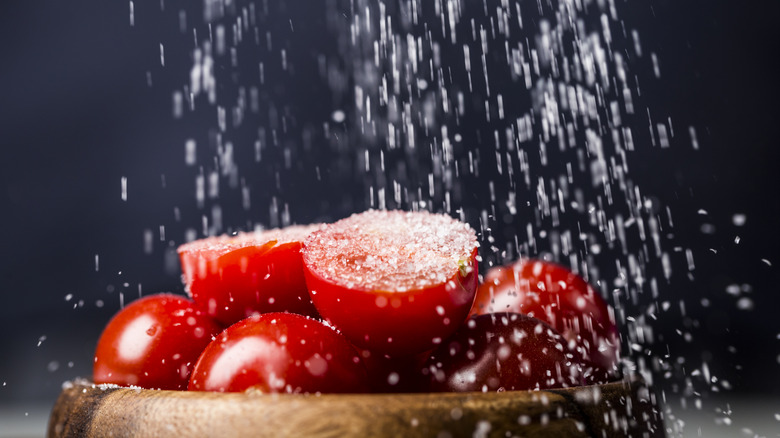
There will be some green-fingered enthusiasts whose eyebrows shoot skyward at this suggestion, but done carefully, there is tasty merit in it. Traditionally, tomato plants and salt go together like two things that really don't get along, but researchers discovereda little salt water at the base of the plants (not on the leaves or they will burn) improved the fruit's flavor. Known as salt stress, it's connected to hydration levels and limits water intake.
Prune tomato plants carefully for the best flavor
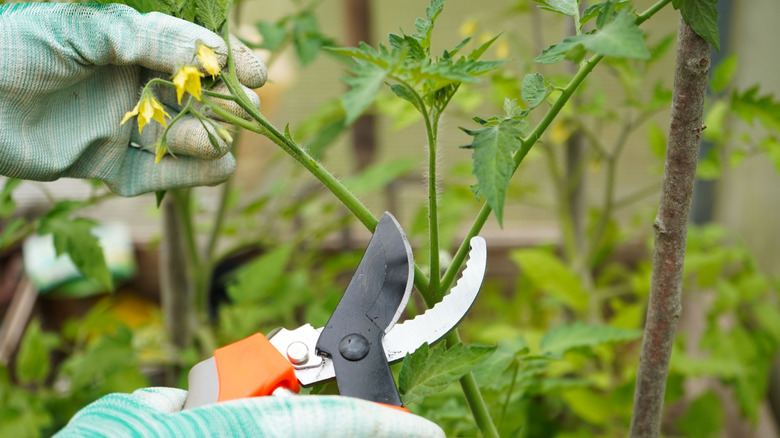
Unlike their determinate counterparts, the suckers or sideshoots on indeterminate tomato varieties need pruning to focus the growing energy. As well as keeping the air flowing around the plant and reducing the threat of disease, regular pruning also allows sunlight to ripen the fruit, enabling those all-important sugars, acids, and volatile organic compounds to do their flavor thing. Support them using Dollar Tree's low-cost trellis find and they'll be a breeze to pick, too.
Pick your tomatoes at the right time
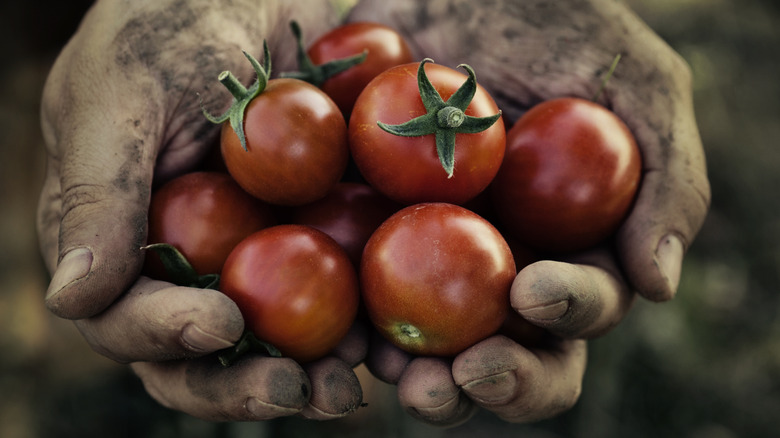
When you harvest your tomatoes also affects how they taste. Their metabolism doesn't kick in first thing in the morning (who knew?), so holding off until the early afternoon, especially when the weather is warm, will enhance the flavor. Another school of thought is to pick them before they are fully red, and ripen them out of direct sunlight. Keep them in a paper bag at between 65 and 75 degrees Fahrenheit for mouthwatering, rather than meh, tomato flavor.