

For A Bigger Basil Crop Than Ever, Use This Type Of Fertilizer And Thank Us Later
We may receive a commission on purchases made from links.
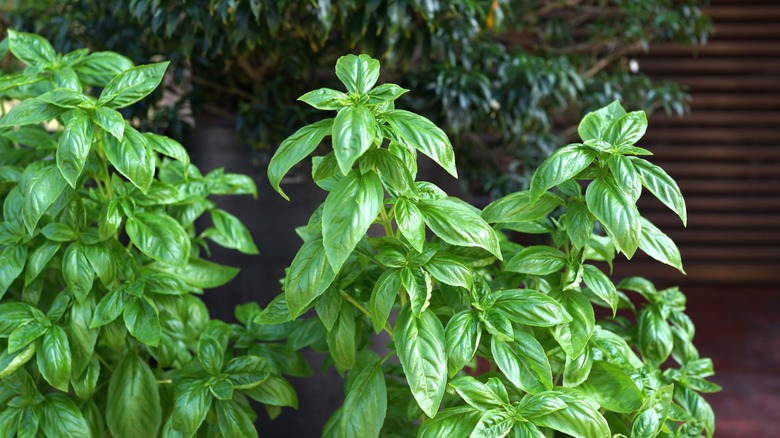
We go gaga for garden-fresh herbs, especially basil. While it's not that hard to substitute dried for fresh herbs, we're of the opinion that nothing compares to whole herbs, especially those plucked, sun-warmed, directly from your garden — which brings us back to our affinity for basil. This peppery, sweet-smelling herb is a natural in all our favorite pestos, pastas, and salads. Basil thrives in the summertime, which is probably why the taste reminds us of soaking up the sun.
If you are growing basil in your garden this summer, you might be wondering what, exactly, to fertilize it with to make the plants go absolutely bonkers with a bounty of hardy, fresh leaves. A commercial 5-10-5 fertilizer is best. For the uninitiated, the three numbers on your bag of fertilizer represent the weight ratio of nitrogen, phosphorus, and potassium (the so-called "big three") respectively. The ideal fertilizer for basil, then, has 5% nitrogen, 10% phosphorus, and 5% potassium by weight. We like the positive ratings on Espoma's 5-10-5 Garden Food fertilizer, which comes in a two-pack on Amazon.
Here are more tips for growing lots of luscious basil
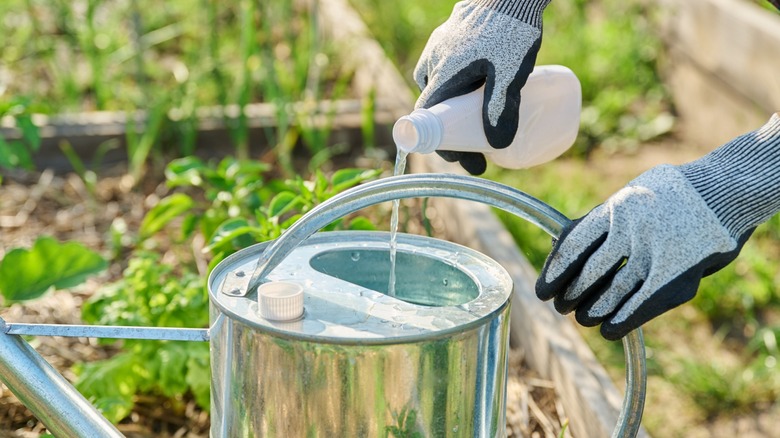
Keep in mind that you shouldn't absolutely douse your basil plants in fertilizer. They need only be fed lightly, and only once or twice per growing season. Basil leaves are fragile, so make sure the fertilizer stays in the soil, and not on the delicate, edible leaves.
Basil goes absolutely wild in the sunshine. Plenty of sunlight is optimal; at least six to eight hours of full exposure daily. Another variable that can really help your basil plants is well-drained soil. Water logging is terrible for many plants, but it will definitely mess with the yield of your basil specifically. Don't be shy about harvesting your basil while it's blooming. It may seem counterintuitive, but gathering leaves for your dinner actually promotes more growth in healthy plants.
Lastly, consider companion planting, in which two or more crops are grown alongside one another to encourage symbiotic sharing of resources and mutual benefit. There's a clever reason to plant tomatoes and basil together in your garden, for instance, and not just because they're a delish flavor combo — perfect for making our beloved recipe for creamy tomato soup with basil oil.