

Texas Roadhouse's Famous Honey Cinnamon Butter Isn't Exactly Butter. Here's What's In It
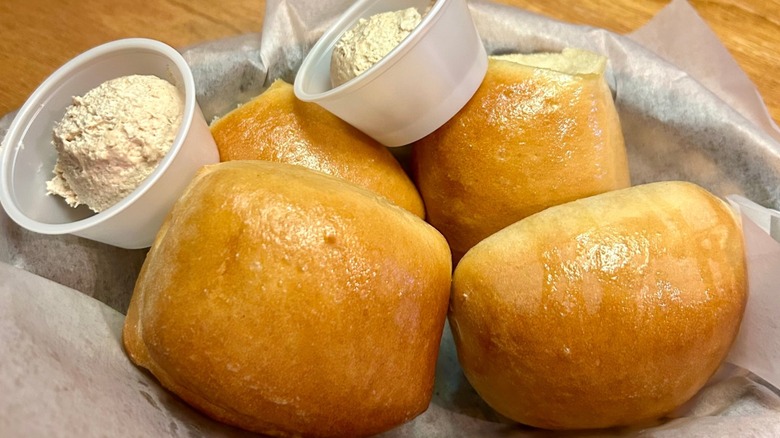
You can be forgiven for the mistake of eating too many rolls at Texas Roadhouse and neglecting to save room for your actual dinner — it's happened even to those of us with the strongest willpower. The gratis rolls, and their accompanying honey cinnamon butter, are an undeniable star attraction. What if we told you, however, that the butter isn't exactly real butter? Not in the strictest definition of the word, anyway.
Butter, the real McCoy, is made with churned cream and perhaps some salt. That's it. If you check out the nutrition info for Texas Roadhouse's menu, however, you won't find "butter." What you'll find, instead, is "honey cinnamon buttery spread," the top ingredient in which is "butter blend" made with "artificial butter flavor." The honey and cinnamon appear legit, but the "butter" component has about a dozen ingredients, including (but not limited to) palm oil, sodium benzoate, and soybean oil.
The words "buttery spread" are doing a lot of heavy lifting in Texas Roadhouse's official materials, because it isn't making any bones about the fact that it's butter isn't actually butter at all. Based on what it is, however — a butter-like spread – we can make an educated guess about why Texas Roadhouse opted for spread in lieu of butter.
There are some great reasons to use spread instead of butter
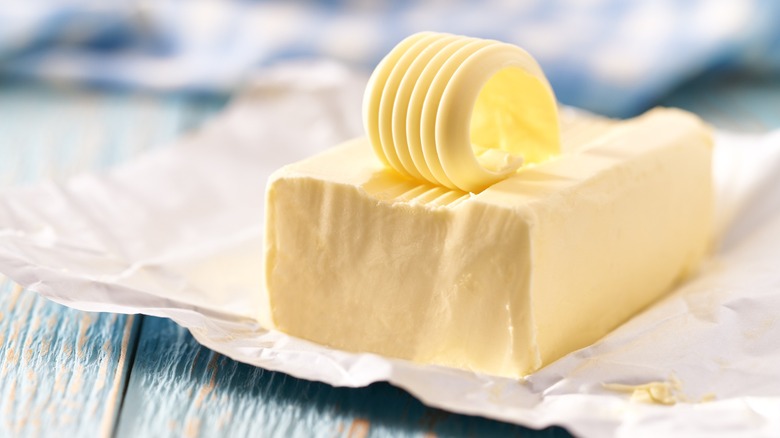
The biggest benefit of buttery spread instead of butter is right there in the name. Butter, real butter, is innately not spreadable. That's why humans came up with a hack to spread butter using a vegetable peeler. Butter won't snuggle nicely into every nook and cranny of your piping-hot yeast rolls, melting immediately into a cinnamon-y puddle of greasy-fingered happiness. Spread, on the other hand, spreads easily. There's no ripping of bread, no clumsiness with a butter knife. It's easy. The consistency is right. That, alone, is a selling point.
The flip side of this also has to do with consistency. Margarine, which is closer to buttery spread, has a slightly higher melting point than butter. Spreads made with veggie oils have melting points that are even more favorable in terms of resisting melting. This means that, in a hot kitchen window next to steaming rolls, butter will predictably go from rock-solid to "yellow liquid" with a quickness, while spread will resist melting into a useless puddle for longer.
For the needs of Texas Roadhouse, America's top casual restaurant, where servers grab baskets of bread and butter(y spread) on the go, actual butter wouldn't make sense. Nobody is trying to dupe you with the buttery spread you're receiving. Once you understand that "real" butter doesn't work as well for the needs of a casual steakhouse, you understand why a delicious, pillowy-soft substitute is what's up for offer.