

The Retro Cooking Tool You Should Avoid Buying Secondhand
We may receive a commission on purchases made from links.
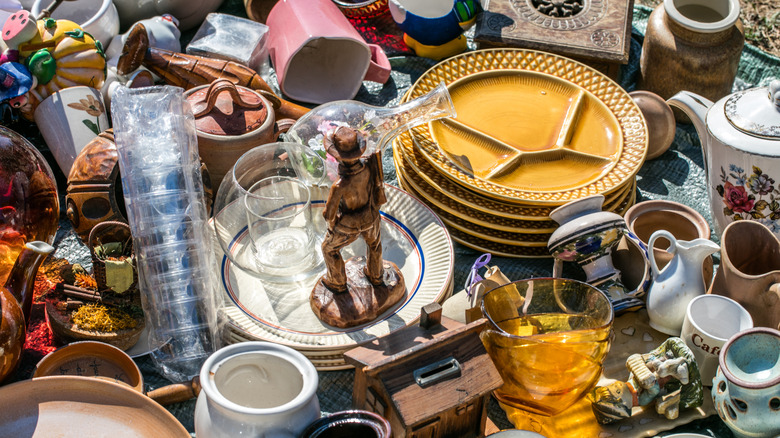
For budget-conscious foodies, there are a lot of buys to be found at garage sales, or at the secondhand or resale shop. Martha Stewart herself advises us to thrift kitchen crocks for savings and style, and we're always keeping an eye peeled for vintage glass Weck jars at thrift stores to suit our home canning endeavors. From beautiful, classy tableware to crystal decanters for our bar cart, one person's trash is usually another's treasure when it comes to items for our cooking space. And, yet, there's one common kitchen item that the pros say you should never buy secondhand, no matter how cheap. It's a retro utensil that still gets major play today ... the wooden spoon. Whether you are using it for cooking or for serving up hot food, you should just say "no" to used.
Basically, the porous nature of wooden objects make them a lot harder to sanitize effectively than their steel or plastic peers. When you pick up kitchen items at the neighborhood rummage sale or the Salvation Army charity shop, you have no idea how their previous owners treated them. That's especially pertinent when it comes to wooden spoons, which can look benign, but harbor all sorts of nasty bacteria. There's good reason to beware of anything wooden when it comes to secondhand kitchenware, but spoons are especially dangerous because there can be tiny cracks in the wood from improper use and you might not see them on the surface. Using these spoons can make yourself and your family sick.
Buy wooden spoons new and take care of them properly
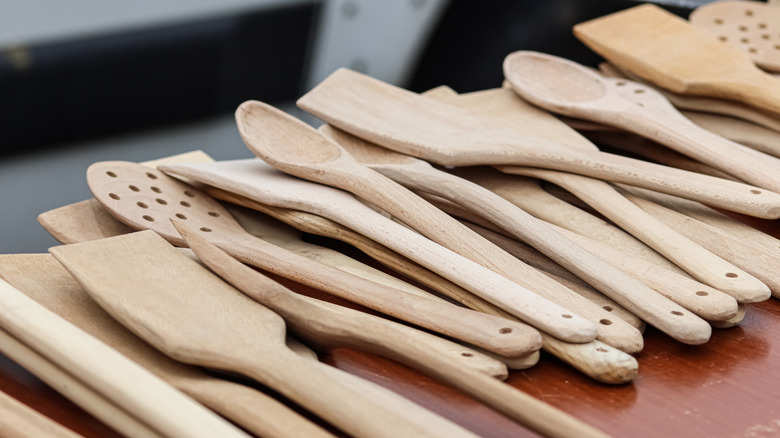
If you like the look and/or feel of wooden spoons — understandable, since these tools are highly functional in addition to having plentiful retro visual appeal — you should buy them new, so you always know their history and can make sure they are treated right. Wooden spoons range in price all the way from the sub-$15 mass market bamboo sets you can grab on Amazon to beautiful, polished walnut and olivewood specimens from high-end retailers like Williams Sonoma. As is the case with most kitchen supplies, your personal budget should dictate your choice. The shape of wooden spoons seems to be a more important element of their function than the materials used, so don't shy away from cheaper options.
Once you have your wooden spoons, you can prolong their lifespan and ensure that they remain food-safe by taking care of them properly. Never put your spoons in the dishwasher! Nor should you clean your wooden spoons in boiling water as a TikTok trend suggests. Anything that involves your spoons soaking in water is a no-no. Instead, wash them in hot water with a mild dish soap and oil them with a food-grade oil if they start to dry out. That's really all you need to do; it's not complicated. Treated correctly, your wooden spoons will not only reward you with years of faithful use, but they'll give you that "old-timey homemaker" vibe that you were seeking at the thrift store in the first place. Some things you just need to do yourself, and that includes taking care of your wooden spoons.