

Take The Guesswork Out Of Cooking Rice With This Technique That Breaks All The Rules
We may receive a commission on purchases made from links.
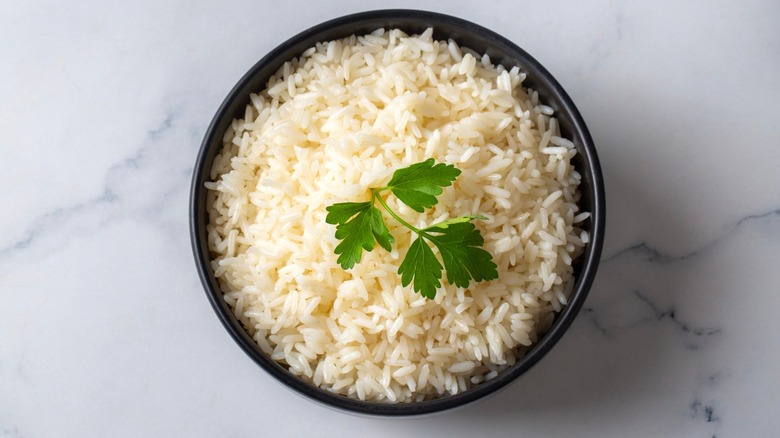
There's a whole list of uses for your rice cooker besides cooking rice, but not everyone wants (or has room for) a separate appliance. Without a rice cooker, however, cooking rice can be a fraught process. Regardless of conventional wisdom about ratios and methods, it's all too easy to burn rice, undercook it, or turn it into a homogenous mass of mush. Imagine a cooking method that simplified everything ... boiling your rice like pasta.
Hear us out! Boiling your rice in a pot of water and then straining it has several advantages over rice cooked on the stovetop. First of all, there's no need for measuring, so you never need to remember percentages. Secondly, it's a great way to cook a large amount of rice at one time. Thirdly, if you taste-test your rice every couple of minutes, you needn't watch the clock, either. All you do is put the rice in boiling water, check it periodically for doneness, and strain it through a colander when it's al dente. Carryover cooking and a lid will steam the rice the rest of the way through!
As a bonus, the FDA has determined that cooking rice like pasta removes between 40 and 60% of the arsenic content. This is no small concern for people who eat a lot of rice as part of their daily diets.
This rice cooking method is a game changer
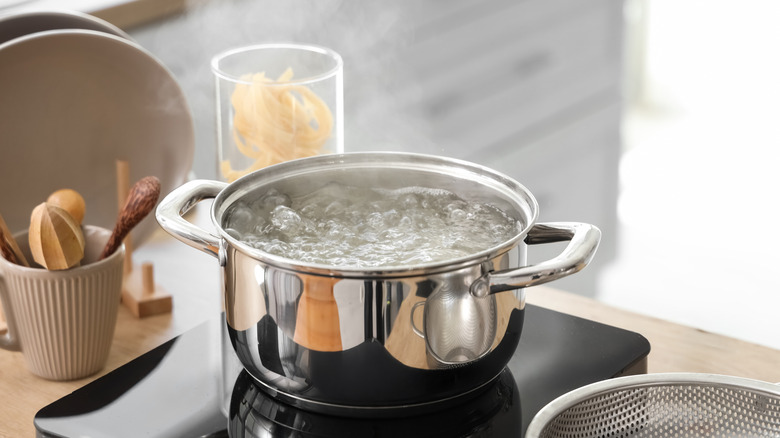
On Reddit, one commenter couldn't believe how long it took them to realize that boiling rice in the style of pasta was the way to do things: "I boiled some salted water, threw in some rice, set a timer for 12 minutes and walked away. At 12 minutes I pulled out a couple of grains to test but they were still a tiny bit al dente for my liking. I boiled the rice for a couple more minutes, dumped it in a colander, dumped it back in the pot, and threw a lid on it [...] It turned out exactly how I like rice! It [...] was literally fool proof. Rice is back on my menus!" This joyful comment brings up a few essential tips for boiling rice; the first being the fact that times will vary. This depends on how much rice you cook, what type it is, and normal variables like your altitude. Tasting the rice at regular intervals is a much more reliable metric than using a timer.
Some folks will season their water before cooking rice. Salt is de rigueur, but we sometimes like to use a bit of chicken bouillon, or bay leaf as a one-ingredient upgrade for rice. The strainer you use should have very small holes (like this well-rated stainless steel colander by Gulex) so that the grains of rice don't escape. Stirring in a bit of fat, like butter or olive oil, can help with texture, along with fluffing the grains with a fork before serving. Of course, if you don't finish all the rice you cook, keep in mind how to safely store and reheat leftover rice!