

Know When To Upgrade: Signs That Show Your Grill Is At The End Of Its Lifespan

For many foodies, the grill is practically part of the family. How else are you going to deliver backyard burgers, ribs kissed by the tang of smoke, or even an underrated, cheap bavette steak that makes your loved ones swoon? As per Watson's, an average American family replaces its grill every three years, but that may be too frequently — with proper care, a grill should last at least five years and maybe even as long as 15! Sure, you know all about keeping your grill squeaky clean and how to store it for the winter to prevent pests, but when do you actually know that it's time to give in and buy a new one?
According to the pros, the decision to replace your grill ought to have nothing to do with sentimentality or stubbornness and everything to do with economics. If the cost to fix your grill exceeds half the cost of a new one, it's time to give in and start researching your next grill purchase. Not all damage is a dealbreaker. Flaking grates, for instance, can usually be swapped out semi-reasonably, and a handy homeowner (or repair person) may be able to replace a faulty ignitor.
At least one component of your grill means automatic replacement if damaged: the firebox. Not only is there no practical way to replace it, but a compromised firebox is especially dangerous for you and your property. Basically, if your grill just needs a little TLC or some new parts that are reasonable in cost and installation, go for replacing. If you're looking at big or irreparable damage (especially if your grill is already older), it might be time to scrap Old Faithful.
Go armed with knowledge when it's time to buy a new grill
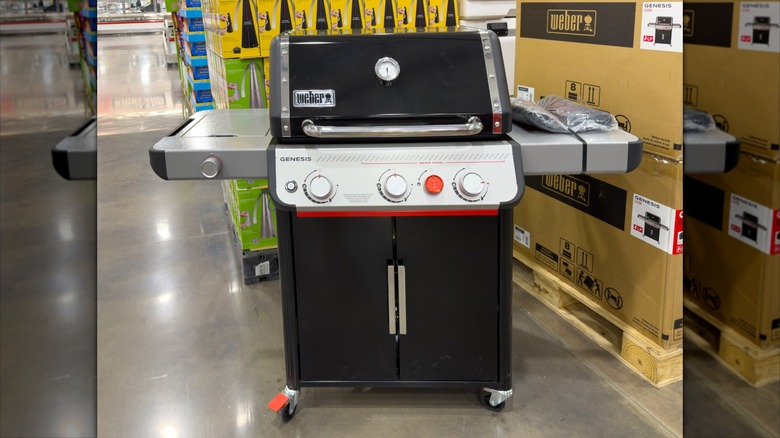
If your old grill gave up the ghost, the concept of shopping for a new one might feel overwhelming. People tend to have strong opinions when it comes to charcoal vs. gas grills (even Bobby Flay has commented on the matter!), but there are a few rules of thumb that apply to either purchase. First, consider your budget ... an issue that goes hand-in-hand with how much "grill" you actually need. The more fancy features you're considering, the higher that price tag will climb. The same goes for size. If you have a small family and don't entertain very often, you needn't waste your money on a larger, more expensive grill. Consider how much grilling you did last year and whether a grill with all the bells and whistles is justified. From there, you can work within your cost constraints.
Once you've selected and paid for your new grill, there are at least two non-negotiable steps you should take, and they have nothing to do with christening the grill with its maiden cookout. First of all, take time to read the owner's manual, which will have product-specific recommendations for care and maintenance. Secondly, register your grill with its manufacturer to make sure the company has your warranty information. Should your new grill develop problems prematurely, a warranty can be very helpful! Plan on taking great care of your new grill, and you will put off the cost and stress of another replacement for as long as possible.