

Here's How Long Cooked Oatmeal Is Safe To Eat
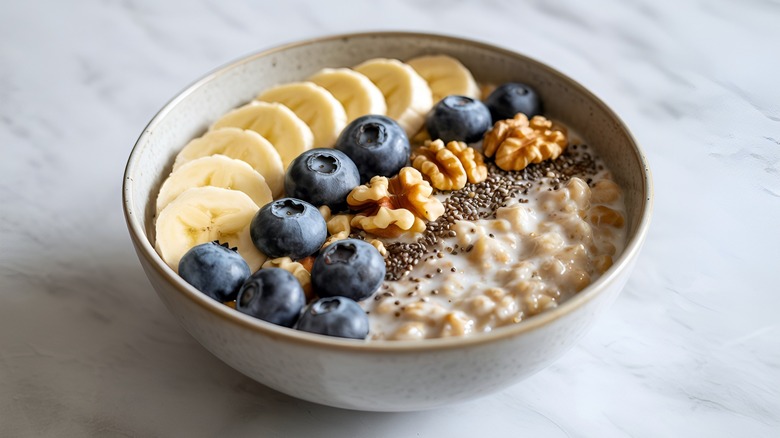
We could easily eat oatmeal every day because of its many health benefits, but also because it's delicious and versatile. There are equally-yummy savory and sweet preparations of this popular grain (including a hack that taught us how to make our oatmeal the British way!), and it's easy to prepare and devour on even the busiest mornings. This is all to say nothing of the fact that oatmeal is loaded with protein, fiber, complex carbs, and a bunch of vitamins and minerals that will set you off on the right foot for a great day of eating well. We're nothing if not conscientious about leftovers and food safety, however, which begs the question: how long can cooked oatmeal safely be stored in the fridge?
According to Healthline, cooked oats should be treated like a homemade soup or stew with regards to the fact that they should be tossed after three or four days. You can freeze cooked oatmeal for as long as three months, so that's definitely a longer-lasting option if you have a big pot you want to preserve. One of the keys to storing oatmeal is to package it in an airtight container and keep it cool. Our personal recommendation is that, if you like to include fruit in your oatmeal, you store it separately so it doesn't turn to watery mush in your leftovers.
Overnight oats fall in the category of cooked oats in terms of food safety
When we go over tips for cooking oatmeal, it's impossible not to mention overnight oats. This trendy breakfast food is beloved because it's insanely convenient: you mix your oats with liquid the night before and eat them cold in the morning. The oats can be mixed with all sorts of liquids and/or toppings, making them ultra-customizable in addition to being quick and nutritious. You should keep in mind, however, that overnight oats should be treated like cooked oats when it comes to storage and food safety considerations. Never leave your overnight oats sitting at room temperature — always store them in the fridge and in airtight containers.
While dry oatmeal itself is not considered a very risky product in terms of pathogens, as soon as you hydrate it, you run into some potential concerns. The biggest is Bacillus cereus, also called B. cereus, which you may have heard referred to as "reheated" or "fried rice syndrome," since it is seen most frequently in individuals who consume reheated rice. This toxin can cause all sorts of unpleasant gastrointestinal symptoms and make you quite sick. To protect yourself and your family, use care and common sense when handling leftover cooked or overnight oats. This food may seem pretty benign, but it can be surprisingly risky if you mishandle your grains.