

Why Restaurant Burgers Are Always So Much Better Than Yours
We may receive a commission on purchases made from links.
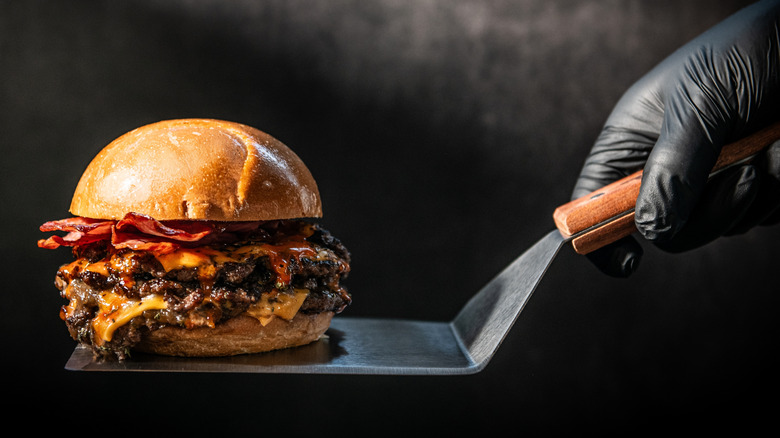
Everyone has their go-to burger joint, and maybe yours even came up in our showcase of the best in each state. Whether you love an indie outlet or can't get enough of what a national chain serves up, chances are the burgers you make at home aren't a patch on those from a restaurant. What gives? Mike Puma, founder of New York City's Gotham Burger Social Club, has the inside track on some of the reasons why. It begins with that all-important ratio of lean meat to fat, which Puma tips slightly in favor of the fat rather than meat, opting for a 75/25 blend. Generally, he spoke of sourcing high-quality ingredients and being mindful of both time and heat while cooking for best results. "We use great ingredients that work together to deliver that nostalgic burger flavor," he said.
What happens with that combination plays a key role in how each burger tastes, while mastering cooking temperatures is crucial. "Control the heat of your pan, otherwise the burger and onions will burn," Puma warned. "Try and get yourself a carbon steel pan for this burger." We know that in the battle of carbon steel pans versus stainless steel, the carbon versions come out on top for high-temperature recipes. That said, he notes that cooking burgers on a grill, however, offers a "completely different experience," and he recommended investing in a flat-top pan for yours or even a Blackstone grill, like this portable model, to get the best results.
How to replicate a restaurant burger in your own kitchen
The key to every delicious burger is timing, whether you prefer them medium rare or well done, and part of that is knowing how long to cook each side. To achieve restaurant-style crispy edges without overcooking the burger's interior, you need patience. "Cook [them] on one side for 90% of the cooking process," Puma said, but keep an eye on the clock so they don't end up dry and unappetizing. He also recommended butter, saying "a butter-basted burger is outstanding!" for super-juicy results, which numbers among our essential tips for grilling perfect burgers.
Of course the patty is the main character in every restaurant burger, but it relies on a supporting cast of bun and toppings to help make it shine. Cheese is one of the most important. Puma's go-to is American, which for him "melts great and that salty, creamy flavor works perfectly with beef." He's a fan of the classic toppings (unlike these chefs whose tastes are more unusual), maintaining that onion and cheese are a must.
He also had a handy tip for home cooks who want to melt their cheese just like in a restaurant. "Add a few drops of water to the pan and dome it," he said. "An aluminum bowl works for this. Just use a towel so you don't burn your hand." Puma said home cooks can use the same technique for other more challenging cheeses that won't melt quite so easily, such as feta or extra sharp cheddar, but noted that you would likely need to adjust the timing. Alternatively, he suggested popping your burgers under a broiler for that restaurant-quality melted cheese finish.