

The Best Homemade Biscuits Can Start With The 3-2-1 Method
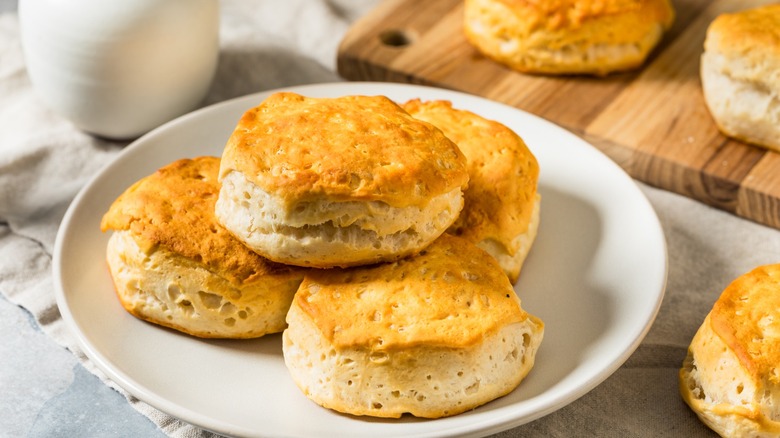
The canon of American Southern foods is legendary, from cornbread to Aretha Franklin's favorite chitlins. Perhaps no one dish evokes the glories of Southern cookcraft quite like the humble biscuit. Slathered in honey and butter, used to coddle a thick slab of fried sugar ham or smothered in unctuous sausage gravy, a great biscuit is a truly magnificent creation. Yet making biscuits is a bit harder than these deceptively-unassuming lumps of golden dough might lead you to believe. Sure, we've covered how to make two-ingredient biscuits as a shortcut, but if you want to get in touch with your inner Meemaw, you need to do things the old-fashioned way. Luckily, there's a ratio to keep in mind that can help start you on the path to perfect homemade biscuits. The numbers to know are 3-2-1, and they represent how many parts of flour-liquid-fat you should incorporate, in that order, by weight.
Within those parameters, you have a little room for variation. The flour must be self-rising, or else you also have to account for yeast or baking powder to leaven your dough. The fat can be lard (which is very old-school), shortening, or butter, which is preferred by many home cooks nowadays. The liquid in many Southern cooks' arsenal is buttermilk, but whole milk or even sour cream or yogurt can be used! Just remember that you want three parts of flour to two parts liquid and one part fat, then scale up or down depending on how many biscuits you are trying to bake at once.
Biscuits are highly personal, so it's worth it to perfect your own recipe
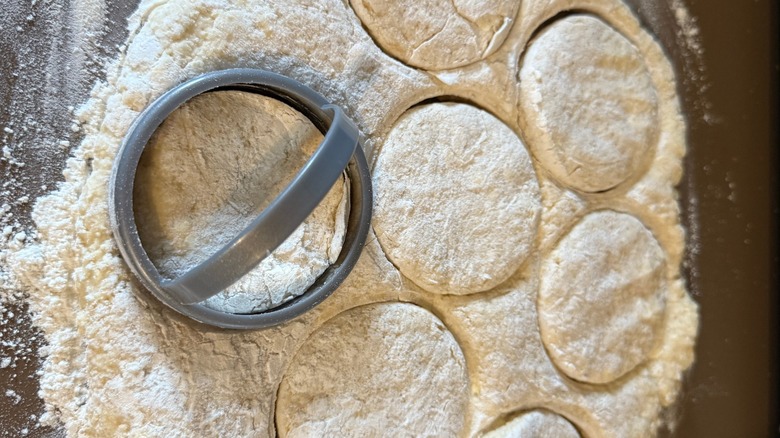
On Facebook, a user touted her grandmother's biscuit recipe, which follows a 3-2-1 configuration. Her grandmother preferred room-temperature butter, she reported, but was known to sometimes freeze the sticks and grate them instead. Butter temperature is just one of the variables that biscuit aficionados will quibble over, along with the specific brand of flour used (since different flours have different protein contents, which noticeably affects the rise of your biscuits) and method of cutting — do you have your biscuits touch sides in the pan? Do you bake them pat-in-the-pan style and bake them as one solid mass? Many Southern families with a proficient home cook in the family line have strong preferences for the specifics.
Yet, there's great news for those of us who don't have the ghost of a no-nonsense Southern aunt or grandma breathing down our necks (or those who simply want to make their own traditions). It's that, as long as you follow the 3-2-1 ratio, there's a lot of room in biscuit-making to explore your own options and make your own mark. With some time and experimentation with the aspects of that formula for successful biscuits, you'll develop fluffy, delightful specimens that taste as good as they look and make every Sunday morning breakfast special. While we enjoy canned biscuits (and appreciate ways to take them to the next level), we think that, once you master scratch biscuits, you won't want to savor them any other way.